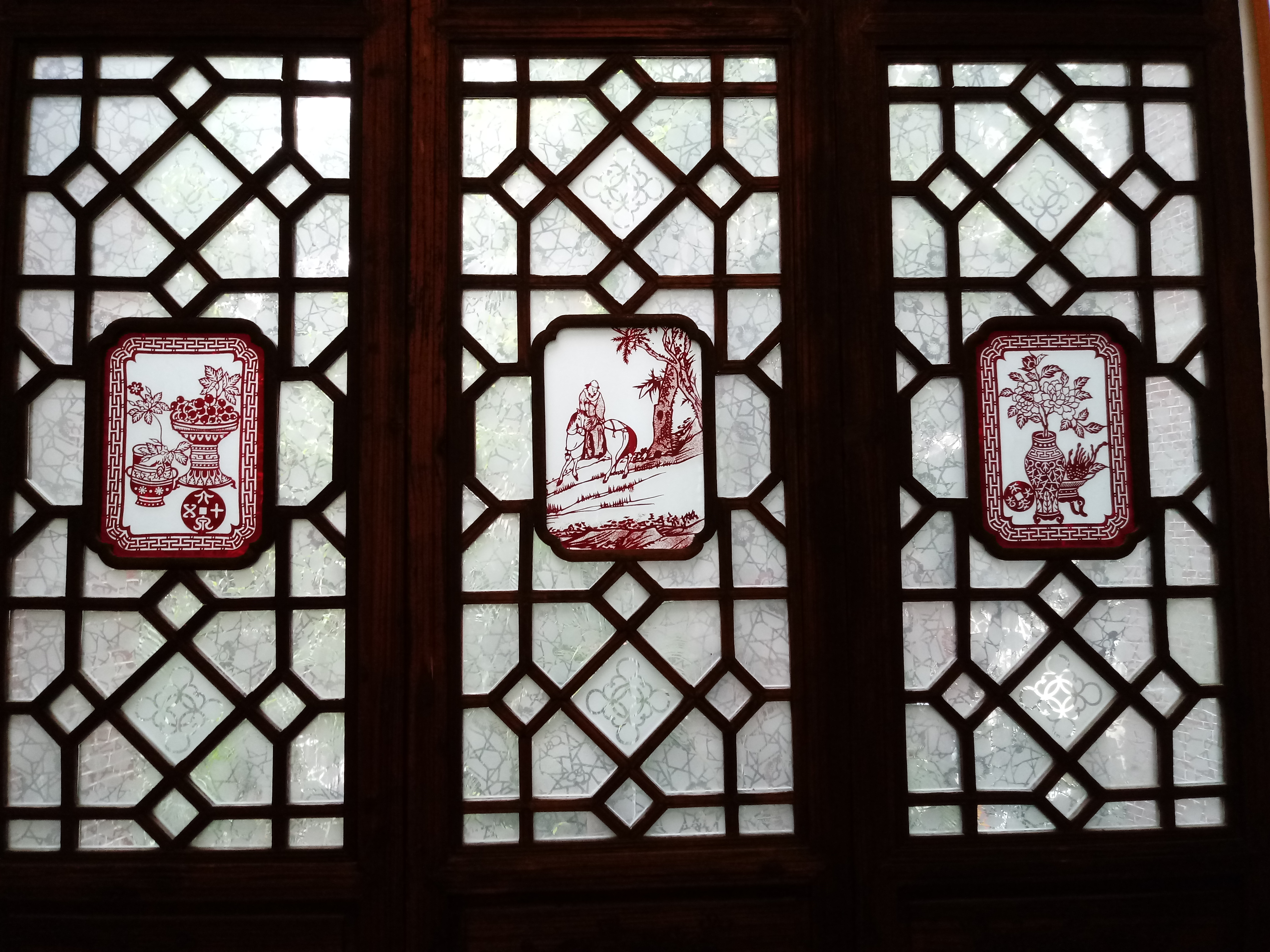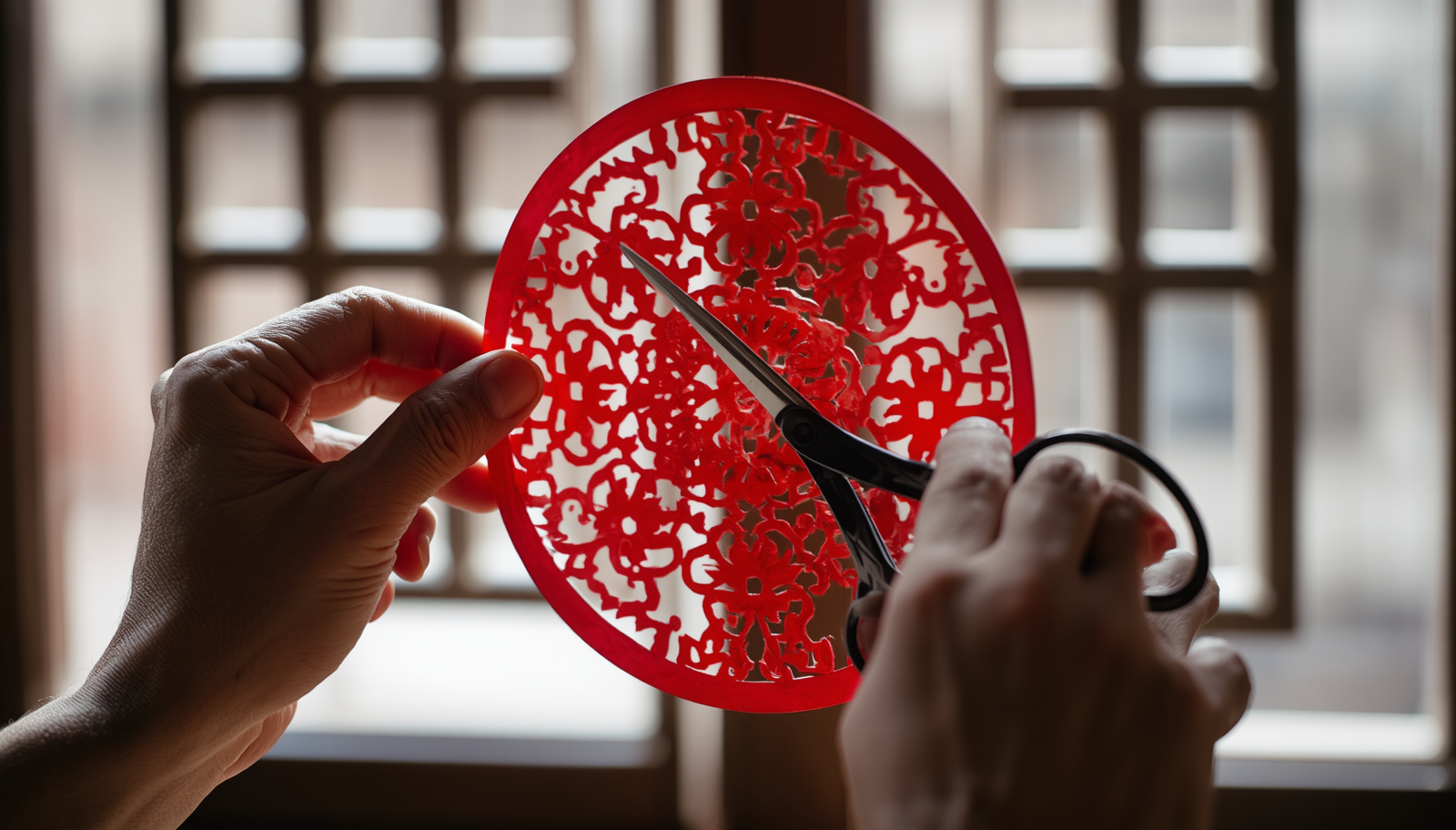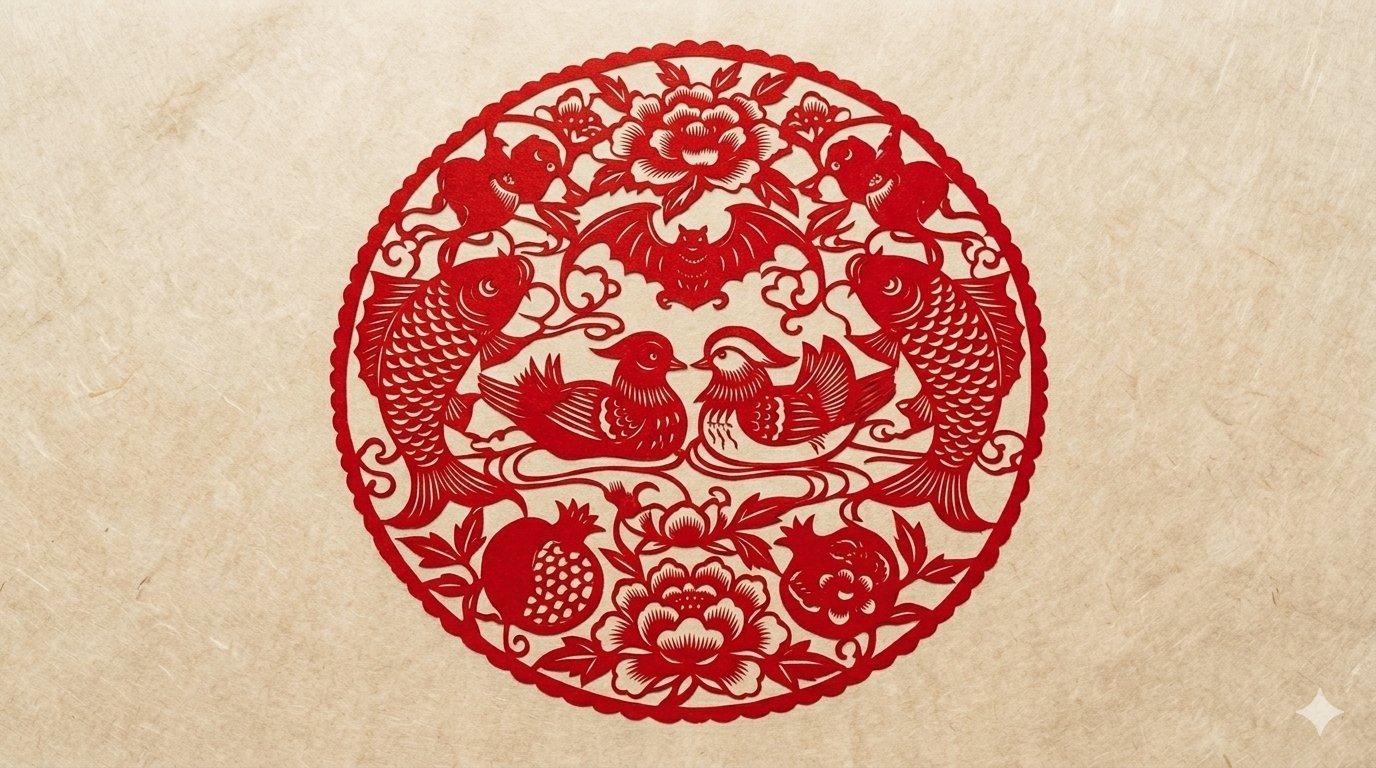
Every paper cutting hanging in a Chinese window is more than decoration. It is a wish made visible. For centuries, rural families used a small set of symbols to send messages about health, wealth, love, and long life.
Understanding these symbols is the fastest way to read a paper cutting — and once you can read one, a village street at New Year turns into a book of good wishes pasted up in red.
Why symbols matter
Chinese folk art loves puns. Many symbols were chosen because their names sound like lucky words. A bat, fu (蝠), sounds like blessing, fu (福). A fish, yu (鱼), sounds like surplus, yu (余). These sound-alikes turned simple images into spoken prayers.
Other symbols came from nature, history, or myth. Together they formed a visual language that anyone in the village could read, even without formal schooling. The heritage description of Zhuanghe paper cutting, a nationally protected tradition from Liaoning, breaks this language into three rhetorical devices, and they explain nearly every motif you will ever see:
- Metaphor (比喻): a creature or plant stands for a quality — the peony for wealth and honor, the pine for endurance, the mandarin duck for faithful love.
- Homophone (谐音双关): the image is a pun — bat for blessing, fish for surplus, lotus (lian, 莲) for "year upon year" (lian, 连).
- Written word (文字表达): the character itself becomes the picture — happiness, longevity, and above all the doubled xi of weddings, cut straight into the design.
Paper cutters rarely use these devices one at a time. As China's UNESCO heritage nomination puts it, folk cutting combines images "to borrow the meaning through the image and build the image around the meaning," assembling conventional motifs until the auspicious message is complete. A single square of red paper can therefore carry a whole sentence of hope: not just "wealth" but "wealth and honor, year after year, unto the third generation."
Eight common motifs
-
The Bat (蝠) — Blessing and good fortune. To Western eyes the bat is an unlikely emblem of joy, but the pun is exact: fu the bat is fu the blessing. Five bats together mean the "five blessings" of the classical canon: longevity, wealth, health, love of virtue, and a peaceful end of life. Cut five bats in a ring around the character for longevity, and you have wu fu peng shou (五福捧寿) — five blessings cupped around a long life — one of the most beloved compositions in all of folk art. A bat shown upside-down adds one more pun: fu dao le (福到了), "the blessing has arrived."
-
The Fish (鱼) — Abundance and surplus. The standard New Year wish nian nian you yu (年年有余), "may you have surplus year after year," is literally spelled out by cutting fish, because fish (yu) and surplus (yu) share a sound. Pair the fish with lotus — lian echoing lian, "continuous" — and the picture says lian nian you yu (连年有余): abundance in unbroken succession. A child riding a carp, or a carp leaping a dragon gate, extends the wish toward success in examinations and advancement.
-
The Peony (牡丹) — Wealth, honor, and feminine beauty. Known as the king of flowers, the peony bloomed in imperial gardens and became the fixed emblem of fugui (富贵), wealth-and-rank. Peonies with a phoenix make "wealth and honor without end"; peonies around a vase (ping, 瓶, punning on ping'an, 平安, peace) make "wealth and honor in peace." When a paper cutter wants to say "prosperity" in a single flower, the scissors reach for the peony.
-
The Peach (桃) — Long life and immortality. In myth, the peaches of the Queen Mother of the West ripened once in three thousand years and granted immortality to whoever ate them. The peach became the fruit of longevity, presented at birthday celebrations — sometimes as real fruit, often as steamed dough peaches, and always as cut paper. A peach beside the longevity character, or held by the white-bearded God of Longevity, is the standard birthday message for an elder.
-
The Pomegranate (石榴) — Fertility and many children. Split a pomegranate, and it spills hundreds of seeds; in a culture that measured family fortune in descendants, the fruit became the emblem of duo zi (多子), many sons. Cut open with its seeds showing, often beside a gourd (another seed-spiller, punning on fulu, 福禄, blessing and emolument), the pomegranate appears in wedding chamber decorations and gifts to newlyweds — a cheerful, undisguised wish for a full house.
-
The Mandarin Duck (鸳鸯) — Faithful love and marriage. Mandarin ducks were believed to pair for life, so a pair swimming among lotus flowers became the fixed image of marital harmony — yuanyang xi he (鸳鸯戏荷), mandarin ducks playing among lotuses, means husband and wife in joyful accord. The motif belongs to weddings: on bedding, on window flowers in the bridal chamber, and on gifts. Always two ducks — a single one would reverse the meaning entirely.
-
The Dragon and Phoenix (龙凤) — Cosmic balance and happy union. The dragon, emblem of the emperor and of yang energy, and the phoenix, emblem of the empress and of yin, together make long feng cheng xiang (龙凤呈祥), "dragon and phoenix present auspiciousness" — the grandest wedding motif in the repertory and a general emblem of harmonious union. In village cuttings the pair wheel around each other like partners in a dance, tails and wings filling the red square with controlled turbulence.
-
Double Happiness (囍) — Marriage and joy. The character xi (喜, happiness), doubled into the single glyph 囍, is the most common wedding symbol in China — so common that Western designers sometimes mistake it for a decorative pattern rather than a word. Cut in paper and pasted on doors, windows, mirrors, and gift boxes, it announces a marriage to the whole neighborhood. Brides once cut their own as proof of skill; today wedding suppliers sell them by the sheet, but hand-cut pairs still carry special weight.
How symbols combine
The real grammar of paper cutting appears when motifs meet. A magpie (xique, 喜鹊, the "happiness bird") standing on a plum branch says xi shang mei shao (喜上眉梢) — happiness up on the eyebrow tips — because plum tips (mei shao, 梅梢) pun on eyebrows. A monkey on a horse's back wishes ma shang feng hou (马上封侯), "may you be ennobled at once," stacking two puns in one cut. Lotus seeds (lianzi, 莲子) pun on "sons in succession," so a seedpod of lotus means children arriving one after another.
These combinations were conventional — agreed by centuries of use — so a viewer in Shaanxi could read a cutting made in Shandong. Master cutters held hundreds of such formulas in memory, which is why the UNESCO inscription describes paper cutting as carrying "rich cultural and historical information": each cutting is a small archive of the community's moral ideas, practical experience, and hopes.
Where you will see the symbols
Context sharpens meaning. The same repertory changes costume with the occasion:
- Window flowers (窗花): New Year cuttings pasted on window panes — bats, fish, zodiac animals, and the character for spring — welcoming blessing into the house.
- Wedding flowers (喜花): double happiness, mandarin ducks, dragon and phoenix, pomegranate — arranged in the bridal chamber and on gifts.
- Birthday cuttings: peaches, the God of Longevity, five bats around shou — presented to elders.
- Gate streamers (门笺): rows of small cut banners hung over doorways at New Year, mixing characters with coin and flower patterns.
- Embroidery patterns (花样): paper cuts used as templates for stitching shoes, hats, and pillowcases — which is why the same symbols reappear in cloth folk art.
Reading a paper cut
Next time you meet a Chinese paper cutting, read it in three passes. First, name the creatures and plants — every one of them is a word. Second, sound out the puns — bat, fish, lotus, vase, and magpie are the most common keys. Third, check the occasion — a window flower wishes a good year, a red pair of ducks wishes a good marriage. You will rarely be wrong, because the language was built to be legible: folk art speaking to everyone, not to connoisseurs.
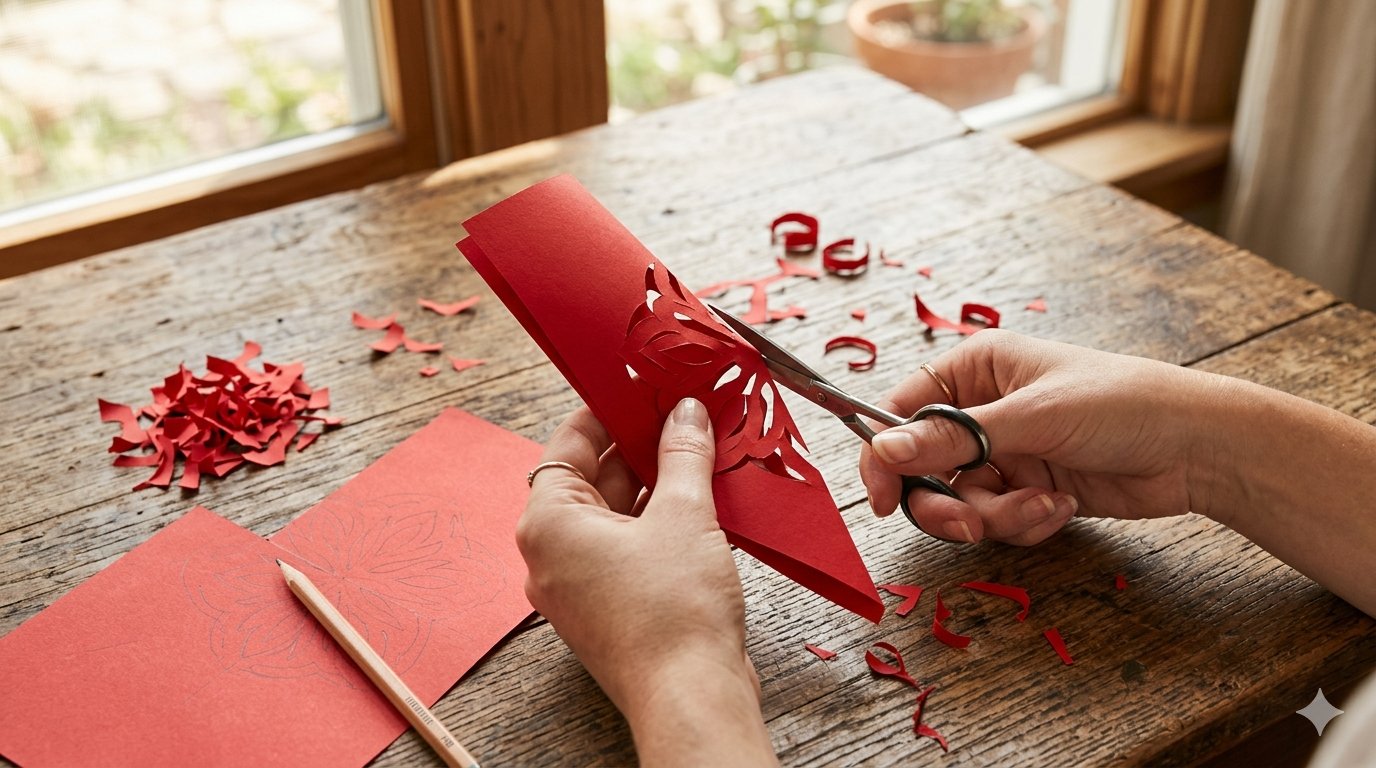
For the long story behind the craft, see our history of Chinese paper cutting and the essay on how red paper became a language. And if reading the symbols makes you want to cut your own, our beginner's tutorial starts with a single folded square.
Frequently asked questions
Why are bats lucky in Chinese paper cutting?
Because of a pun: the word for bat, fu (蝠), sounds identical to the word for blessing, fu (福). Five bats stand for the five blessings — longevity, wealth, health, virtue, and a peaceful end — and an upside-down bat puns on "the blessing has arrived." Far from sinister, the bat is one of the most auspicious creatures in Chinese folk art.
What does a fish mean in Chinese paper cutting?
A fish means abundance, because fish (yu, 鱼) sounds like surplus (yu, 余). Cut for New Year, it voices the wish "may you have surplus year after year." Combined with lotus, it means abundance in continuous succession; a leaping carp adds wishes for examination success and advancement.
What is the double happiness symbol?
Double happiness, 囍, is the character xi (喜, happiness) written twice and fused into one glyph. It is the universal emblem of Chinese weddings, cut in paper and pasted on doors, windows, mirrors, and gifts to announce and bless a marriage.
How do paper cutters combine symbols?
By stacking metaphors, homophones, and characters into fixed formulas: five bats around the longevity character means "five blessings surround long life"; a magpie on a plum tip puns "happiness on the eyebrow tips"; lotus with fish says "surplus year after year." These combinations were conventional, so viewers across China could read them.
Where are paper-cut symbols used besides windows?
The same repertory appears on wedding chamber decorations, birthday gifts, New Year gate streamers, lantern shades, and as paper templates for embroidery on shoes, hats, and pillowcases. The occasion selects the motif: double happiness for weddings, peaches for birthdays, bats and fish for New Year.
Author
This article was prepared by the team at ChineseFolkCrafts.com. We are not intangible-cultural-heritage inheritors or museum researchers. Our job is to find authoritative Chinese sources, understand them, and explain them clearly for international readers.
If you spot an error — a date, a translation, a misattributed custom — please let us know and we will correct it. Last updated 2026-07-13.