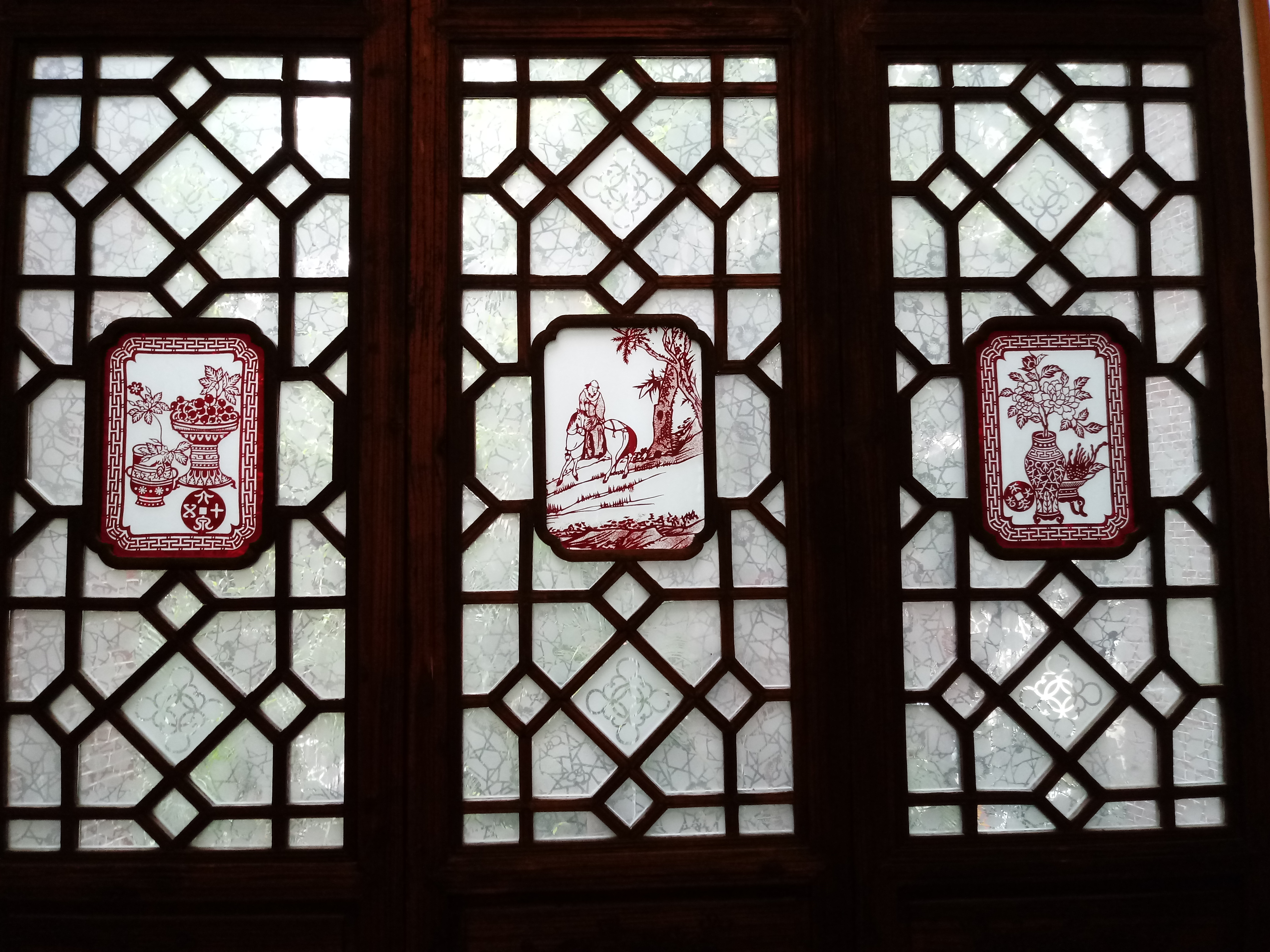
Before it became an art form admired in museums, paper cutting was a language spoken by women in rural China — a way to mark births, weddings, harvests, and the turning of the year.
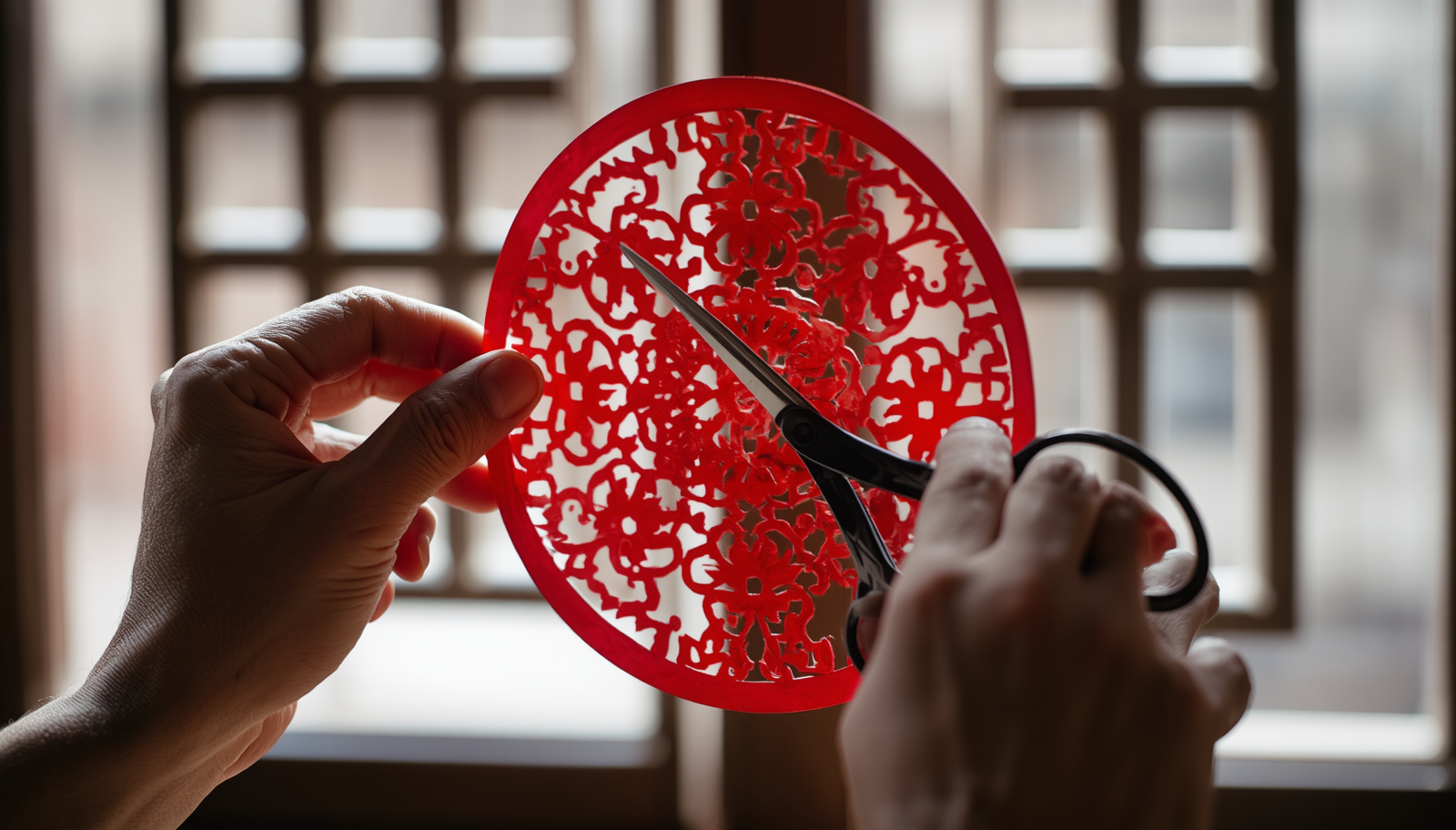
Walk through a village in northern China during the Lunar New Year and you will still see it: red paper cut into flowers, animals, and characters, pressed against window glass so that sunlight filters through the negative space. To outsiders, these decorations are beautiful. To those who grew up with them, they are a code.
From windows to wishes
The origins of Chinese paper cutting, or jianzhi (剪纸), are difficult to pin down. Some historians trace it to the Han dynasty, when paper itself was invented; others argue it emerged later, after paper became affordable enough to cut and discard. What is clear is that the underlying technique — cutting openwork patterns from thin sheets — is older than paper: people were carving gold foil, leather, silk, and even leaves with the same grammar of piercing and silhouette before paper existed to receive it.
The full chronology is a story in itself — the Northern Dynasties tomb medallions unearthed near Turfan, Du Fu's Tang-dynasty line about cut paper summoning a traveler's soul, professional cutters selling window flowers in Song-dynasty streets, the Ming-Qing golden age that covered gates, cupboards, and ceilings with red wishes — and it is told in A History of Chinese Paper Cutting. What matters here is what those fifteen centuries produced: not just a decoration, but a vocabulary.
In its earliest form, paper cutting was not meant to last. It was made for festivals, pasted on windows and doors, then burned or replaced when the season changed. The impermanence was part of the point: a fresh cut for a fresh year, a red paper blessing to welcome spring and ward off misfortune.
"A window without paper cuts is like a face without eyebrows." — Northern Chinese folk saying
Video: Cutting a classic Chinese New Year window flower, via YouTube.
A women's art
One fact sets Chinese paper cutting apart from most recognized art forms: its carriers were, overwhelmingly, ordinary rural women. China's UNESCO heritage documentation states it plainly — the main body of transmission for folk paper cutting has been the country's hundreds of millions of working women, among whom the art spread and renewed itself "like wildflowers over the mountains, blooming year after year."
A girl learned the scissors the way she learned other nügong (女红), the womanly needle arts: watching her mother and grandmother through the winter evenings, first cutting simple flowers, then festival sets, then the wedding repertory. A woman's cuts were her credentials — brides were judged on the fineness of their window flowers, and a respected cutter's patterns were borrowed, traced, and re-cut across neighboring villages. In communities where many women had little access to formal schooling, the scissors became a fluent pen. The cuts recorded what mattered: a birth, a betrothal, a prayer for grain, the hope of sons, the wish that an old parent see one more spring.
This is why the art is described as a language rather than a decoration. Paper cutting accompanied every passage of life —张贴 for doors and windows, 摆衬 to dress gifts and offerings, 刺绣底样 as the pattern-base for embroidery on shoes and hats, and 印染 as stencils for printed cloth. To cut was to say something in the only public medium many women controlled.
What the scissors say
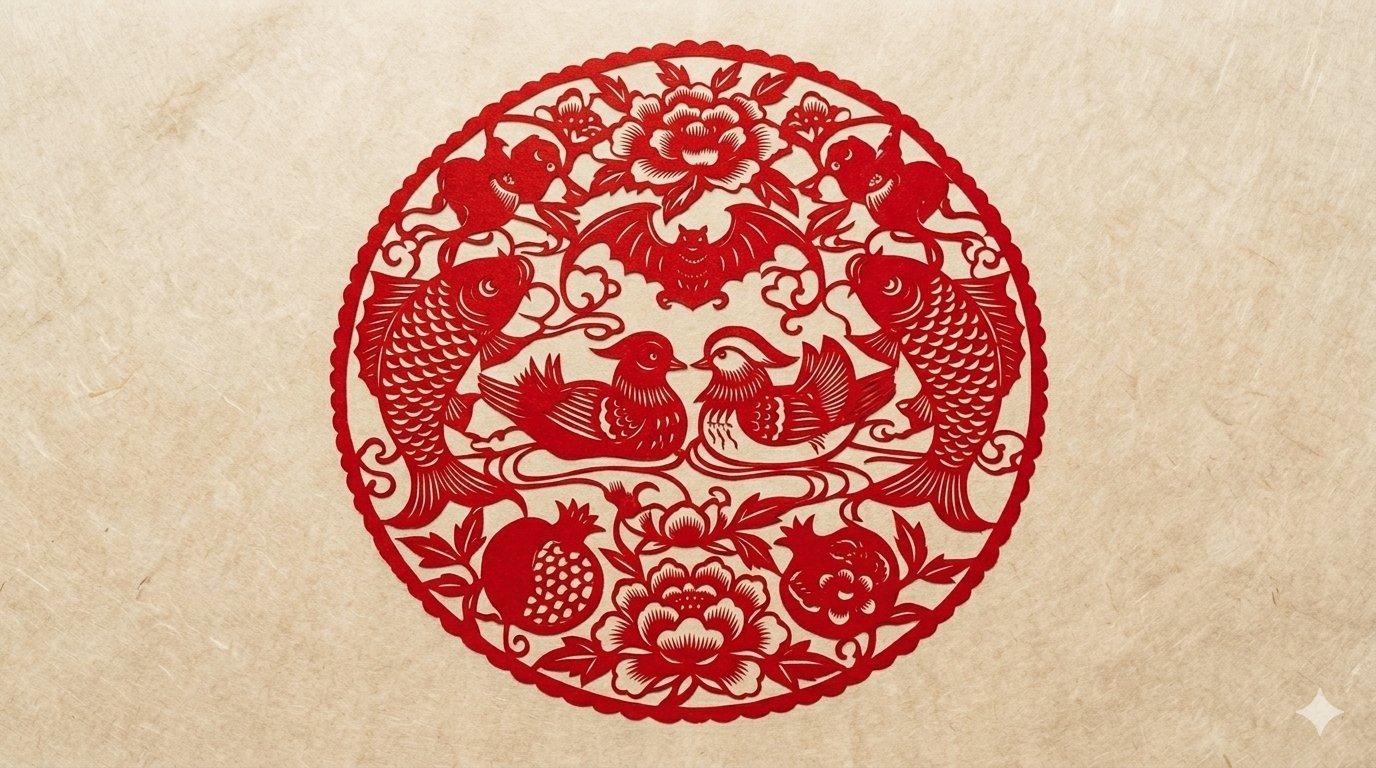
The language of paper cutting runs on puns. Chinese is dense with homophones, and folk cutters exploited them mercilessly: the word for bat, fu, sounds exactly like the word for blessing, so a bat means good fortune; the word for fish, yu, sounds like surplus, so a fish means abundance. A motif, in other words, is a word — a visual pun that any viewer could sound out at a glance.
Put words together and you get sentences. A lotus beside a fish does not merely decorate; it says "may you have surplus year after year." A magpie perched on the tip of a plum branch puns "joy reaches the tip of your brow." Cutters called this "borrowing meaning through the image" — combining conventional motifs until the auspicious message completes itself. A gift of paper cuttings at a wedding was never just ornament; it was a layered message of fertility, prosperity, and family continuity that every guest in the room could read.
For the dictionary itself — the eight classic words of this language, decoded motif by motif — see our guide to 8 Auspicious Symbols in Chinese Paper Cutting.
Regional voices, same scissors
One of the remarkable things about Chinese paper cutting is how differently it sounds from place to place. In Shaanxi and Hebei, the style tends to be bold and vigorous, with thick lines and exaggerated figures. In the south, especially around Yangzhou, the cuts become delicate and intricate, almost lace-like.
The Yuxian paper cuts of Hebei are famous for their bright colors, dyed after cutting. Known locally simply as "window flowers," the Yuxian tradition runs about two hundred years: it began with auspicious flower patterns, absorbed the flavor of Yangliuqing and Wuqiang New Year prints, and was transformed when artists like Liu Laobu reformed the tools — replacing single-sheet scissors with small knives that could cut a stack at once — and when the early twentieth-century master Wang Laoshang pushed the style toward opera characters and faces. Yuxian work is yin-cut at its core, lines removed and masses kept, then dotted with intense color, giving it a theatrical richness unlike anywhere else. The Foshan cuts of Guangdong often include copper foil and gold; the fine-line carving of Yueqing in Zhejiang can fit dozens of hair-width grooves into a square inch.
Each region adapted the craft to local materials, beliefs, and aesthetics, creating distinct dialects of the same visual language. China's national heritage list now records fifty-six separate paper-cutting traditions from twenty-two provinces — from the Manchu cutting of the northeast to the Shui-people cutting of Guizhou — all branches of one art.
Recognition and revival
The twentieth century nearly broke the chain, then deliberately repaired it. After the May Fourth movement, scholars like Cai Yuanpei and Lu Xun championed the study of folk culture and began collecting paper cuts as serious evidence of Chinese folk aesthetics. In the 1940s, artists in the Yan'an base area exhibited new northern cuttings drawn from real life — the first time the village art was consciously reframed as modern art. After 1949, state folk-art research institutionalized that interest.
Formal protection followed: paper cutting entered China's first national list of intangible cultural heritage in May 2006, and in 2009 Chinese paper cutting was inscribed on UNESCO's Representative List of the Intangible Cultural Heritage of Humanity. Forty-seven master cutters — thirty women, seventeen men — have been named national-level representative inheritors. The gender of that roster quietly confirms what the wildflowers always said.
Why it still matters
Today, paper cutting is recognized by UNESCO as an Intangible Cultural Heritage. Master cutters give demonstrations in museums and cultural centers. Yet the craft's deeper power may still lie in ordinary hands: a grandmother cutting a rabbit for a grandchild's birth year, a teacher preparing window decorations for a classroom, a bride receiving a pair of mandarin ducks as a wedding gift.
In an age of digital images, the slowness of paper cutting feels radical. Each cut is irreversible. There is no undo button, only the next careful slice. That concentration, and the cultural memory carried in every pattern, is what keeps the practice alive.
Try it yourself
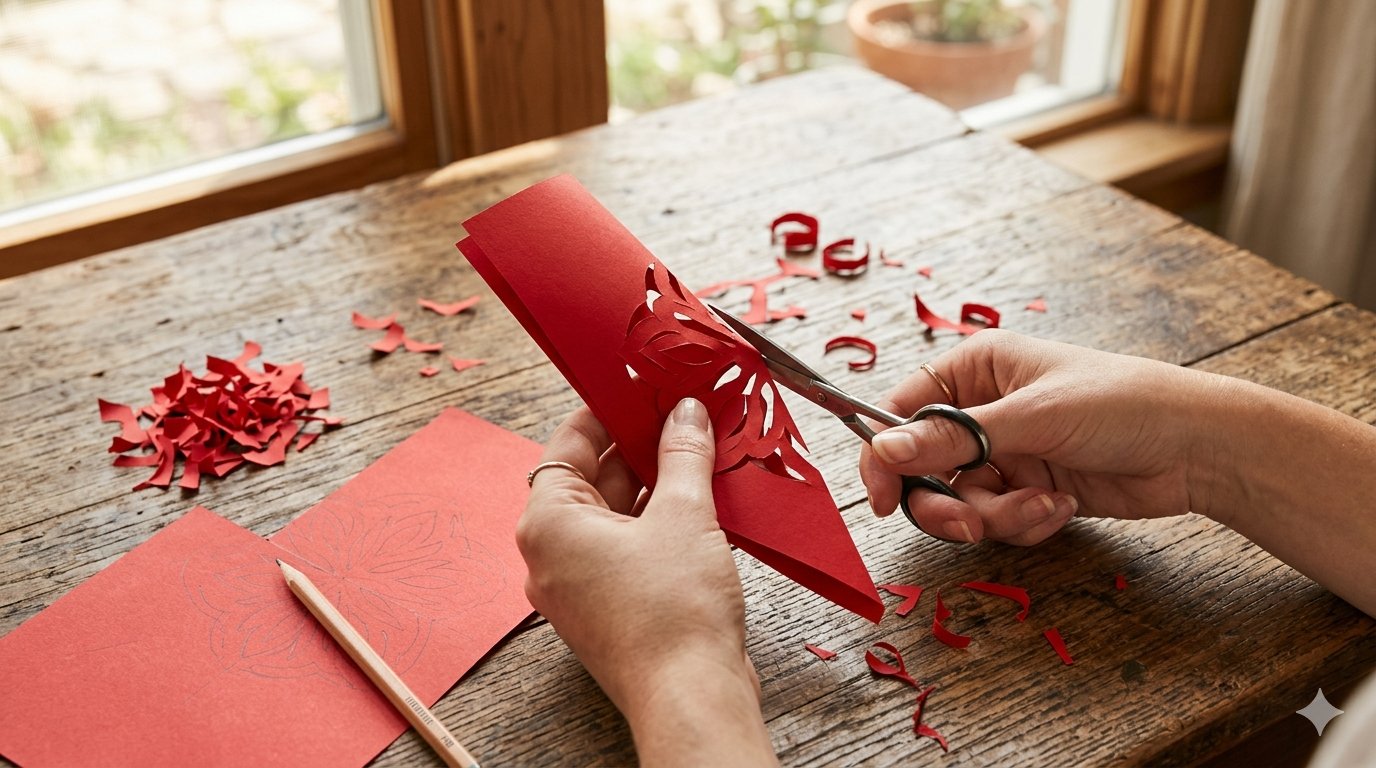
You do not need special training to begin. A sheet of red paper, a small pair of sharp scissors, and a simple pattern are enough. Start with a four-fold snowflake-style design, then progress to more open cuts — our beginner's tutorial walks through it step by step, and the full history of the craft shows what three thousand years of hands have done with the same few moves. The goal is not perfection; it is to feel how a flat sheet of paper can suddenly contain a story.
Frequently asked questions
What is jianzhi?
Jianzhi (剪纸), Chinese paper cutting, is the folk art of cutting or carving patterns from paper with scissors or small knives, used to decorate homes and accompany festivals and life-cycle rituals. Practiced across China for well over a thousand years, it was inscribed on UNESCO's Representative List of Intangible Cultural Heritage in 2009.
How old is Chinese paper cutting?
The technique of cutting openwork patterns in thin materials predates paper, but the oldest surviving paper cuttings are five folded medallions from Northern Dynasties tombs near Turfan, dated to roughly the fifth or sixth century. Tang dynasty poetry already describes cutting paper to summon a traveler's soul, so the art is at least 1,500 years old.
Why is paper cutting called a women's art?
Because its principal carriers were rural women, who learned the scissors as part of the womanly arts and used cuts to mark births, weddings, and festivals. China's heritage documentation names the country's working women as the main body of transmission, and thirty of the forty-seven national-level representative inheritors are women.
What are the main regional styles of Chinese paper cutting?
The north favors bold, vigorous cutting — Shaanxi, Shanxi, and the color-dyed knife cuts of Yuxian in Hebei. The south favors fineness — the lace-like cutting of Yangzhou, the hair-line carving of Yueqing, and the foil-backed work of Foshan. China's national heritage list records fifty-six distinct paper-cutting traditions from twenty-two provinces.
Is Chinese paper cutting still practiced today?
Yes. It is protected as national and UNESCO-recognized heritage, taught in schools, demonstrated by master inheritors, and still used for New Year window flowers and wedding decorations. Many rural cooperatives also produce cuttings for the craft market, keeping both the scissors and the vocabulary in use.
Author
This article was prepared by the team at ChineseFolkCrafts.com. We are not intangible-cultural-heritage inheritors or museum researchers. Our job is to find authoritative Chinese sources, understand them, and explain them clearly for international readers.
If you spot an error — a date, a translation, a misattributed custom — please let us know and we will correct it. Last updated 2026-07-14.