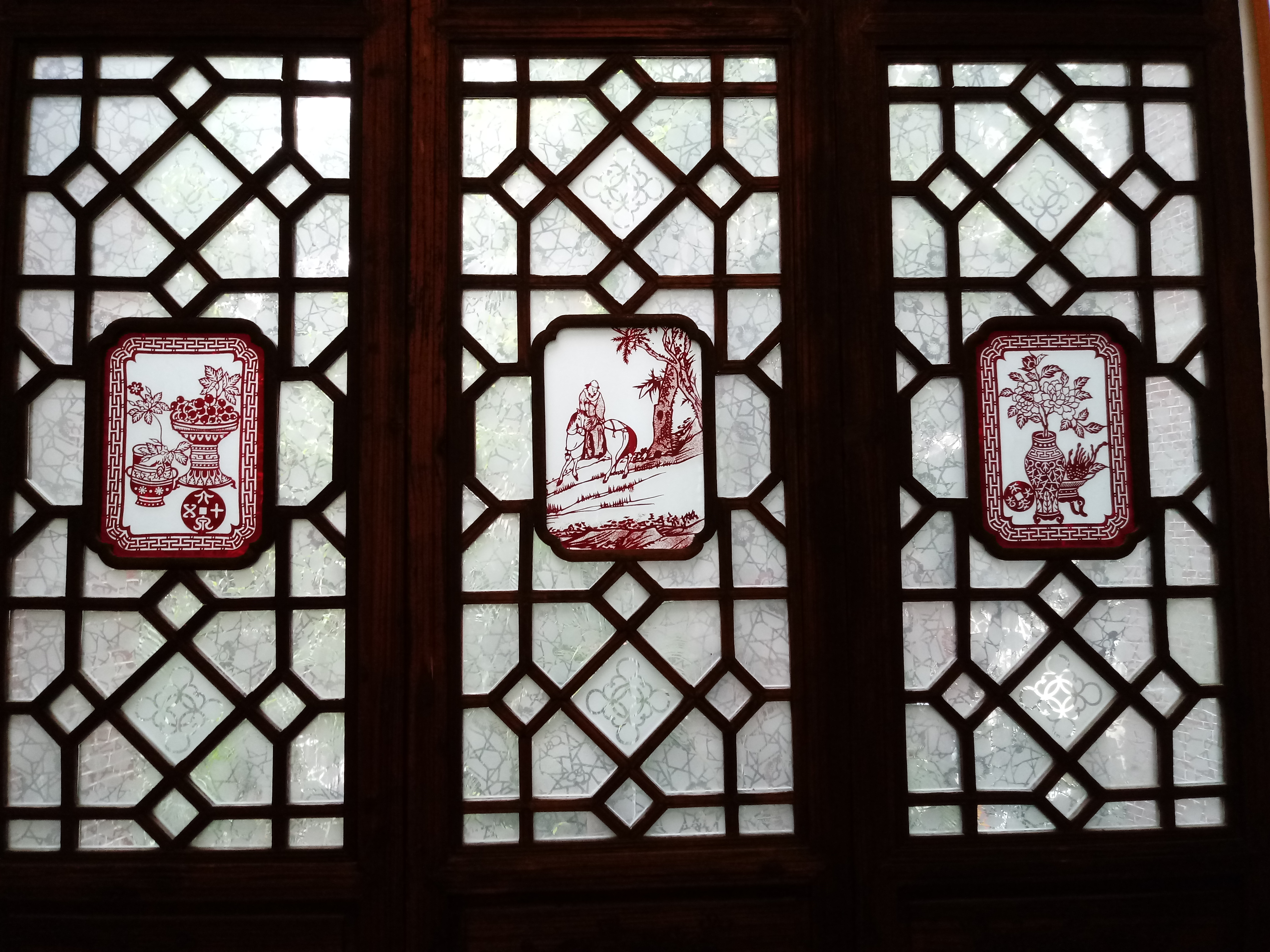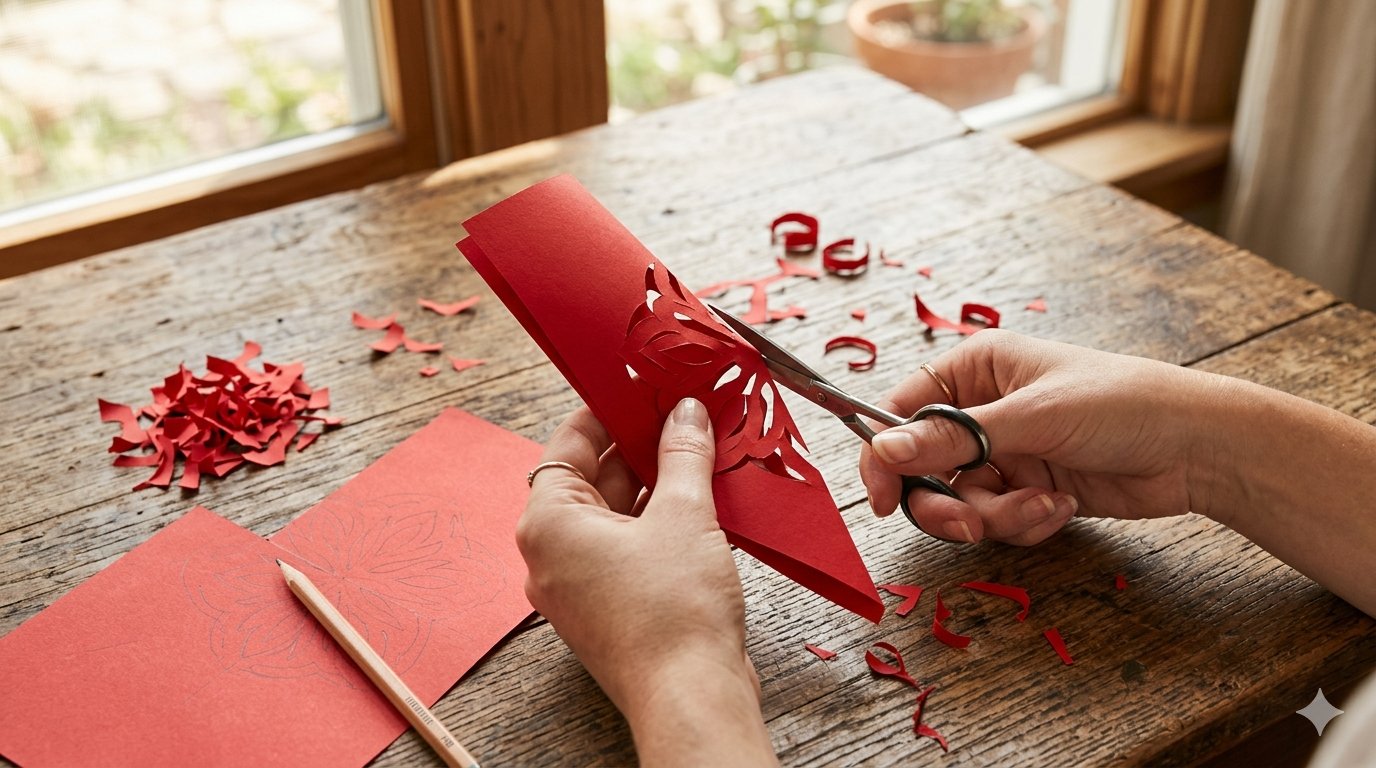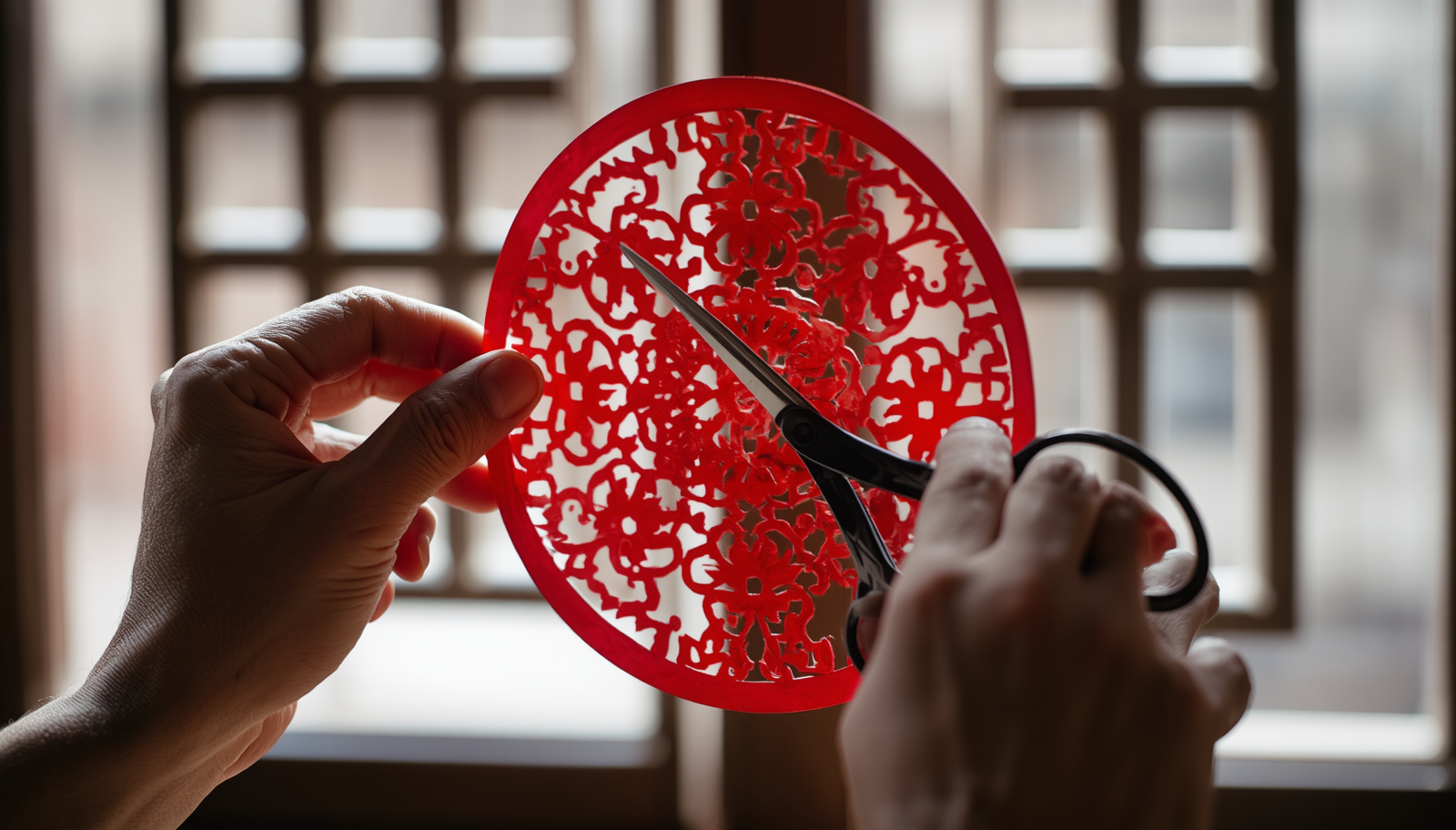
On the twenty-third day of the twelfth lunar month, the kang stove in a Shaanxi cave dwelling still holds a little warmth. An old woman reaches to the bottom of a cabinet and pulls out a few folded sheets of red paper. The tip of her scissors meets the center, her wrist turns gently, and crimson flecks fall into a basket like autumn leaves. On the window appear a plump pomegranate, a pair of twin lotuses, or a smiling child with topknots. Such nights have repeated themselves across Chinese villages for centuries. No one remembers who sharpened the first pair of scissors, but nearly every Chinese child knows that red: it is New Year, it is joy, it is a charm against evil, and it is a wish left unspoken.
This is Chinese paper cutting — an art that speaks through what is removed and what remains. In 2006, it entered China’s first national list of intangible cultural heritage; in 2009 UNESCO added it to the Representative List of the Intangible Cultural Heritage of Humanity. From official archives back to the village stove, its true record is carved into every window, every bridal sedan chair, and every pair of hands that have worked a lifetime.
Video: An introduction to Chinese paper cutting as intangible cultural heritage, via YouTube.
Before paper: roots of cutting and carving
Paper became common in the Western Han dynasty, yet the Chinese instinct to cut is far older. Before paper existed, people already carved and cut thin materials — gold foil, leather, silk, even leaves — for ritual, shamanic practice, and decoration. The logic was the same: a flat sheet, a sharp edge, and a pattern born from absence.
When paper finally became cheap enough to reach ordinary homes, the scissors found their gentlest stage.
Han to Tang: from tomb offerings to printed patterns
The oldest surviving Chinese paper cuts were discovered near Turpan, in the dry sands of the Flaming Mountains: five circular medallions from the Northern Dynasties period, folded repeatedly, so the design mirrors itself around a center. Fifteen centuries of desert silence preserved them.
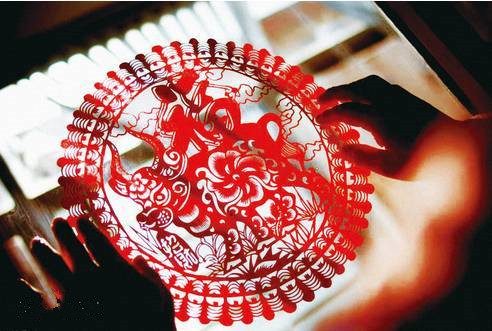
By the Tang dynasty, paper cutting had moved beyond the tomb. The poet Du Fu wrote, "Warm water washes my feet; cut paper summons my soul," recording a folk custom of calling back the spirit. At the same time, paper cuts found a practical role as stencils: thick paper was carved into a pattern, dye was pressed through the openings, and plain cloth bloomed with repeated peonies and butterflies. One sheet of paper began to mass-produce beauty.
Song and Yuan: paper cutting becomes a craft and a trade
The Song dynasty brought mature paper making and a wide variety of papers. Paper cutting left the temple and entered the market. By the Southern Song, professional cutters sold ready-made window flowers and shoe patterns in city streets.
More remarkably, paper cutting began to cross into other arts. At Jizhou kilns in Jiangxi, ceramicists applied paper-cut patterns to porcelain before glazing and firing, leaving ghost-like floral shadows. Shadow-puppet figures borrowed the same hollowed silhouette. Blue calico printing used paper-cut resists — yin carving, yang carving, long lines cut and short dots separating void from solid. The language of a single red sheet quietly seeped into ceramics, theater, and clothing.
Ming and Qing: paper flowers on every door
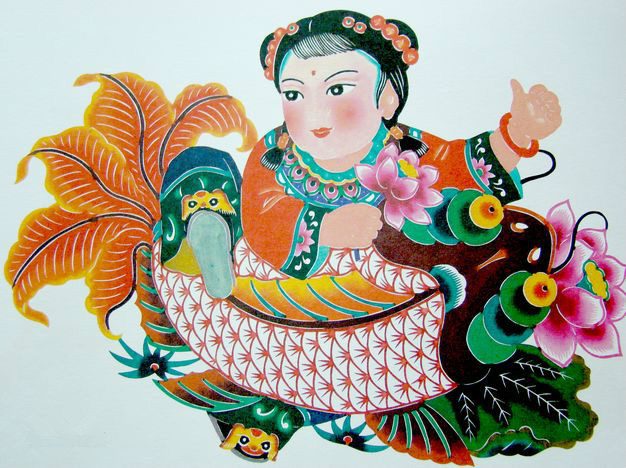
The Ming and Qing dynasties were the golden age of folk paper cutting. It was no longer the preserve of ritual or the elite; it moved into daily life. Door strips, window flowers, cabinet decorations, wedding ornaments, ceiling medallions — every festival and life passage had its paper.
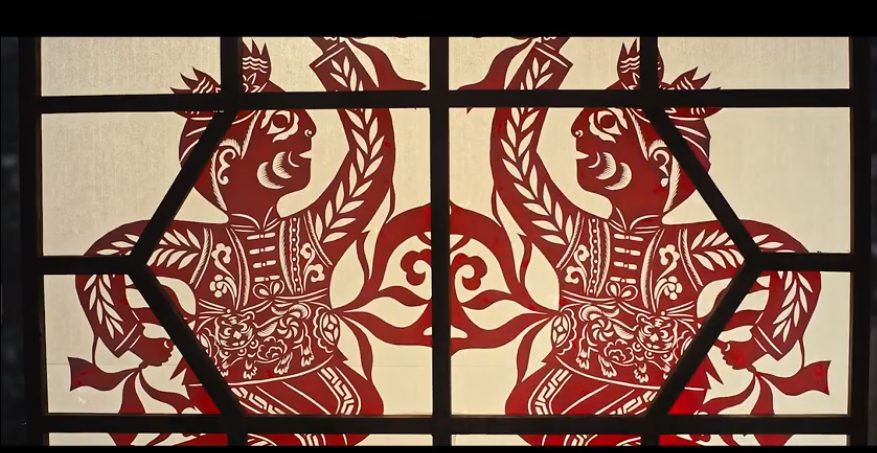
This era also set the regional dialects of the art. On the Loess Plateau, cuts were bold and free, lines like wind. In the south, especially around Yangzhou, they grew delicate and lace-like. Yuxian in Hebei became famous for dyed paper cuts; Yangzhou for fine-line engraving; Ansai in Shaanxi for vigorous, almost totemic figures. Different soils sharpened different blades.
The 20th century: folk art, revolution, and revival
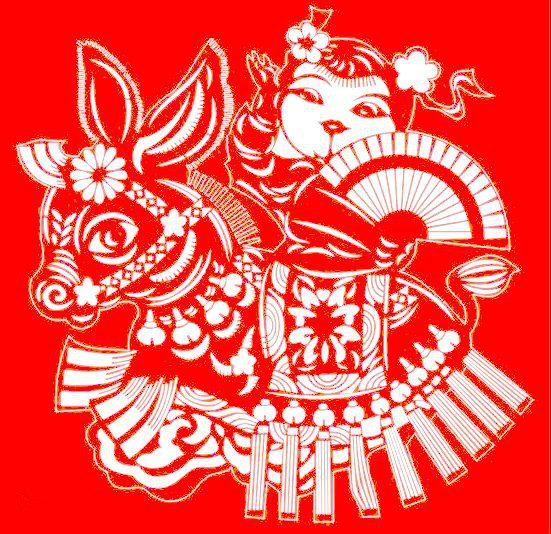
In the early twentieth century, intellectuals such as Cai Yuanpei, Lu Xun, Liu Bannong, and Zhou Zuoren began collecting folk art as a subject worthy of study. Paper cutting was no longer mere "vulgar custom"; it was recognized as art. In the 1940s, artists in Yan’an created new paper cuts depicting contemporary life, giving the ancient craft a modern pulse.
After 1949, the state policy of "letting a hundred flowers bloom and weeding through the old to bring forth the new" produced a wave of socialist-themed paper cuts. Then, after the 2006 and 2009 heritage designations, paper cutting returned to cultural memory: both preserved in museums and still pasted on Shaanxi windows.
Why three thousand years did not silence the scissors
Paper cutting survived not because it was listed in a register, but because it was never an isolated art. It clung to the calendar and to rites of passage: a window without paper cuts does not feel like New Year; a wedding without red paper does not feel complete; a bride’s dowry without embroidered shoe patterns lacks blessing.
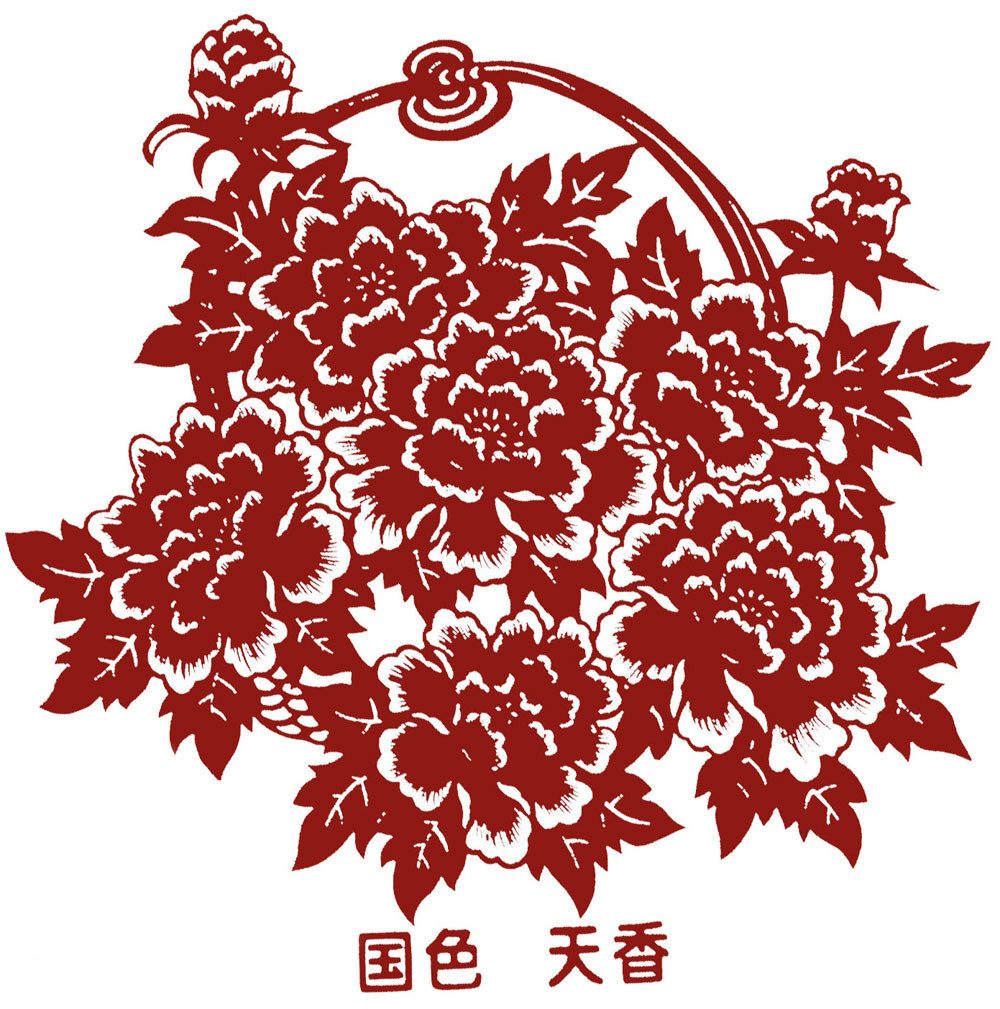
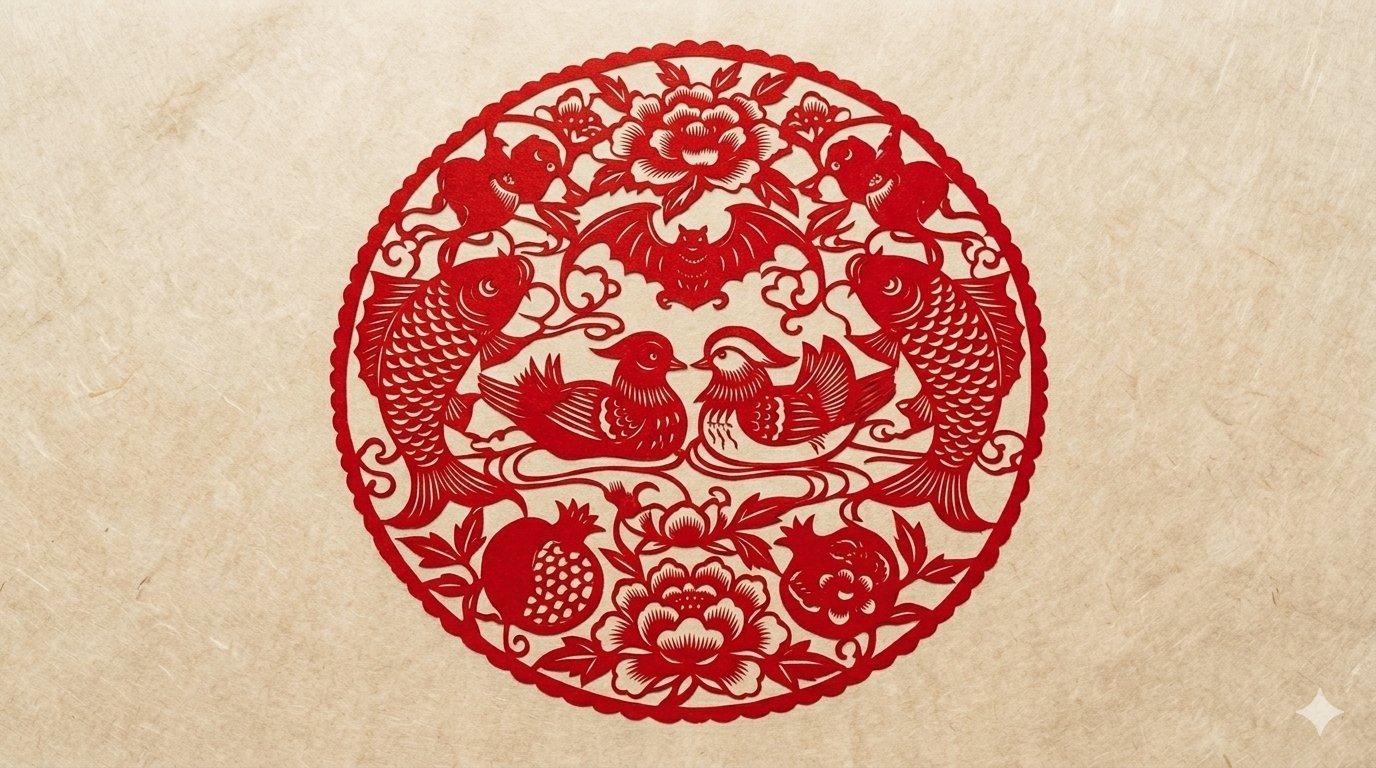
It also carried China’s most modest wishes. Fish means surplus; pomegranate means many children; bat is a homophone for blessing; double gourd means fortune and salary. The scissors do not merely cut shapes — they cut prayers for abundance, health, and family continuity.
How to read a Chinese paper cut today
When you look at a Chinese paper cut today, read it on three levels:
- The blade. Is it yin carving, where the outline is cut away, and large surfaces remain, giving weight and contrast? Or yang carving, where the lines themselves are kept, and every line connects, creating lightness and clarity?
- The meaning. Recognize the rebus and symbol. Lotus and fish form "abundance year after year"; a magpie on a plum branch says "joy reaches the brow."
- The place. Northern cuts often speak of farming and fertility; southern cuts echo opera and literati refinement.
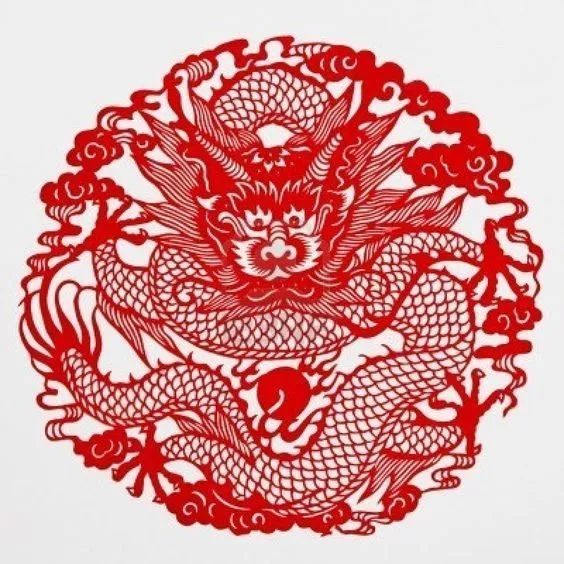
Once you read this way, a red sheet is no longer just decoration. It is a folk epic you can hold in your hands.
To go deeper into what the motifs say, read The Red Paper That Became a Language — our essay on how rural women turned red paper into a language of blessing — and keep 8 Auspicious Symbols in Chinese Paper Cutting at hand as a motif-by-motif dictionary.
Try it: one fold, one cut, one wish
History need not stay distant. Take a square of red paper, fold it in half, then in half again. Cut a half circle, a heart, or the character for spring. When you open it, you will have repeated an action handed down for a thousand years. The most moving thing about paper cutting may be that ordinary people, with a single pair of scissors, can still carve a little extraordinary light into an ordinary day.
Author
This article was prepared by the team at ChineseFolkCrafts.com. We are not intangible-cultural-heritage inheritors or museum researchers. Our job is to find authoritative Chinese sources, understand them, and explain them clearly for international readers.
If you spot an error — a date, a translation, a misattributed custom — please let us know and we will correct it. Last updated 2026-07-15.