Chinese Kite Symbolism: Bats, Butterflies, and Auspicious Meanings
Pick up a traditional Chinese kite and you are holding more than bamboo, paper, and silk. You are holding a folded letter written in pictures. For over two thousand years, Chinese kite makers have painted birds, beasts, flowers, and characters onto kite surfaces so that every launch carries a wish skyward: health, wealth, long life, happy marriage, and a peaceful home [source:1]. Whether you are a parent introducing children to world crafts, a teacher planning a culture lesson, or a maker who wants your next kite to mean something, understanding Chinese kite symbolism turns a simple afternoon activity into a conversation with history.
If you want to know how these decorated objects evolved from military tools to folk art, read our overview of Chinese kites from war signals to sky art.
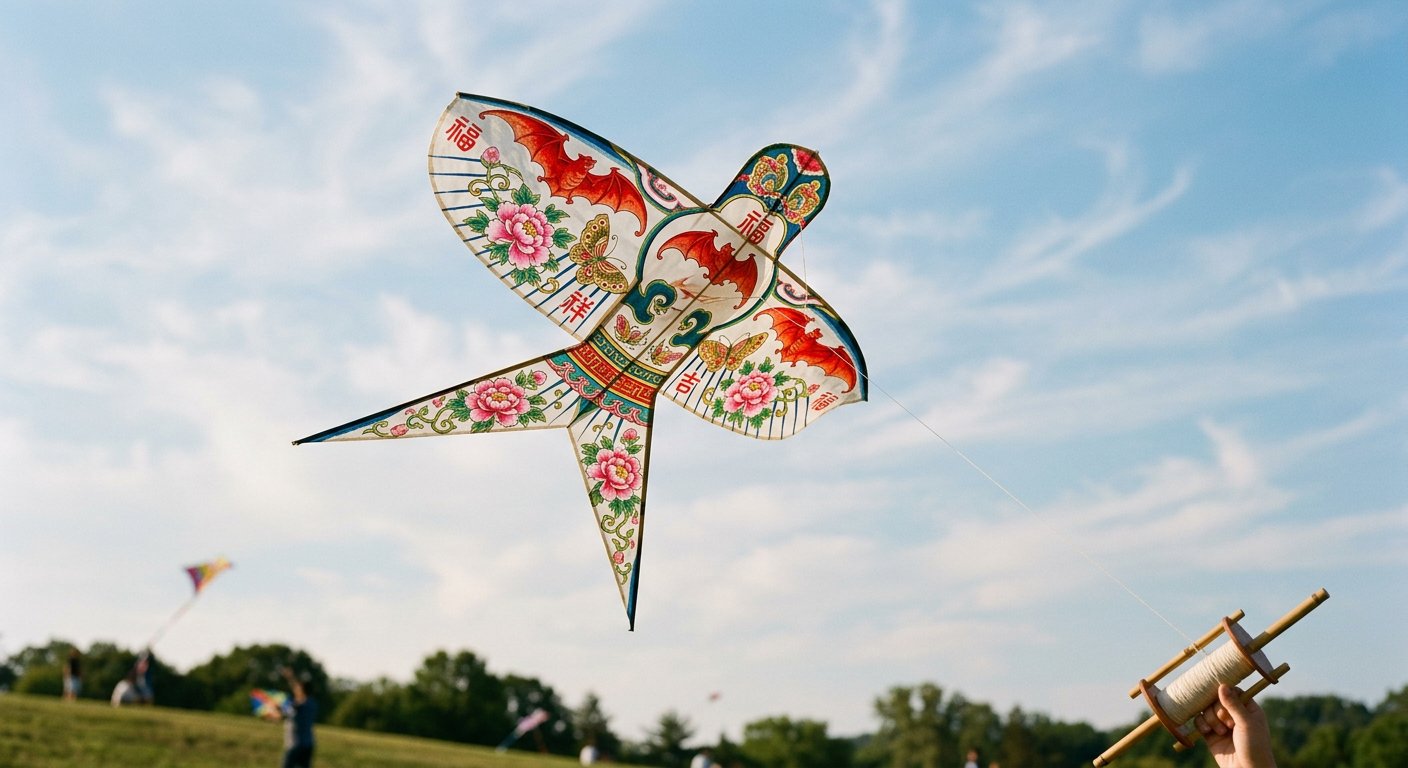
A traditional Chinese swallow kite layers bats, butterflies, and flowers into one soaring good-luck message.
More Than a Toy: Why Chinese Kites Carry Messages
Kites in China are ancient. Mozi and Lu Ban are credited with early wooden kites (muyuan) in the 5th century BC, and once paper became common in the Han dynasty, lighter paper kites (zhiyuan) spread from military signal posts into gardens and festival grounds [source:1]. By the Tang dynasty, craftsmen attached bamboo whistles so the kite hummed like a zheng instrument, giving the modern object its name: fengzheng, or "wind zheng" [source:1].
As the craft moved from battlefields to backyards, decoration became central. A kite was no longer just a flying machine; it was a mobile blessing hung in the sky. Because spring was the season for flying, kite decoration merged naturally with the hopeful, renewal-minded art of the new year.
The Language of Symbols: How Kites Speak in Pictures
Chinese folk art often uses a visual language built on three devices: homophones, visual metaphor, and accumulated cultural memory [source:4]. A picture of a fish (yu) whispers "surplus" because the word for fish sounds like the word for extra. A peony speaks wealth because it was once the queen of imperial gardens. A pair of mandarin ducks quietly announces a faithful marriage. Kite makers borrowed this vocabulary and gave it wings.
The result is a surface covered in "one auspicious phrase, one pattern." A kite may carry several layers of meaning at once: a swallow body for the joy of spring, a border of bats for blessings, a pair of butterflies for happiness, and a peony spray for prosperity [source:2]. When the kite rises, the message rises with it, as if the sky itself were receiving the household's hopes.
This symbolic richness is one reason traditional kites remain popular family projects. If you would like to build one, our guide on how to make a traditional Chinese kite explains the classic zha, hu, hui, fang steps: bind, paste, paint, and fly.
Bats: Little Creatures, Big Blessings
To many Western eyes, bats are creatures of the night. In Chinese kite art, they are tiny ambassadors of good fortune. The reason is sound: the word for bat, fu 蝠, is pronounced almost exactly like fu 福, the word for blessing, good fortune, and happiness [source:4]. Over centuries, artists redesigned the bat with rounder wings, swirling scrolls, and cheerful faces until it became one of the most welcoming symbols in folk art.
On a kite, bats appear in many forms. A single bat may simply mean "blessing." Five bats arranged together represent the "Five Blessings" drawn from the ancient Book of Documents: longevity, wealth, health, virtue, and a peaceful end [source:4]. The design "A Hundred Bats" (baifu) multiplies the wish into abundance. Some Beijing swallow kites, especially the famous "Blessing Swallow" (fuyan), can cover an entire wing surface with stylized bats [source:4]. Other popular combinations include:
- Fu at the Eyebrows (fuzai meishao): a bat near plum blossoms, playing on the homophone for "eyebrow" to mean good fortune arriving.
- Blessings Before the Eyes (fu zai yanqian): a bat placed near coins or eyes to say "good fortune is right in front of you."
- Blessings and Longevity Together (fushou shuangquan): bats paired with peaches or the character for longevity.
So the next time you see a bat on a kite, remember: in this context, it is not a Halloween decoration. It is a sky-bound thank-you note for the good things already on their way.
Butterflies: Joy, Love, and Long Life
Butterflies add lightness and color to kite design, but they are never just decorative. Because hudie sounds like the word for an elderly person's age, "eighty" (die), butterflies carry wishes for a long life [source:4]. They also evoke joy, transformation, and the playfulness of spring. A kite covered in butterflies is essentially saying, "May life be long and full of delight."
One of the most charming kite motifs pairs a butterfly with a cat. The cat (mao) and butterfly (die) together form maodie, a traditional phrase for a long life of seventy to eighty years [source:2]. Other butterfly designs include:
- A Hundred Butterflies Celebrating Spring (bainao naochun): a riot of butterflies suggesting renewal and family happiness.
- Butterflies Seeking Fragrance (jiadie xunfang): butterflies among flowers, associated with romance and the sweetness of life.
- Butterfly and Peony (hudie mudan): combining beauty with prosperity.
Beijing's swallow kites often place butterflies alongside bats and peonies, so one kite can wish the flyer blessings, long life, and wealth at once [source:2].
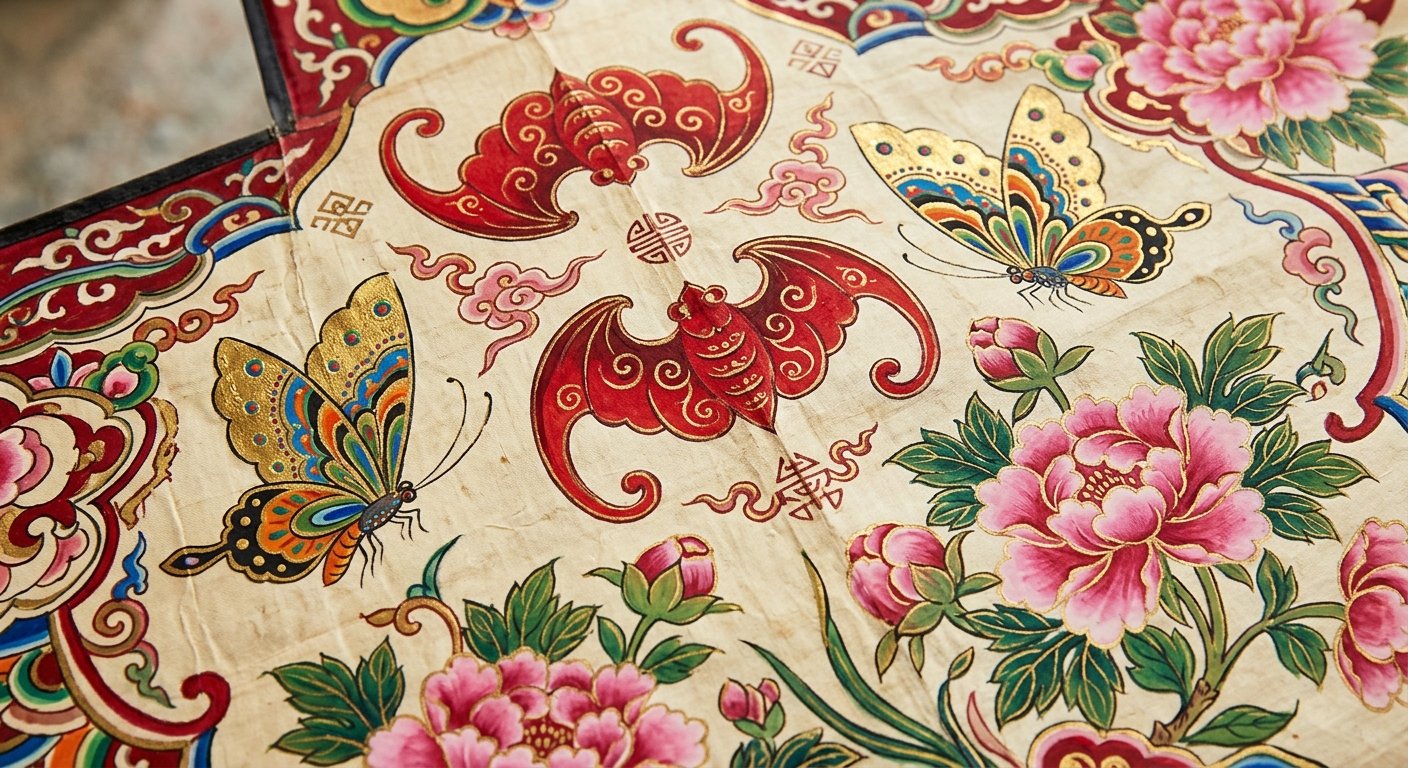
Bats, butterflies, and peonies share one kite surface so a single flight can carry many good wishes.
Other Auspicious Motifs on the Kite Canvas
Bats and butterflies may be the stars, but they are far from the only symbols in the kite maker's vocabulary. Traditional kites are crowded with good omens:
- Dragons and phoenixes: The dragon represents power, authority, and China's cultural identity; the phoenix stands for beauty, virtue, and happy marriage. Together they form "Dragon and Phoenix Bringing Auspiciousness" (longfeng chengxiang), a favorite wedding theme [source:4]. Long dragon kites, sometimes dozens of meters long, turn the whole sky into a moving symbol of collective good fortune.
- Fish: A leaping carp suggests success in examinations and promotions; " surplus year after year" (liannian youyu) wishes abundance [source:4].
- Peonies: Known as the king of flowers, the peony signals wealth, rank, and a flourishing household.
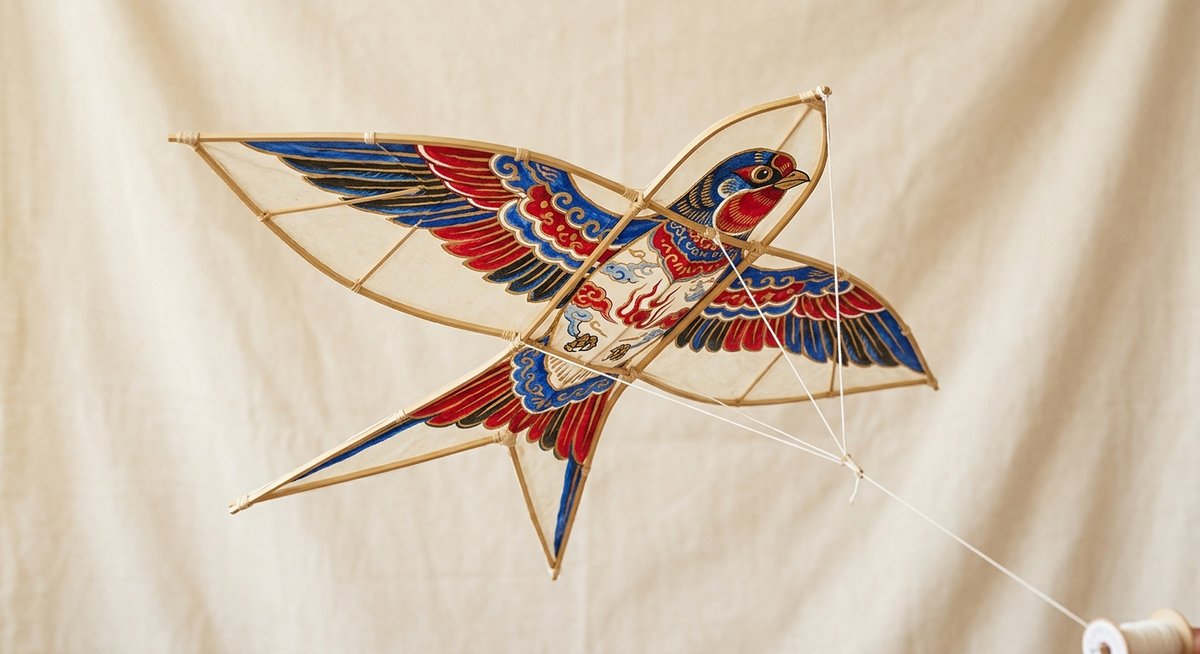
- Swallows: Beijing's sha yan or "sand swallow" kites are modeled on the cheerful spring bird. A fat swallow represents the man of the house, a slim swallow the woman, and a pair of swallows a loving couple [source:3].
- Double happiness: The mirrored xi character appears on wedding kites and festival kites, often combined with bats to mean "double blessings and happiness."
- Lions: Because shi 狮 sounds like shi 世, generations, lions painted on kite wings wish for "five generations under one roof" [source:3].
A master kite painter thinks like a poet, compressing several blessings into one composition. The Chinese Art Museum's collection of nearly 600 kites shows how every region developed its own palette of these symbols while speaking the same visual language [source:3].
Flying Wishes: What Kite Symbolism Means Today
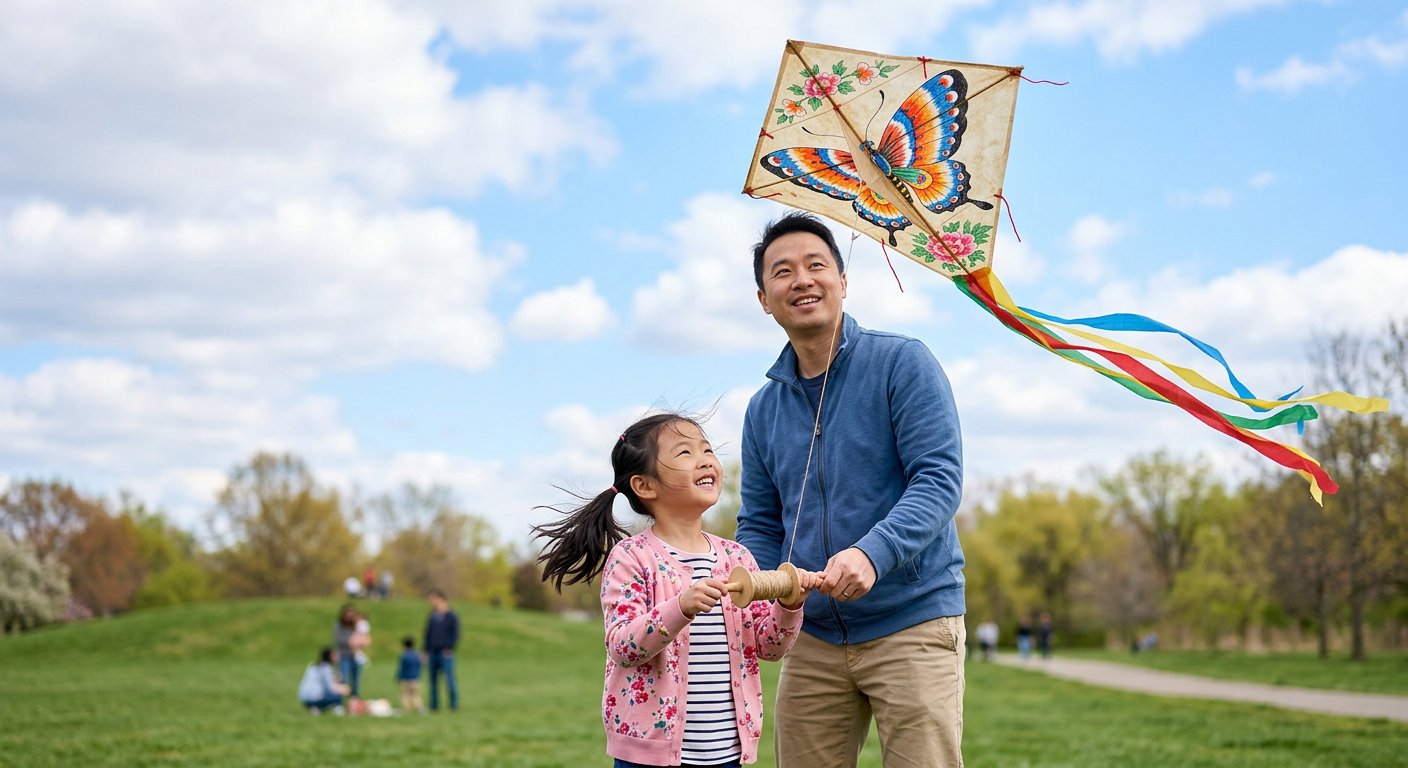
Today, Chinese kite symbolism continues in two ways. In museums and heritage programs, antique kites teach younger generations how farmers, scholars, and craftspeople once expressed hope through bamboo and pigment [source:3]. At kite festivals and in schoolyards, families and children still paint bats, butterflies, and dragons onto simple kites, sending the old wishes into a modern sky.
For parents and teachers, this is an ideal entry point into Chinese culture. A child who learns that a bat on a kite means "blessing" is learning more than vocabulary. They are learning that ordinary objects can carry extraordinary meaning, and that art can be both beautiful and generous.
If you want a simple project to share these ideas, our easy Chinese kite craft walks through a beginner-friendly design you can decorate with your own auspicious symbols.
The next time you watch a kite climb, look closely at what is painted on its surface. Every bat is a blessing, every butterfly a wish for joy, every peony a promise of abundance. In Chinese kite art, the sky is not empty; it is full of good intentions.
Sources and Further Reading
- [source:1] Kite - Wikipedia
- [source:2] 南"鹞"北"鸢"话风筝 - 中国非物质文化遗产网
- [source:3] 风筝,云中龙风中燕 - 人民日报海外版
- [source:4] 风筝文化 - 中国华文教育网