How to Make a Simple Chinese Kite with Kids (Free Printable Template)
A handmade kite is one of the gentlest ways to introduce children to Chinese folk craft. With a free printable template, two thin sticks, a little glue, and a long string, a family can build something that climbs into the wind and carries a small piece of history with it.
This project is designed for parents, teachers, and young makers. The template removes the hardest part — getting the shape and bridle points right — so children can focus on decorating, assembling, and flying.
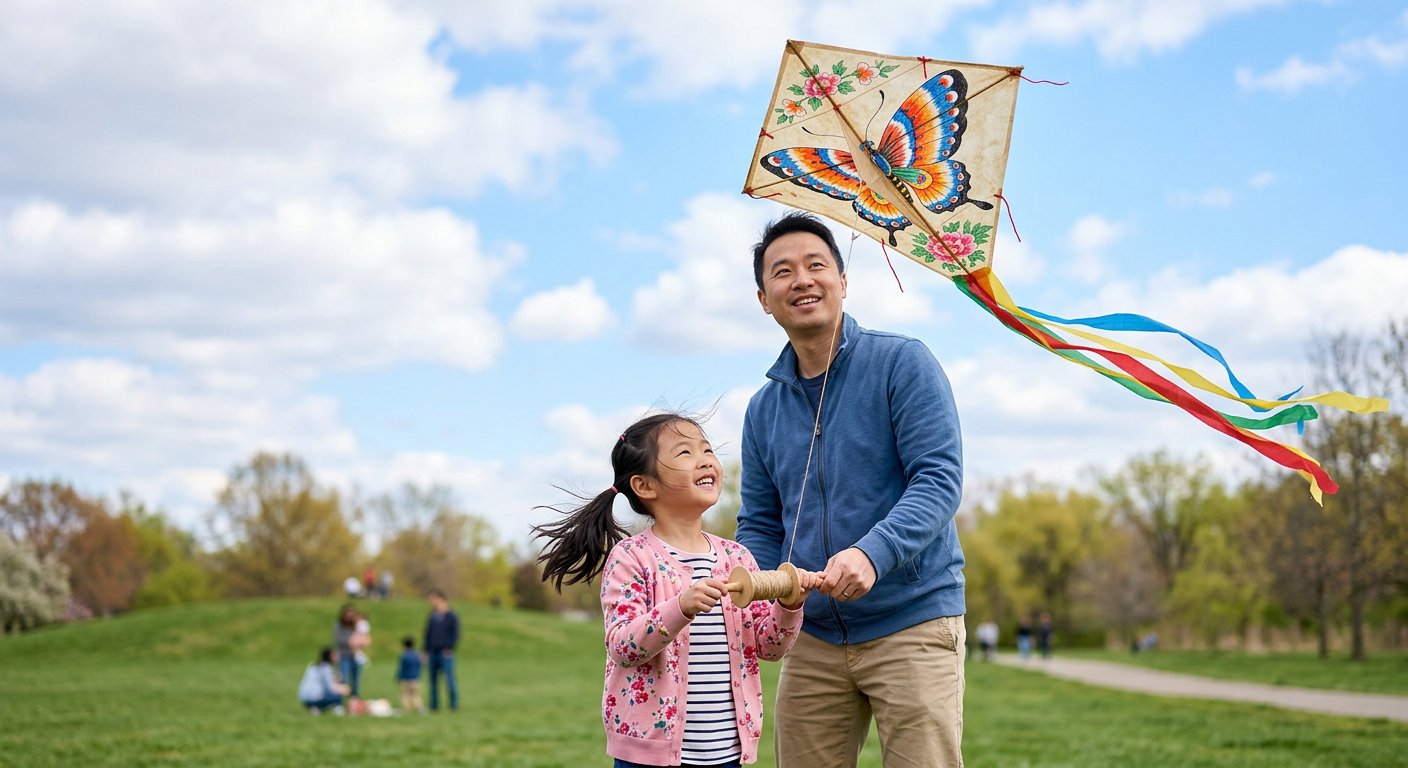
A simple diamond-shaped Chinese kite is a perfect first craft for children.
Download the free Chinese kite template
Click the button below to download the printable A4 template. It includes the kite outline, spine and cross-spar guides, bridle holes, and tail strips.
Download Chinese Kite Template (PDF)
Print the PDF at 100% scale — do not let your printer scale it to fit. Ordinary A4 paper works well; lightweight card stock is even better if your printer can handle it.
Why make a Chinese kite with kids?
Kite making touches everything children enjoy: cutting, painting, tying knots, and running outside to test their work. This simple project shares the same four-part logic master craftsmen have used for centuries: zha (framing), hu (covering), hui (painting), and fang (flying) [source:1]. By the time the kite is in the air, a child has practiced patience, symmetry, and a little physics.
It also pairs naturally with the meanings behind the decorations. If your group has tried Chinese kite symbolism, they will recognize bats, butterflies, and fish as flying good-luck messages.
A little kite history
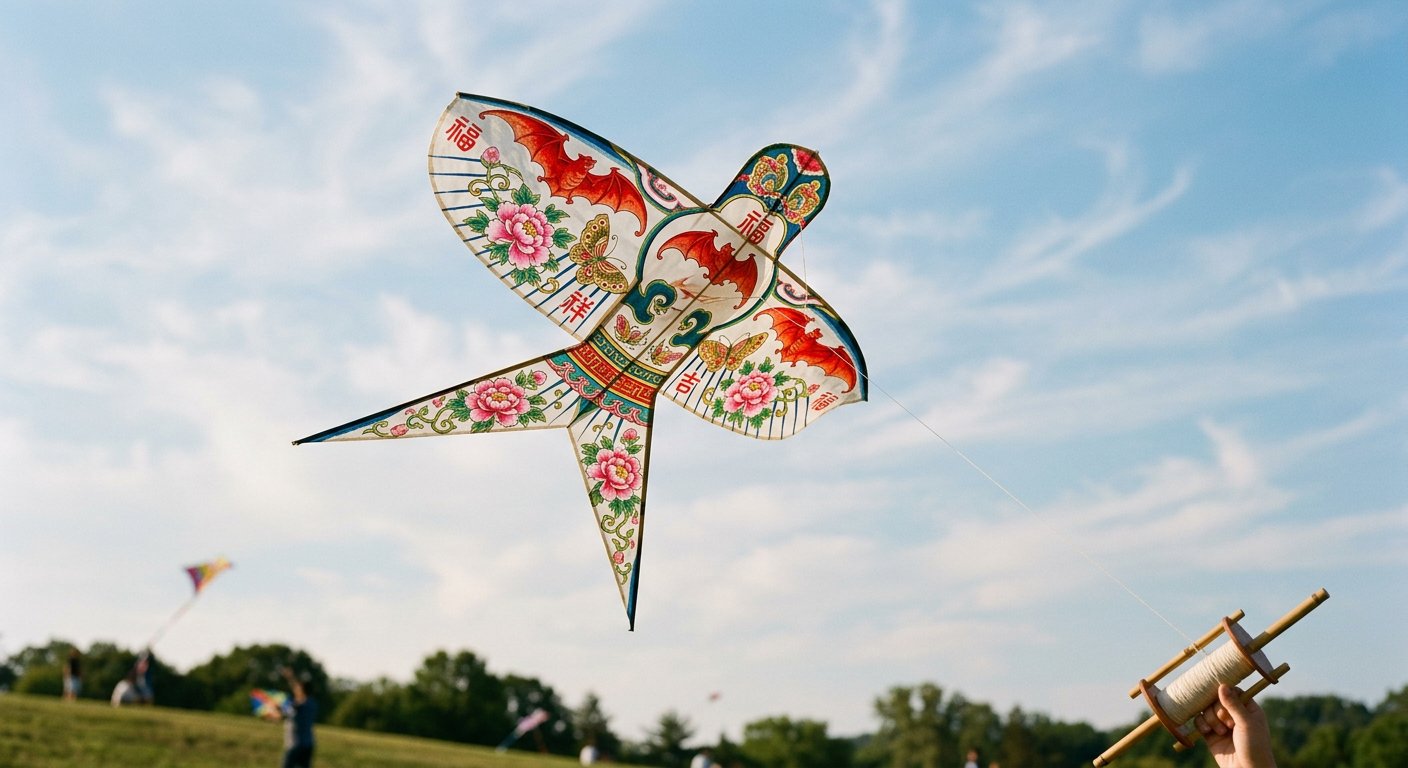
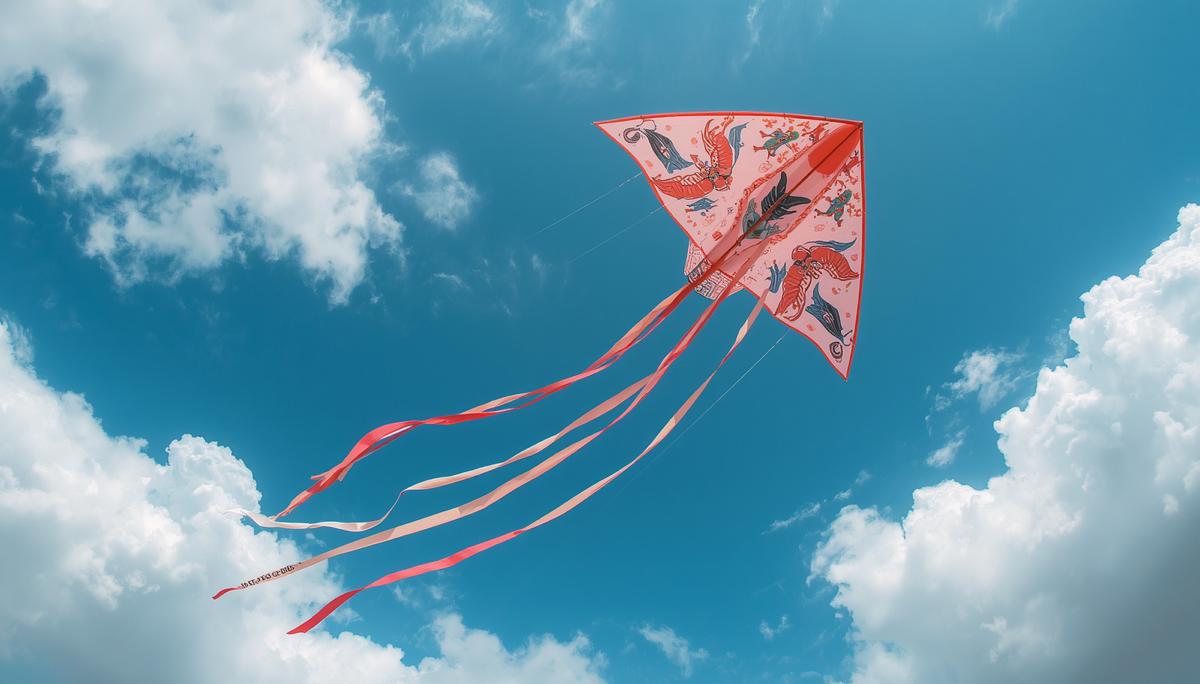
The Chinese kite is older than paper itself. Legends credit the philosopher Mozi and the craftsman Lu Ban with wooden birds called mu yuan during the Warring States period; by the Han dynasty makers had shifted to bamboo frames covered with paper or silk, creating the lighter zhi yuan [source:2]. The word fengzheng (风筝) means "wind zither," from the bamboo whistles attached so kites sang as they flew [source:2].
In 2006, kite-making skills were added to China's national intangible cultural heritage list [source:1]. You can read more in our article on Chinese kites: from war signals to sky art.
What you need
- The printed template on A4 paper or light card stock.
- Two thin sticks: bamboo skewers, wooden dowels, or even sturdy straws. One about 45 cm long for the spine, one about 35 cm long for the cross spar.
- Adhesive: white craft glue, glue stick, or tape.
- Flying line: cotton twine or kite string, 30–50 meters.
- Bridle line: thin string, about 60 cm.
- Tail material: crepe paper, ribbon, or the tail strips from the template.
- Tools: scissors, pencil, ruler, hole punch or needle, and masking tape.
- Decorations: water-based paints, markers, or crayons.
Step 1: Cut out the template
- Cut out the diamond kite shape along the outer red line.
- Cut the long rectangle on the right into 2–3 cm wide tail strips. You will need three to five strips.
The small circles mark where to punch the bridle holes. If you are using paper, reinforce these spots with a small piece of tape on the back before punching.
Step 2: Add the sticks
- Lay the longer stick along the vertical spine line.
- Lay the shorter stick along the horizontal cross-spar line, about one-third of the way down from the top.
- Attach them with tape or a thin line of glue. They should cross at a right angle and lie flat.
An even, balanced frame will fly straight. Encourage children to check that both sides of the cross spar are equal.
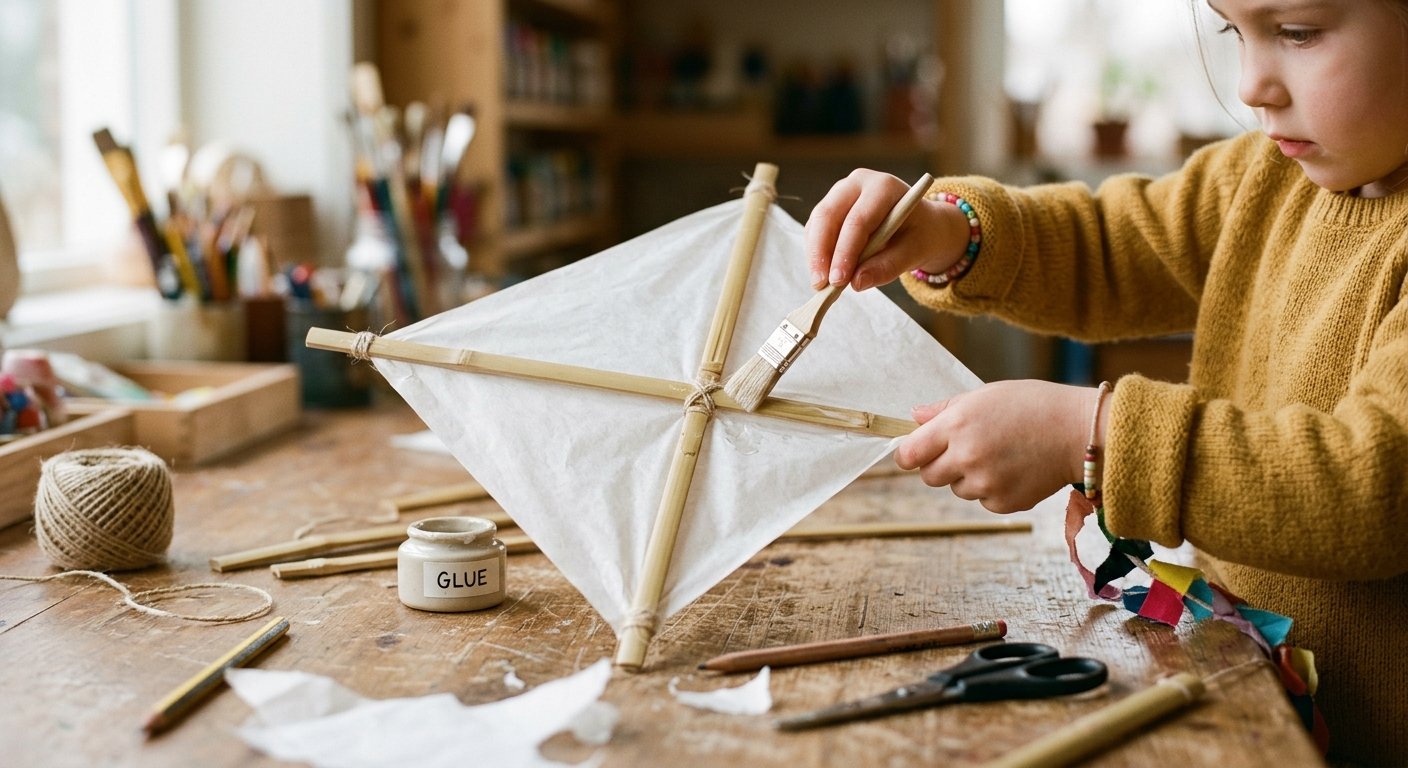
The frame is the kite's skeleton: keep it light, straight, and centered.
Step 3: Paint and decorate
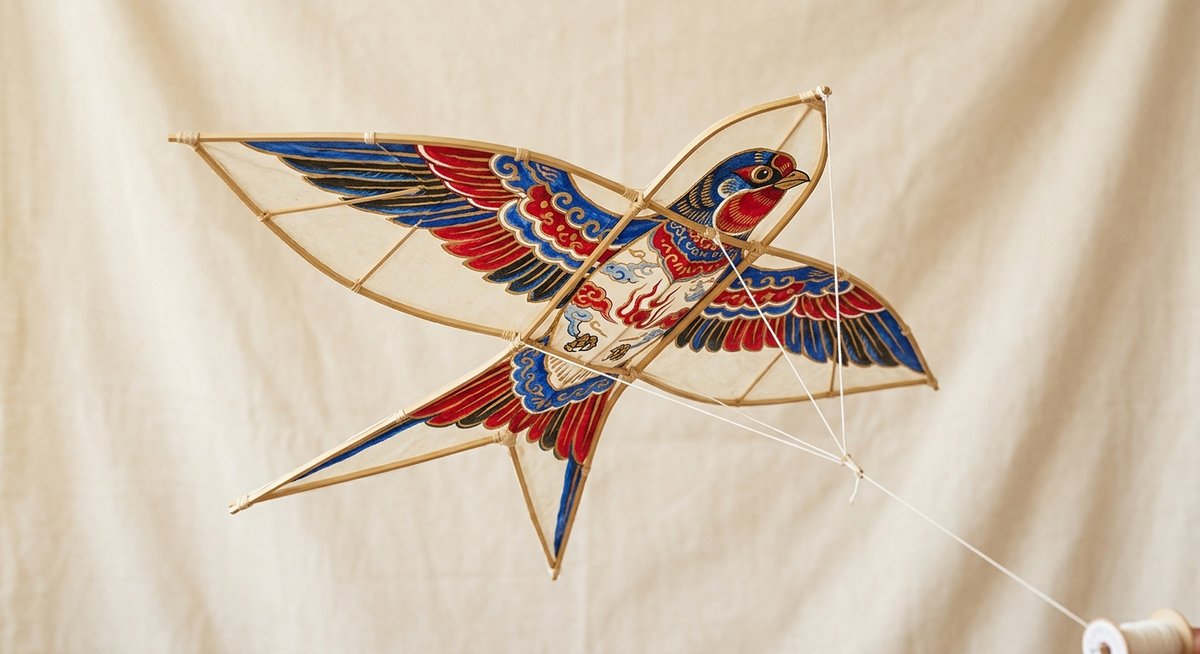
Now the kite becomes art. Traditional Chinese kite painters favor bright, flat colors and bold outlines [source:3]. Children can paint butterflies, swallows, fish, dragons, or geometric patterns. Popular symbols include:
- Butterfly — joy and long life
- Bat — blessing (fu)
- Fish — surplus (yu)
- Swallow — spring and happiness
- Dragon — strength and good luck
Keep paint layers thin; heavy paint adds weight and can keep the kite from lifting. Let everything dry before flying.
Step 4: Add the bridle and tail
- Punch the two bridle holes marked on the template.
- Thread a 60 cm piece of string through both holes and knot it securely, forming a triangle beneath the kite.
- Hold the kite by the knotted loop and slide it until the kite hangs level, nose slightly up. This is where the flying line attaches.
- Tape the tail strips to the bottom of the spine. A longer tail adds stability in stronger wind.
Step 5: Launch your kite
- Choose the right place. Find an open field away from trees, power lines, buildings, and roads.
- Test the wind. Hold a ribbon at shoulder height; a steady lift means good kite weather.
- Launch with a helper. Have a child hold the kite 10–15 meters downwind. When the wind is steady, signal them to let go as you pull in a little line.
- Let out line slowly. Once stable, release more line little by little. If the kite dives, pull in a short length.
Qingming, the spring tomb-sweeping festival, has long been a favorite time for kite flying in China [source:2]. A breezy spring afternoon is the perfect season to try this craft.
Tips for success with children
- Start small. The template size is chosen to be easy to handle.
- Pre-cut materials. Have sticks, string, and tails ready before the session.
- Use glue sparingly. Too much glue wrinkles paper and adds weight.
- Emphasize symmetry. Ask children to compare the left and right sides before gluing.
- Make it a story. Talk about Mozi's wooden bird, the sound of fengzheng, or the Weifang kite festival while you work.
If your family wants a more advanced build without a template, see our guide on how to make a traditional Chinese kite.
Safety first
- Never fly near power lines.
- Avoid flying in thunderstorms or very strong winds.
- Stay away from airports and busy roads.
- Wear gloves if the line is thin; a fast-moving line can cut skin.
- Supervise young children closely, especially during launch.
Sources and Further Reading
- 风筝制作技艺(潍坊风筝)— 中国非物质文化遗产网
- 风筝制作技艺(天津风筝魏制作技艺)— 中国非物质文化遗产网
- 潍坊风筝:手造之美 匠心绽放 — 中国非物质文化遗产网
- 春风托纸鸢 — 中国非物质文化遗产网
- Kite — Wikipedia
This article was researched and written by the ChineseFolkCrafts.com editorial team. Claims are cross-checked against authoritative Chinese-language sources; see About Us for our editorial approach.