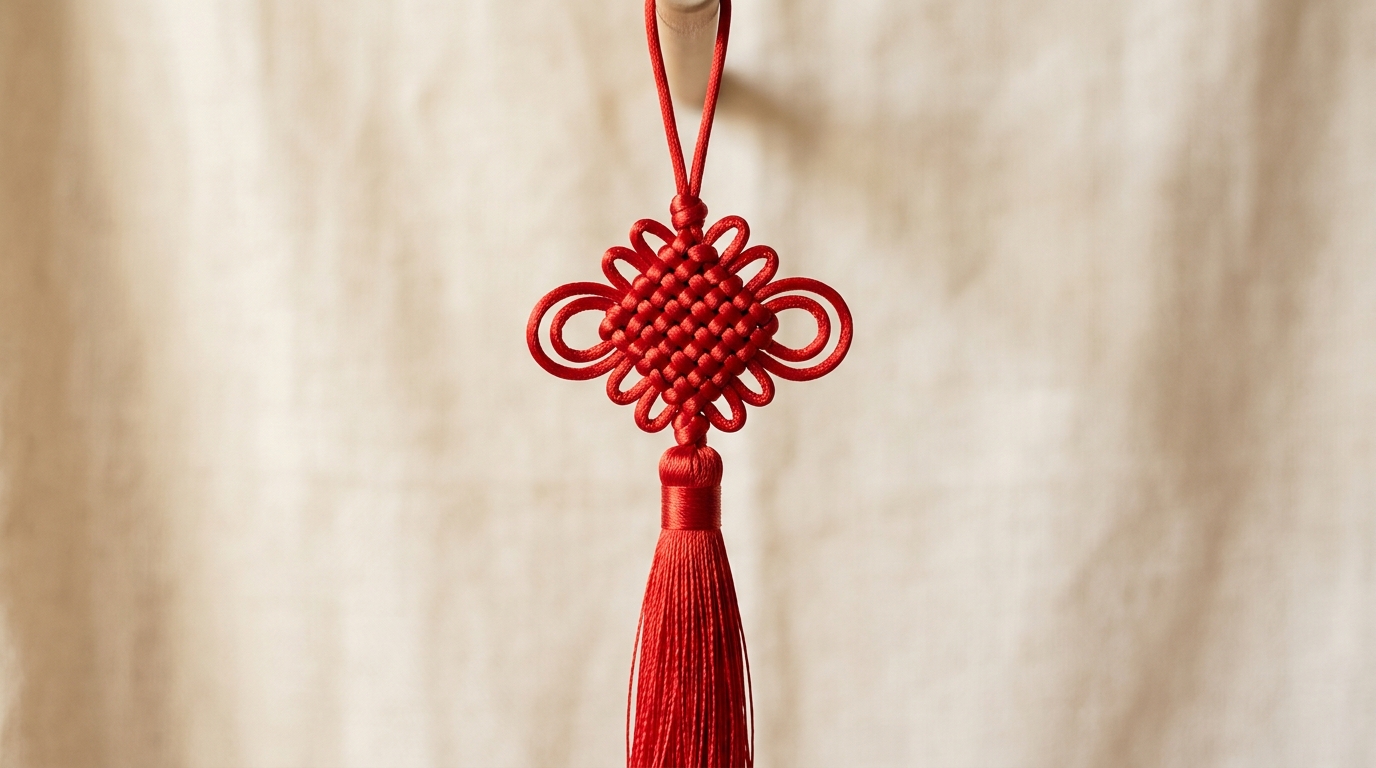
A knot that looks like a wish
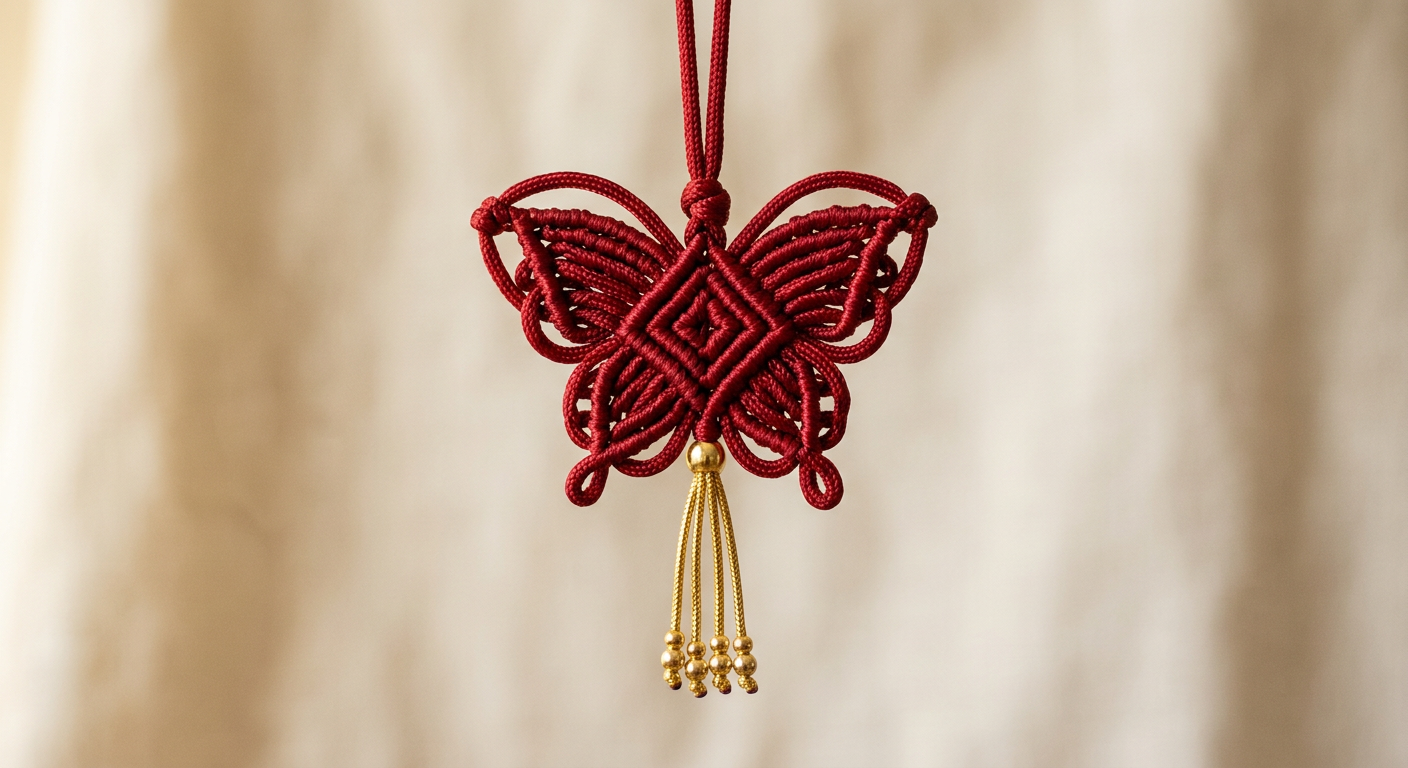
Of all the wishes a Chinese knot can hold, the butterfly knot may be the most romantic. Tied from a single cord, its two wings spread outward like a small red butterfly caught mid-flight, and every part of the shape carries a blessing: love, joy, wealth, and the hope that good fortune will land close to home.
The butterfly knot — hudie jie (蝴蝶结) — is one of the best-loved shapes in the Chinese knotting tradition. It appears on bridal ornaments, sachets, keychains, and gifts between couples. Yet its meaning is richer than a simple image of romance. To read the knot is to unpack a small puzzle of puns, shapes, and old Chinese wishes.
What the butterfly knot means
At its simplest, the butterfly knot symbolizes love, joy, and a happy marriage. The butterfly itself is an emblem of transformation and delight in Chinese culture; a pair of butterflies suggests a relationship that grows and flourishes. For this reason, the knot is a favorite for wedding accessories and gifts between sweethearts.
But the meaning does not stop at romance. Because the butterfly knot is also built from wealth symbols, it carries a second wish: prosperity. And because of a sound pun in several southern dialects, it becomes a direct blessing for fortune. The butterfly knot is therefore a layered message: may your love be joyful, may your household be wealthy, and may blessings appear before your eyes.
In folk stories, butterflies often represent faithful lovers who have overcome separation. The most famous example is the Butterfly Lovers legend, in which a young couple transforms into a pair of butterflies so they can be together forever. That story deepens the knot's meaning: it is not only about new romance, but also about lasting devotion.
How the butterfly knot is constructed
A traditional butterfly knot is constructed from a single length of cord, and every stage of the folding carries meaning. The body is a "treasure knot" (bao jie), shaped like an old Chinese gold ingot. That shape already says wealth. On either side, the wings are formed from small double coin knots (shuang qian jie), each one a wish for prosperity and completeness. So the butterfly literally carries wealth on its back: the treasure body holds the ingot, and the coin-knot wings add the ancient promise of "good things come in twos."
In practice, the knot is usually tied in three stages. First, the cord is folded into the central treasure knot, which creates the compact body and sets the symmetry of the whole piece. Next, two double coin knots are tied to the left and right of the body to form the wings. Finally, the remaining cord is trimmed into antennae or finished with beads and a tassel. The result is a flat, balanced ornament that looks delicate but holds its shape under tension.
For anyone learning the knot, a firm satin cord between 1.5 and 2 millimeters thick is easiest to control. A finished palm-sized butterfly knot typically begins with about one meter of cord, though two-color versions need two shorter cords joined at the center. Nylon cord is durable for bag charms, while silk or rayon gives a softer sheen for wall hangings and jewelry.
Symmetry is the hardest part. If the two wings are pulled to different tensions, the butterfly tilts or collapses. Experienced knotters tighten the body first, then adjust each wing against the other before fixing the final shape. If you are new to the underlying techniques, our guide to tying basic Chinese knots covers the double coin knot and other foundations step by step.
This construction makes the butterfly knot more than a cute shape. It is a compound blessing, joining the meaning of the treasure knot with the meaning of the double coin knot in a single symmetrical design.
Video: Tying the Chinese butterfly knot step by step, via YouTube.
The butterfly pun: hu becomes fu
The deepest layer of meaning comes from sound. In several southern Chinese dialects, the word for butterfly, hu (蝴), is pronounced like fu (福), the word for blessing or good fortune. A butterfly knot therefore reads as "fortune before your eyes" — fu zai yan qian (福在眼前).
The pun is strengthened by the coin-knot wings, because coins also mean wealth. So the butterfly knot becomes a visual sentence: a butterfly (fortune) carrying coins (riches) is hovering right in front of you. It is one of the most direct good-luck images in the whole Chinese knot vocabulary.
A cluster of five butterfly knots takes the pun further. Five butterflies represent the Five Blessings (wu fu): longevity, wealth, health, virtue, and a peaceful end. A gift decorated with five butterflies is therefore not a single wish but a complete prayer for a good life.
Occasions for giving butterfly knots
Because the butterfly knot speaks of love and fortune together, it is chosen for some of life's happiest moments:
- Weddings: embroidered on bridal sashes, sachets, or the knots of the bed curtain, wishing the couple love and prosperity. A pair of butterfly knots on the wedding gift box reinforces the idea of two people becoming one household. Red and gold threads dominate, since red wards off evil and gold invites wealth into the new family.
- Anniversaries and Valentine's gifts: a quiet emblem of a relationship that continues to transform and grow. A small butterfly knot attached to a card or a wrapped gift adds a personal blessing without extra words. Couples who exchange handmade versions often see the act of tying the knot itself as a metaphor for patience and care.
- Chinese New Year decorations: hung on doors, bags, or indoor plants to invite fortune and joy for the coming year. Red and gold versions are especially popular during the Spring Festival. Because the pun hu/fu is strongest at a season devoted to fortune, the butterfly knot becomes a natural New Year image.
- Birthdays: given to mark a new year of life with wishes for happiness and abundance. For elders, a butterfly knot may carry the broader Five Blessings; for younger recipients, it often emphasizes joy and new beginnings. It is a lighter, more decorative alternative to the purely longevity-focused symbols sometimes used at elder birthdays.
- Housewarmings: a general blessing for happiness and abundance in a new chapter of life. The knot's message of "fortune before your eyes" suits the moment of stepping into a new home. A wall hanging with one or more butterfly knots near the entrance is meant to greet good luck at the threshold.
Red is the traditional color, expressing joy and protection. Gold thread adds the wish for wealth. Pink or multicolored cords can emphasize romance and celebration. For more on choosing colors, see our guide to Chinese knot color meanings.
Butterfly knot variations
Once the basic butterfly knot is mastered, craftspeople expand it in several directions:
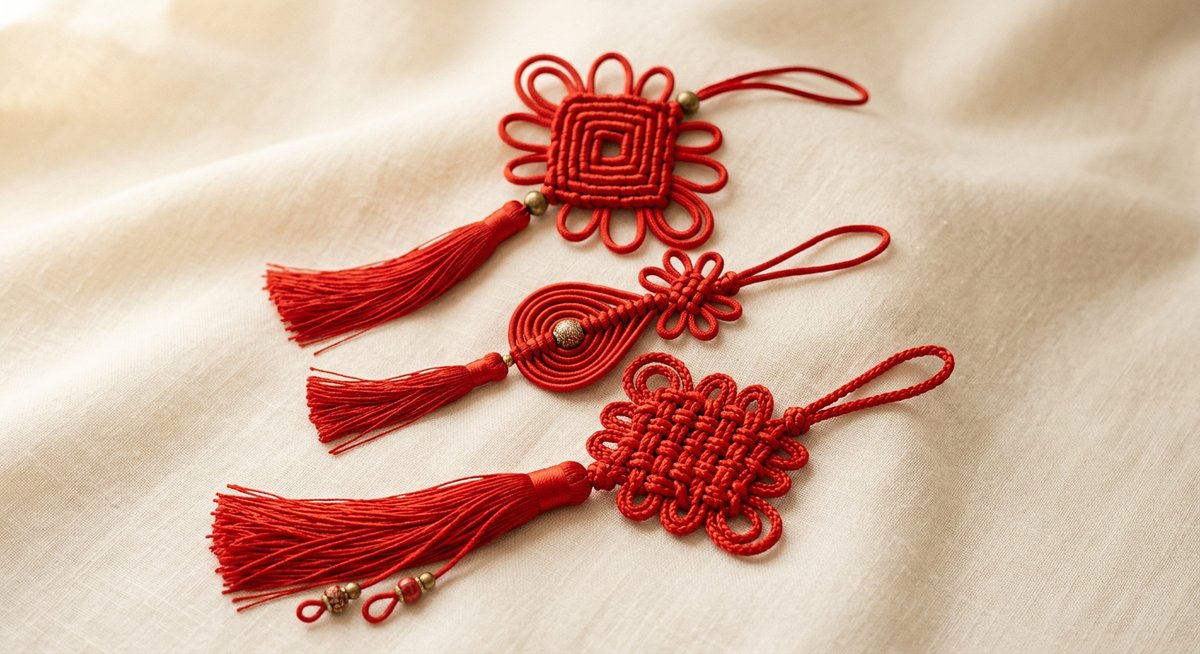
- Two-color butterfly knots: two cords of different colors are joined at the treasure-knot body, so the wings and body read as contrasting tones. Red and gold is the classic wedding pairing, while red and pink softens the design for romantic gifts. The color change must be hidden inside the body, so the outer shape remains clean.
- Beaded butterfly knots: small beads are worked into the body or antennae, or a single large bead forms the head. Beads add weight, texture, and a subtle jingle, and they are often used on jewelry or bag charms. Red agate, gold-plated metal, and freshwater pearl are common choices, each adding its own minor blessing.
- Compound ornaments: several butterfly knots are combined with other auspicious knots — the cloverleaf, the good luck knot, or the pan chang knot — into larger wall hangings or tassel clusters. These pieces turn a single wish into a fuller statement of blessing. A compound piece might place a butterfly at the center and surround it with cloverleaf knots for harmony.
- Five-butterfly panels: five small knots arranged in a circle or row to represent the Five Blessings. These are common in framed textile art and wedding room decorations. The number five is deliberate: one butterfly for each blessing, creating a complete protective image.
Each variation keeps the core meaning intact while letting the maker tailor the message to the occasion. You can see how the butterfly knot compares to other classic shapes in our overview of five common Chinese knots and their meanings.
How it differs from the cloverleaf and good luck knots
The butterfly knot is often taught alongside the cloverleaf knot and the good luck knot, but each carries a different emphasis. The cloverleaf knot, with its three round ears, is a general symbol of good luck and harmony. The good luck knot (ji xiang jie) is the classic all-purpose auspicious knot. The butterfly knot narrows the message: love plus wealth, romance plus fortune. If the good luck knot says "may everything go well," the butterfly knot says "may love and riches both arrive."
Frequently asked questions
What does a Chinese butterfly knot mean?
A Chinese butterfly knot symbolizes love, joy, happy marriage, and transformation. Its treasure-knot body and double-coin-knot wings also carry wishes for wealth and the Five Blessings — longevity, wealth, health, virtue, and a peaceful end.
Why is the butterfly knot considered lucky?
In several southern Chinese dialects, hu (butterfly) sounds like fu (fortune). The butterfly knot therefore reads as "fortune before your eyes." Combined with coin-shaped wings, it becomes a direct image of wealth and blessing arriving. The more butterflies appear together, the stronger the wish.
What color should a butterfly knot be?
Red is the traditional color for joy and protection. Gold adds wealth, pink emphasizes romance, and multicolor threads express celebration. For weddings, red and gold are the classic pairing. See our guide to Chinese knot color meanings for a fuller explanation of color choices.
Is the butterfly knot hard to tie?
The butterfly knot is intermediate in difficulty. It builds on the double coin knot and a central treasure knot body. Beginners who have already tied a double coin knot can usually learn the butterfly knot within an hour. The hardest part is keeping the two wings symmetrical, so it helps to tighten the body first and then adjust each wing against the other.
Author
This article was prepared by the team at ChineseFolkCrafts.com. We are not intangible-cultural-heritage inheritors or museum researchers. Our job is to find authoritative Chinese sources, understand them, and explain them clearly for international readers.
If you spot an error — a date, a translation, a misattributed custom — please let us know and we will correct it. Last updated 2026-07-21.