Chinese Knot History: The Name Is 45 Years Old, the Craft Is 4,000
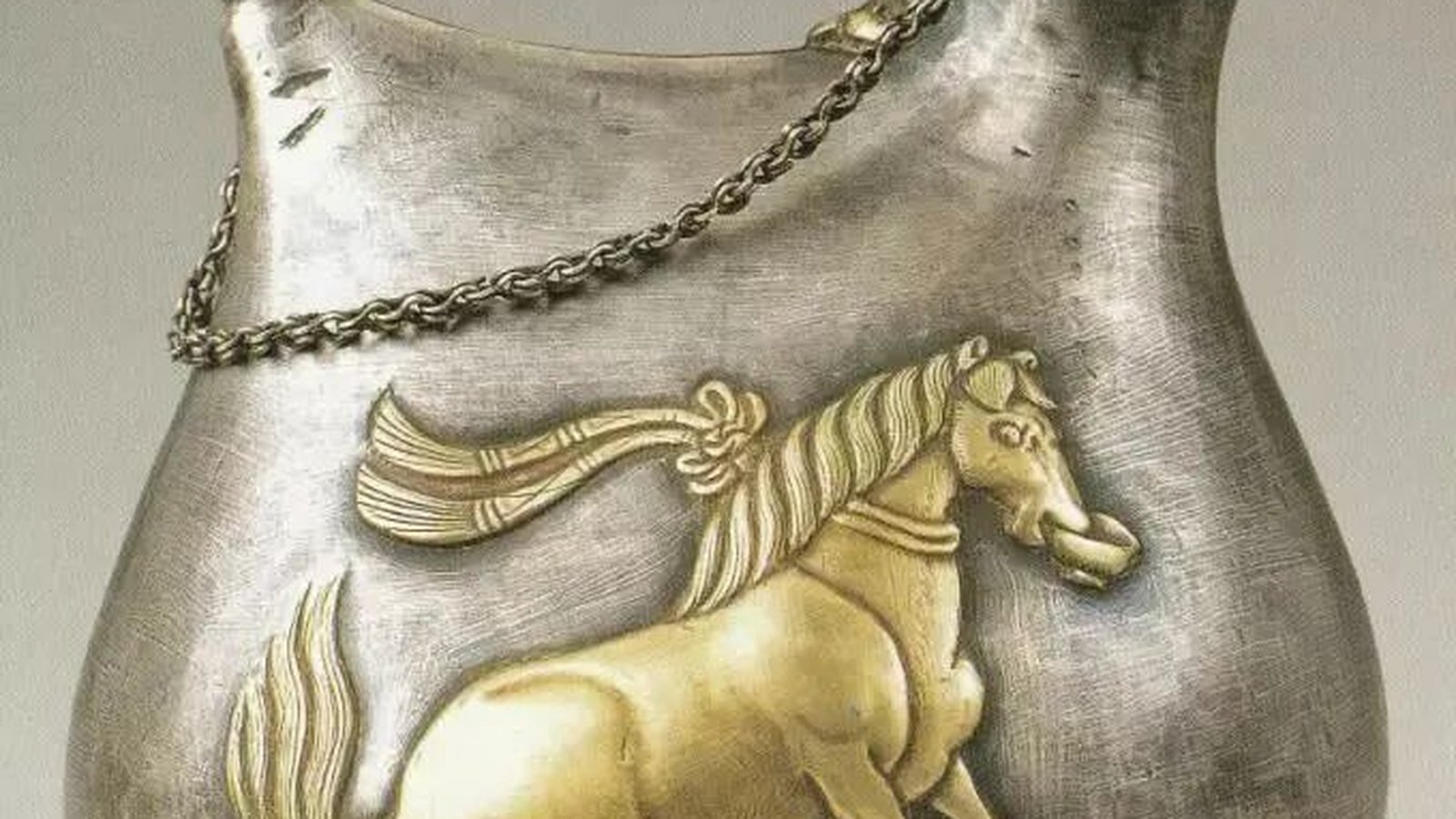
Start with one artifact: the Tang dynasty silver flask in the Shaanxi History Museum, gilded with a dancing horse holding a cup in its teeth. At the horse's neck, a silk ribbon ends in a perfectly woven tuan jin knot [source:1]. When that flask was made, the term "Chinese knot" was still more than a thousand years in the future.
Because the name "Chinese knot" is only 45 years old.
The name is younger than the knot
At the end of 1980, Chen Hsia-sheng, a researcher at the National Palace Museum in Taipei, co-edited a book with Echo Magazine titled simply The Chinese Knot — and the modern name was born. In January 1982 it appeared in a government document for the first time [source:3]. For the centuries before that, the craft went by other names: sheng jie (cord knot), tao zi (silk cord), jie (knot), and most commonly luozi [source:1][source:3].
The knot itself is far older. The I Ching's commentary says, "In high antiquity, people governed by tying knots; the sages of later ages replaced this with written characters" — before writing, cords and knots kept the records [source:3]. From record-keeping tool to dress fitting to auspicious ornament, the thread runs unbroken: by the Warring States period knots fastened jade pendants on robes; through the Tang and Song they spread across dress and objects; under the Ming and Qing the craft reached its peak [source:3].
Da luozi: knotting in the Qing palace
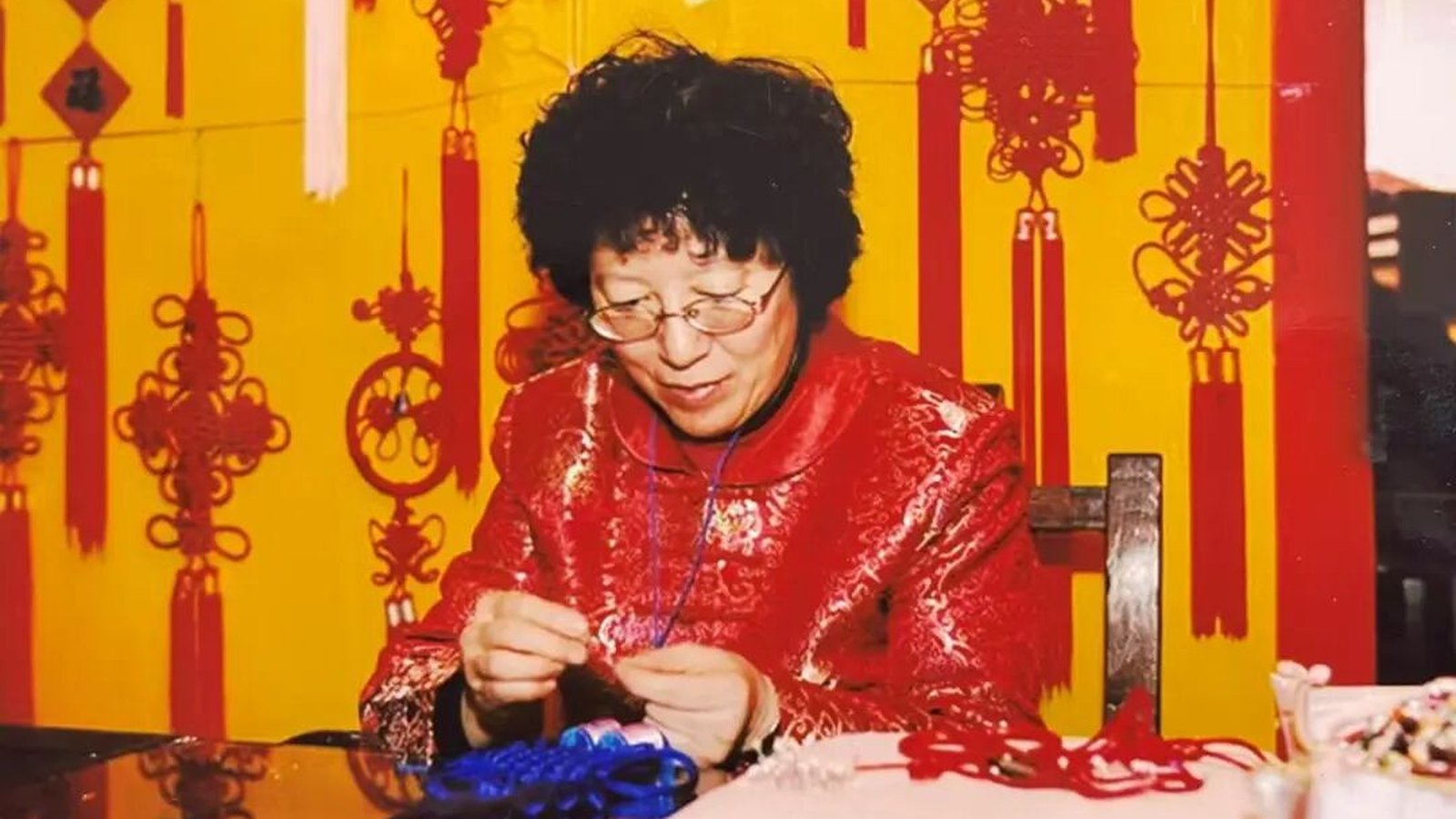
In the Qing palace, the craft was called da luozi — "tying luozi" — and it was a required skill in every palace maid's needlework training. Five-colored silks and gold threads were looped and braided between ten fingers into bats, flowers, and other auspicious forms, used to wrap jade pendants and perfume pouches [source:2].
Records of a Palace Maid — the oral memoir of He Rong'er, a maid who served in the late Qing court — preserves a scene from the Palace of Gathering Excellence. The maids, she recalled, "gripped handfuls of colored pearl-thread, rat-thread, and gold thread, and with nothing but ten fingers wove without stopping — picking, hooking, drawing, closing." To amuse the Empress Dowager Cixi, they would pin one end of the threads to a cushion with a long needle, hold the main cord taut between their teeth, and fly their fingers until a large bat took shape — a twin of the live bats in the palace walkway outside, all for one smile from the Old Buddha. Cixi loved storytellers, and when a tale praised some young lady's clever hands, she would laugh at her maids: "I don't believe anything they produce could match yours!" [source:2]
The maids' luozi were worth real money: some were sold in the antique shops of Liulichang, others in the secondhand clothes stores outside Di'anmen. And when maids left the palace at age, the craft left with them — great families hired retired palace maids to teach knotting to their daughters, perhaps the earliest private craft tutors. Da luozi was a required course for well-born women [source:2].
Ying'er ties luozi in Dream of the Red Chamber
Literature from the same era kept the luozi on record too. Chapter 35 of Dream of the Red Chamber carries the couplet title "Golden Oriole deftly ties a plum-blossom luozi" [source:4].
In that chapter, Baoyu is recovering from a beating, and his maid Aroma reminds him to ask Ying'er — Baochai's maid and a master knotter — to tie him a few luozi. When Baoyu casually asks for "a few of every kind," Ying'er claps and laughs: "Have you any idea? At that rate I couldn't finish in ten years!" [source:4]
What follows reads like a Qing dynasty catalog of knot patterns and color pairings. Asked about patterns, Ying'er rattles off seven: "Incense-stick, skyward-stool, elephant-eye, double-lozenge, chain-link, plum-blossom, willow-leaf." Asked about colors, she rules that "bright red wants black cords, or dark sapphire, to hold it down," that "pine-pollen yellow pairs with peach pink," and that her own favorite is "shallot green with willow yellow." Baochai, passing by, offers a more elegant idea: take gold thread twisted strand by strand with black-pearl thread, and tie a luozi net for Baoyu's famous jade [source:4].
One domestic conversation, and you can see exactly where luozi lived in aristocratic Qing life: on fans, on perfume pendants, on sweat towels — everywhere.
Four thousand years of evidence
Beyond the texts, museum objects stretch the line much further back [source:1]:
- About 4,000 years ago: the earliest known double coin knot, a woven rattan fragment unearthed in 1996 at Yanjiaqiao, Yuhang, Hangzhou, from the late Liangzhu culture. Two coin-shaped loops interlocked — the same form tied today.
- Eastern Han: a red-and-yellow silk sachet excavated at the Yingpan cemetery in Yuli, Xinjiang, its drawstrings ending in reverse-tied good luck knots; an Eastern Han figurine in Yibin wears a recognizable double connection knot.
- Tang dynasty: besides the dancing-horse flask and its tuan jin knot, a red embroidered silk bag in the Gansu Provincial Museum carries button knots spaced along its drawstring; in the painting Palace Concert at the National Palace Museum, Taipei, oxalis knots hang from small rings on the ladies' stools.
- Song dynasty: in The Great Nuo Exorcism at the Palace Museum, Beijing, one figure wears a long knotted cord on the wrist, tied with a pan chang knot. Song fashion favored silk cords wound around the wrist — the lyricist Huang Chang wrote of youths at the Dragon Boat festival, "two knots of colored silk on a jade wrist."
- Ming dynasty: the sash knots on courtiers in Liu Jun's Debating Merits in the Han Hall at the Metropolitan Museum of Art; and in the National Palace Museum's seated portrait of the Hongzhi Emperor, several different knots hang among the screens and curtains — you can still stand before the painting today and play "name that knot."
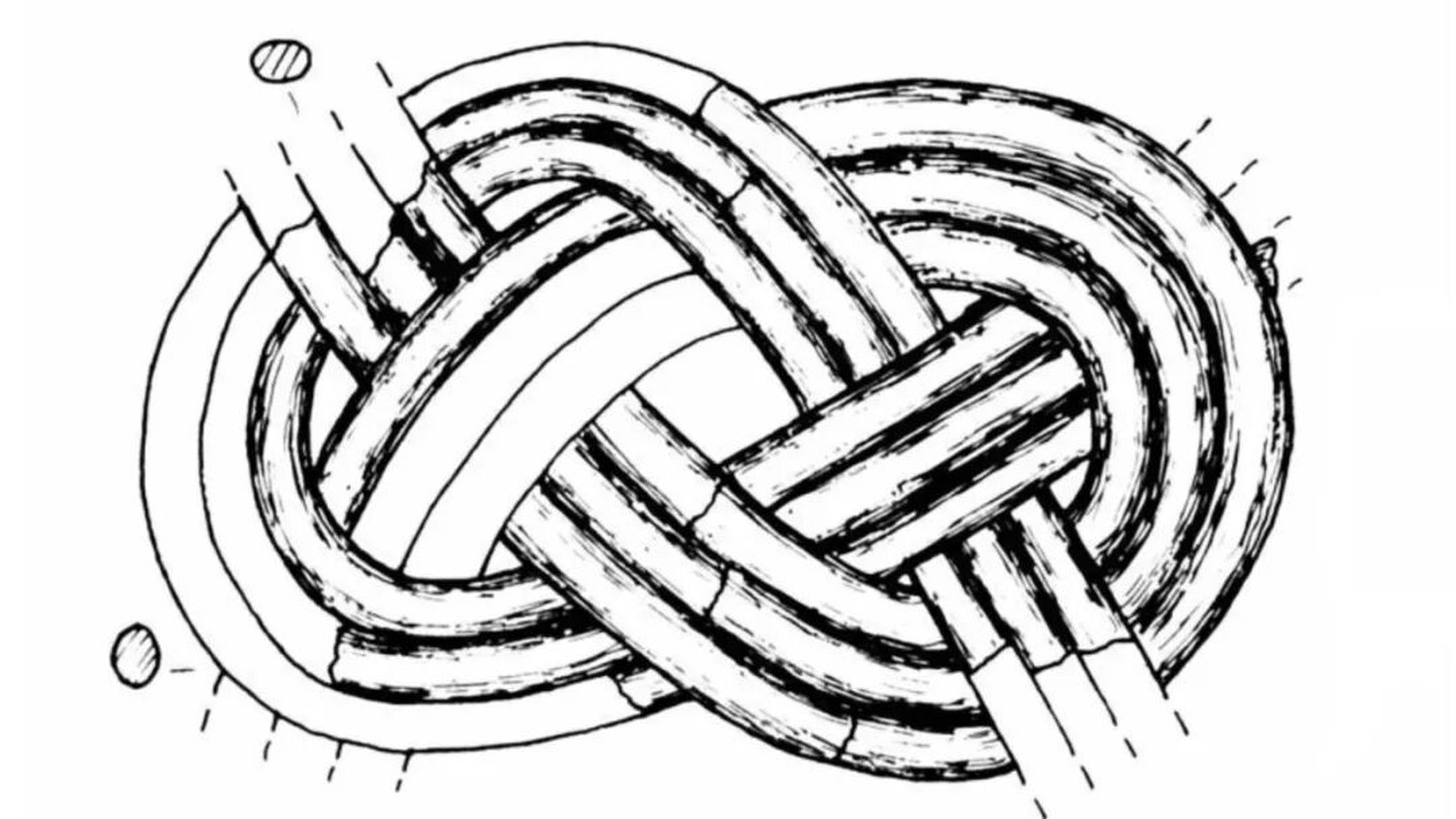
The names changed; the blessings did not. From the Liangzhu double coin to the Qing palace bat, a knot shape has always been a good wish written without characters — the double coin knot draws wealth, the pan chang knot prays for continuity, the tuan jin knot wishes reunion. Not one of those meanings has shifted, as we cover in our guides to five common Chinese knots and their meanings and Chinese knot types and categories.
Frequently asked questions
When did the name "Chinese knot" appear?
At the end of 1980, when National Palace Museum researcher Chen Hsia-sheng and Echo Magazine co-edited the book The Chinese Knot. The term first appeared in an official document in January 1982. Before that the craft was called sheng jie, tao zi, jie, or luozi [source:1][source:3].
How old is the Chinese knot?
As a craft, physical evidence reaches back about 4,000 years to a double coin knot fragment from the late Liangzhu culture. Its ancestor — knotting cords for record-keeping — predates writing. Knots decorated dress by the Warring States period, flourished in the Tang and Song, and peaked in the Ming and Qing [source:1][source:3].
What is "da luozi"?
Luozi is what Chinese knots were called in the Qing dynasty, and da luozi means tying them. It was required needlework for Qing palace maids and aristocratic women. Chapter 35 of Dream of the Red Chamber — "Golden Oriole deftly ties a plum-blossom luozi" — is devoted to the craft [source:2][source:4].
What is the oldest surviving Chinese knot?
A woven double coin knot fragment unearthed in 1996 at Yanjiaqiao, Hangzhou, dated to the late Liangzhu culture — about 4,000 years old [source:1].
Sources and further reading
- Material on identifying knots in historical art (site material archive)
- Excerpt from Records of a Palace Maid on Qing dynasty da luozi (site material archive)
- Chinese knot — Chinese Wikipedia
- Dream of the Red Chamber, Chapter 35 — Chinese Wikisource