Mi Lingzhu: The Chinese Knot Master Who Ties Blessings for the World
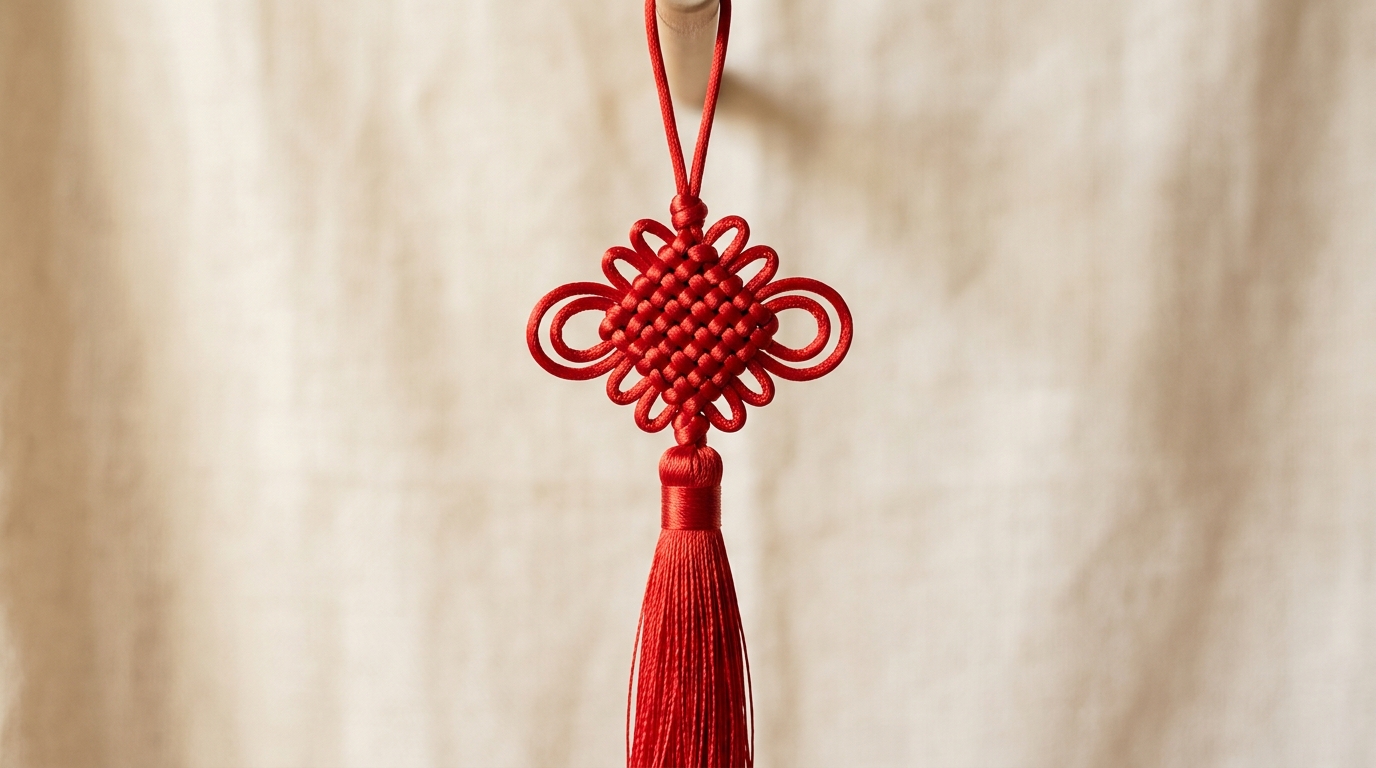
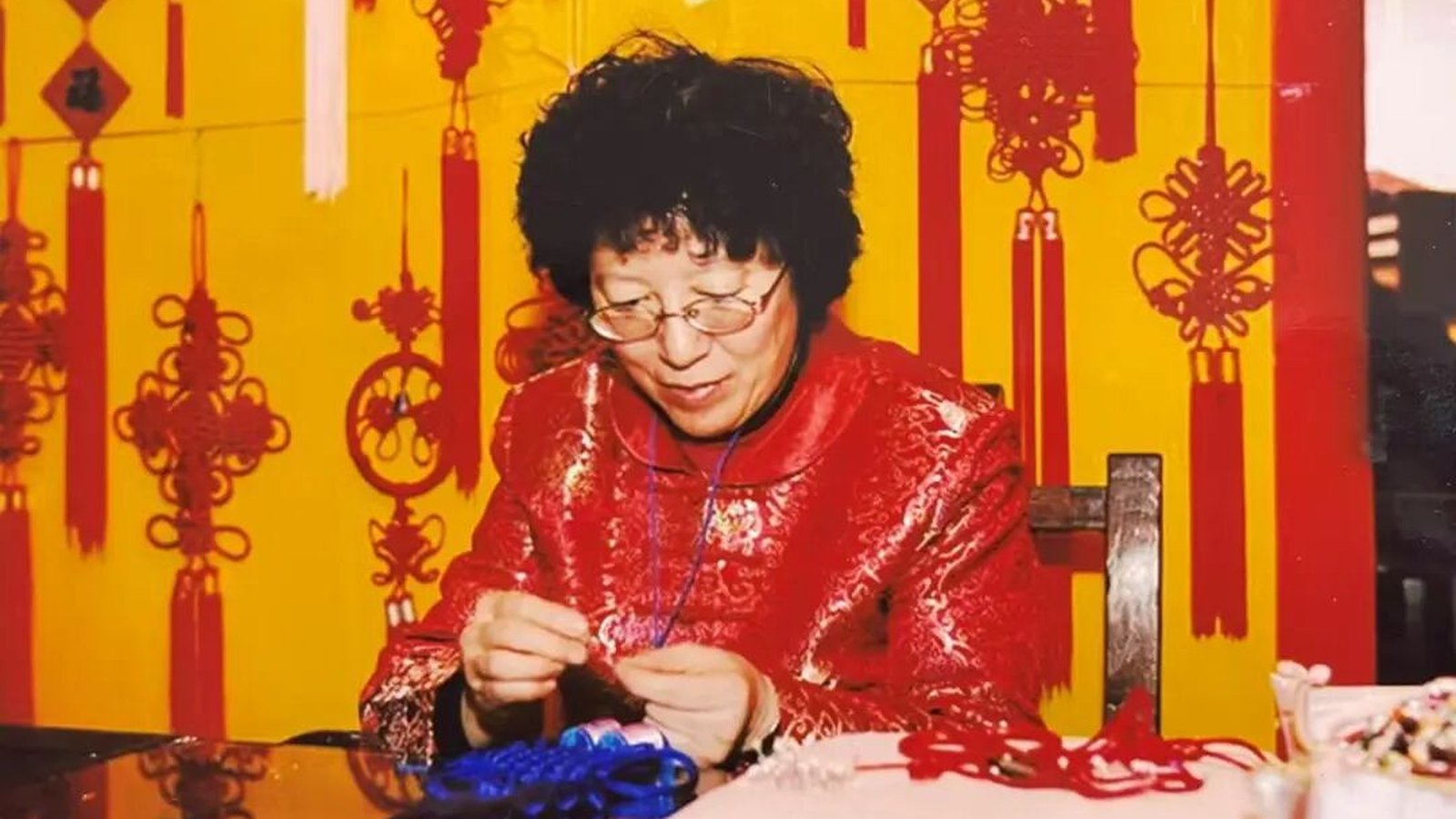
Two red cords turn, loop, and tighten in a pair of hands in their seventies. A few minutes later, a pan chang knot sits perfectly square on the table. The hands belong to Mi Lingzhu — the representative inheritor of Beijing's knotting-art heritage project, a folk artist who has spent thirty years with cords and knots [source:1][source:2].
She likes to say: "Knots have feeling; art knows no borders." [source:1]
Two red cords, thirty years
Mi Lingzhu is over seventy and still works full-time on teaching and transmitting knot craft. She is a member of the China Folk Literature and Art Association and the Beijing Folk Literature and Art Association, as well as the Xicheng and Chaoyang district associations. She previously served as vice-chair of the Dongcheng Folk Artists Association and director of its knotting-and-embroidery committee, where she is now an advisor. Her rope knotting is a district-level heritage project, and her household has been named a Beijing Culture and Art Family [source:1].
Over thirty years, her knots have traveled well beyond China. Yet she insists a Chinese knot is never just decoration: "Folk craft lives in everyday life — it has practical use and aesthetic need behind it. The Chinese knot is a carrier of China's culture of auspicious wishes, loved by everyone, refined and popular at once. Two plain red cords can be woven into endless forms; lengthwise they reach back into ancient history, crosswise they tie into the richness of human life." [source:1]
Knots on the world stage
Mi Lingzhu's knots have been more places than most people go in a lifetime. She has traveled to the United States and Taiwan for cultural exchanges, to temple fairs in Taiwan and Thailand for Spring Festival, to Germany for events supporting Beijing's Winter Olympic bid, and to Japan for the 40th anniversary of the Beijing–Tokyo sister-city partnership [source:1].
Her audiences are even more unusual than her itinerary. She has performed live knotting for the spouses of leaders attending the Asia–Europe Meeting, for delegates of the Asia–Europe People's Forum, for journalists covering the Olympics, and for APEC delegates. Chen Zhili, China's former vice premier, and the wife of IOC president Jacques Rogge have both watched her tie knots in person [source:1].
Through all of it, she says, she stays humble — there is always more to improve [source:1].
Every knot must mean something
Mi Lingzhu is quietly obsessed with Chinese knots, and that obsession keeps her artistically young. Since the day she first tied herself to the cord, she has worked her love of life, her hopes for the future, and her blessings for family and friends into every piece [source:1].
Her rule is "every knot has intent, and the intent is auspicious." In her eyes, no knot in the cord is an ending — it is a pause for adjustment, then a new starting point, reaching toward something more beautiful. Knotting, she says, is like cultivating a life: to tie a good Chinese knot you need kindness toward others, a responsive heart, and the courage to innovate [source:1].
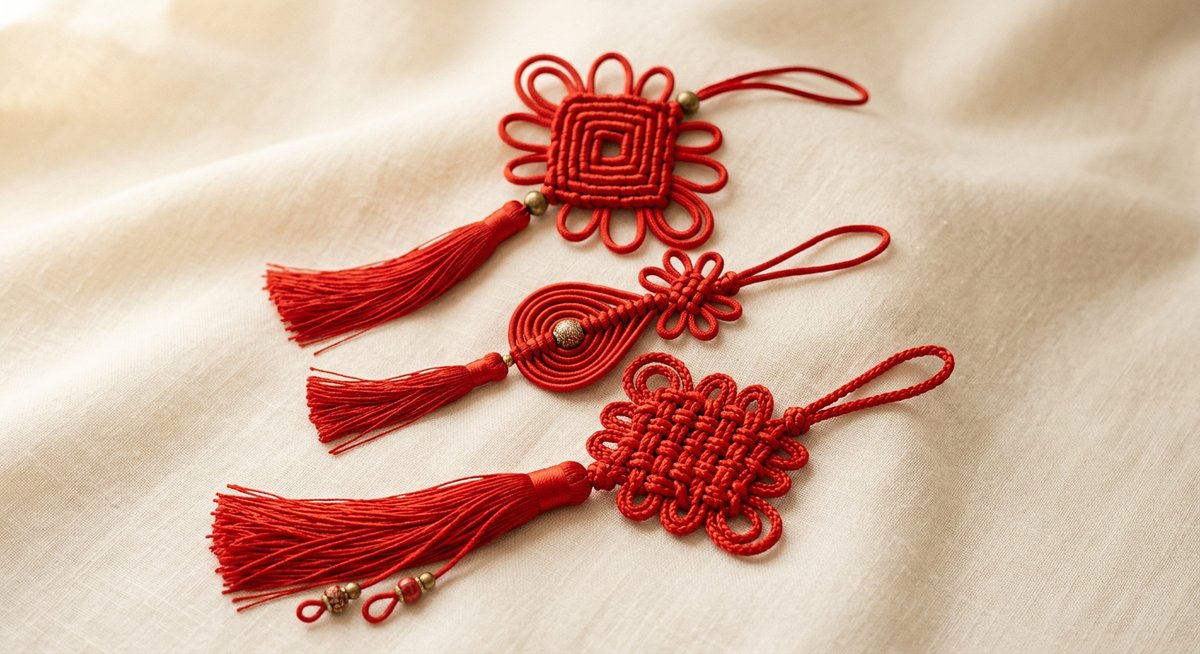
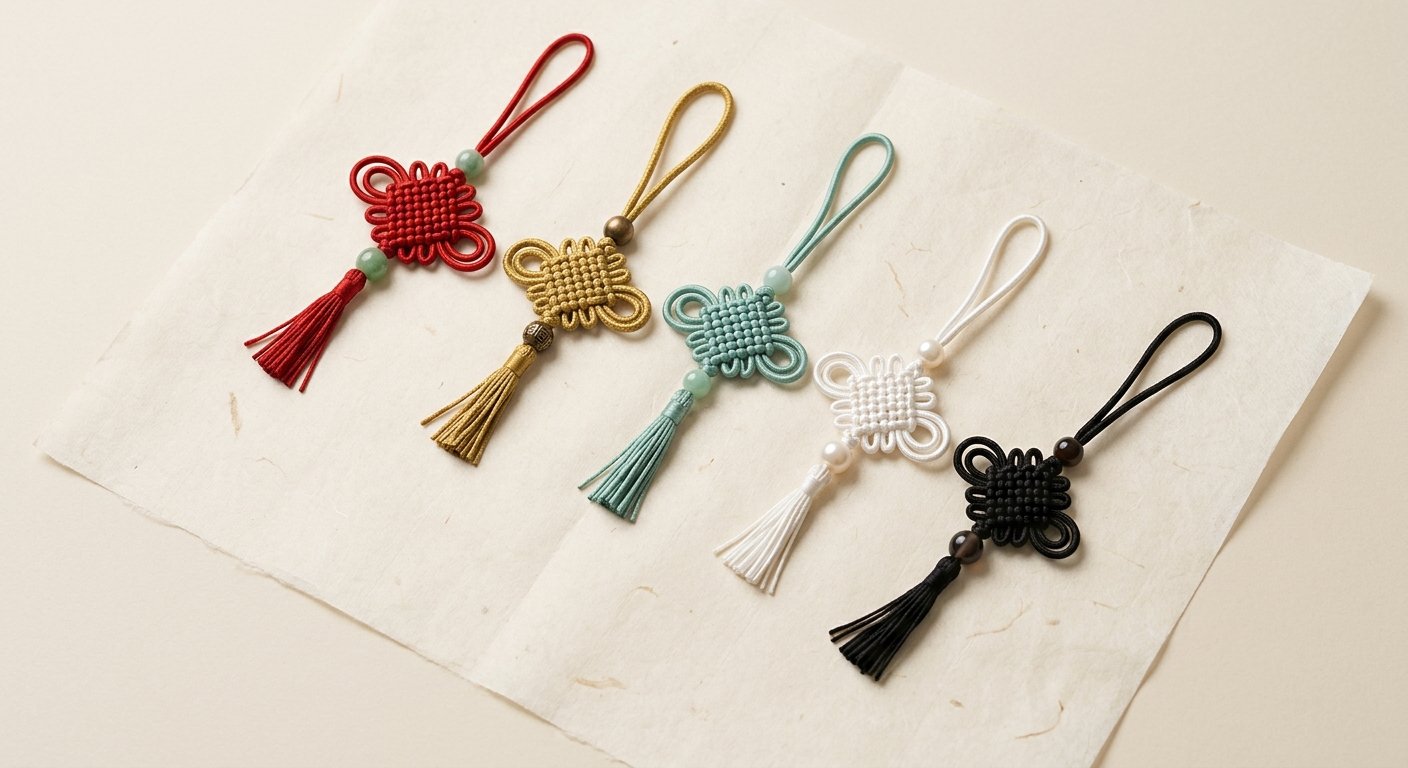
That philosophy matches what the knot shapes themselves say: the double coin knot wishes wealth, the pan chang knot wishes continuity without end, the butterfly knot carries love. Every form is a blessing written without characters — see our guides to five common Chinese knots and their meanings and Chinese knot color meanings.
Beyond knotting, she learns everything
Mi Lingzhu loves art and loves life. Alongside knotting she has studied calligraphy and painting, cloth art, crochet, and silk-stocking flower making. Inheriting tradition, for her, is not a museum exercise — she keeps exploring and absorbing new techniques, hoping to weave, in her words, "a better and happier tomorrow" with her own heart and wit [source:1].
Passing the knot on
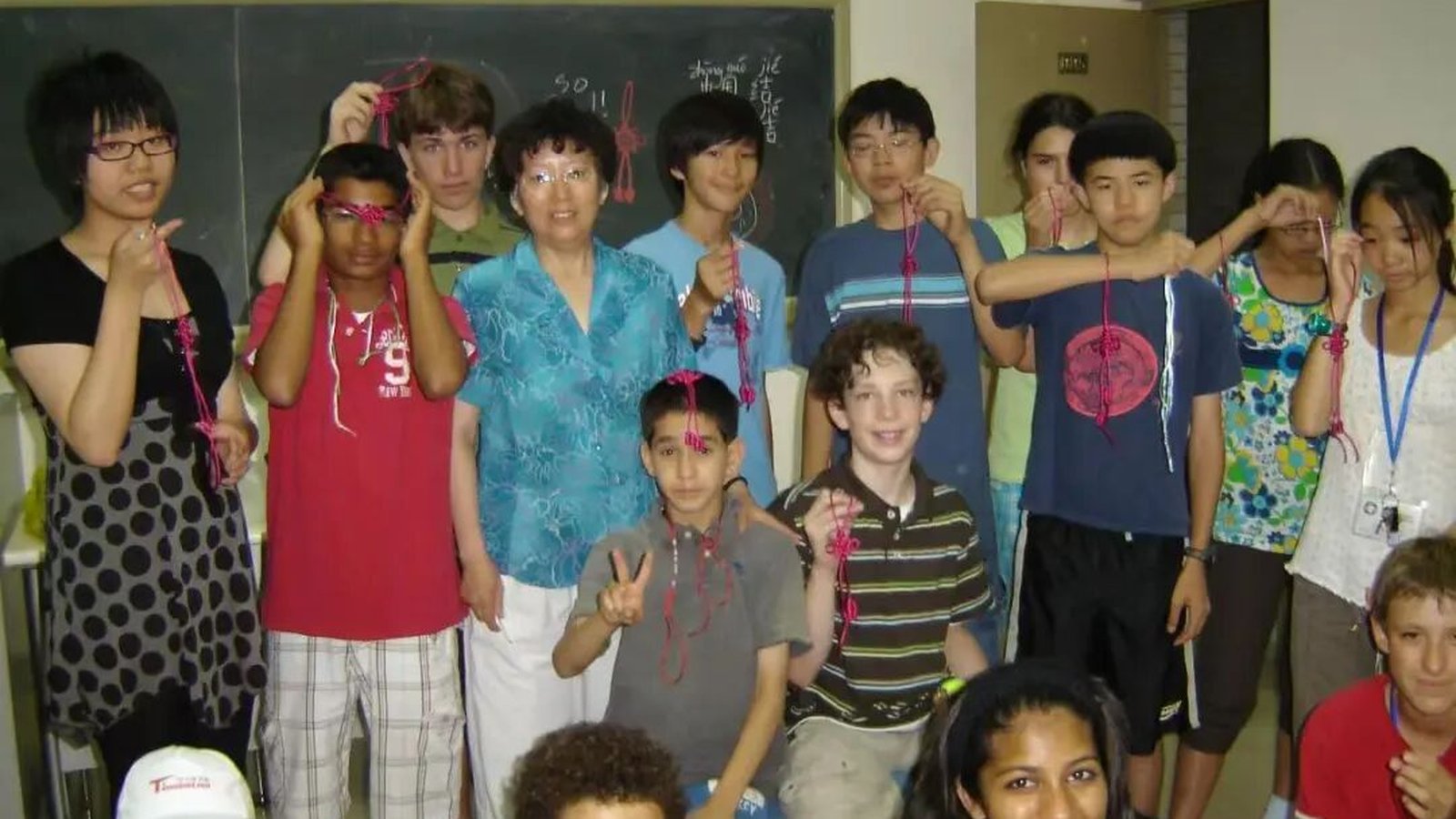
The age range in Mi Lingzhu's classroom spans most of a century.
In 2013, the fifth Spring Festival Culture Temple Fair opened at the Beijing Museum of Chinese National Art Treasures, with fourteen heritage crafts demonstrated live. Mi Lingzhu brought extra bundles of colored cord on purpose: "Whenever we come out to do an event, lots of people want to learn knotting. We do these events to pass the craft on, so I brought more material today." Before she had finished the sentence, a visitor was already at her table asking how a bracelet was tied and what the design meant [source:3].
Ten years later, in January 2023, she was at the Capital Library's children's program introducing knotting art: the kids watched the library's animated short about the craft, heard her explain its history and knot families, then learned to tie a double coin knot with her, step by step, and assembled a "five blessings at the door" hanging. When the session ended, parents and children lingered, unwilling to leave [source:2].
If you want to follow the same path she teaches, start with the double coin knot and the pan chang knot — the two classics in our beginner's guide to tying Chinese knots.
Her own words are the right ending: "It looks like just a simple Chinese knot, but it holds the wisdom of the Chinese people from ancient times to today. It is the accumulation and transmission of a culture — and I think we should keep passing it on." [source:1]
Frequently asked questions
Who is Mi Lingzhu?
Mi Lingzhu is the representative inheritor of Beijing's district-level rope-knotting heritage project and a member of the China Folk Literature and Art Association. Now in her seventies, she has tied and taught Chinese knots for thirty years, performed live for APEC delegates and the spouses of Asia–Europe Meeting leaders, and continues to teach children and adults across Beijing [source:1][source:2].
Is the Chinese knot an intangible cultural heritage?
Yes. Rope knotting is listed as intangible cultural heritage at various levels in China, and Mi Lingzhu is the representative inheritor of a district-level knotting project. The craft descends from ancient record-keeping knots and evolved into today's auspicious decorative art [source:1].
What does "every knot has intent, and the intent is auspicious" mean?
It is Mi Lingzhu's way of stating the tradition's core rule: every knot shape carries a blessing. The pan chang knot stands for endless continuity, the double coin knot for wealth, the double-happiness knot for weddings. The form itself is the message [source:1].
Which Chinese knot should a beginner learn first?
The double coin knot and the pan chang knot are the classic starters — the double coin knot is exactly what Mi Lingzhu teaches children first at the Capital Library [source:2]. Our beginner tutorial walks through both step by step.
Sources and further reading
- Profile interview material on Mi Lingzhu (site material archive)
- "First Capital Library Anime Online" knotting-art event — Capital Library, via Tianjin Library
- Heritage inheritor teaches visitors to tie Chinese knots — Beijing Evening News, via Sina