Zhou Qiaoyi: Knot Designer for Olympic Seals and the Forbidden City
In 2019, the Palace Museum in Beijing launched a project to replicate the Qing dynasty's twenty-five imperial seals, as a tribute to the museum's 600th anniversary. Every one of the twenty-five seals needed its shoudai — the knotted silk cord-and-tassel that dresses an imperial seal — and the making of all twenty-five was assigned to Beijing knot designer Zhou Qiaoyi, working alongside more than twenty national-level masters of arts and crafts [source:1][source:2].
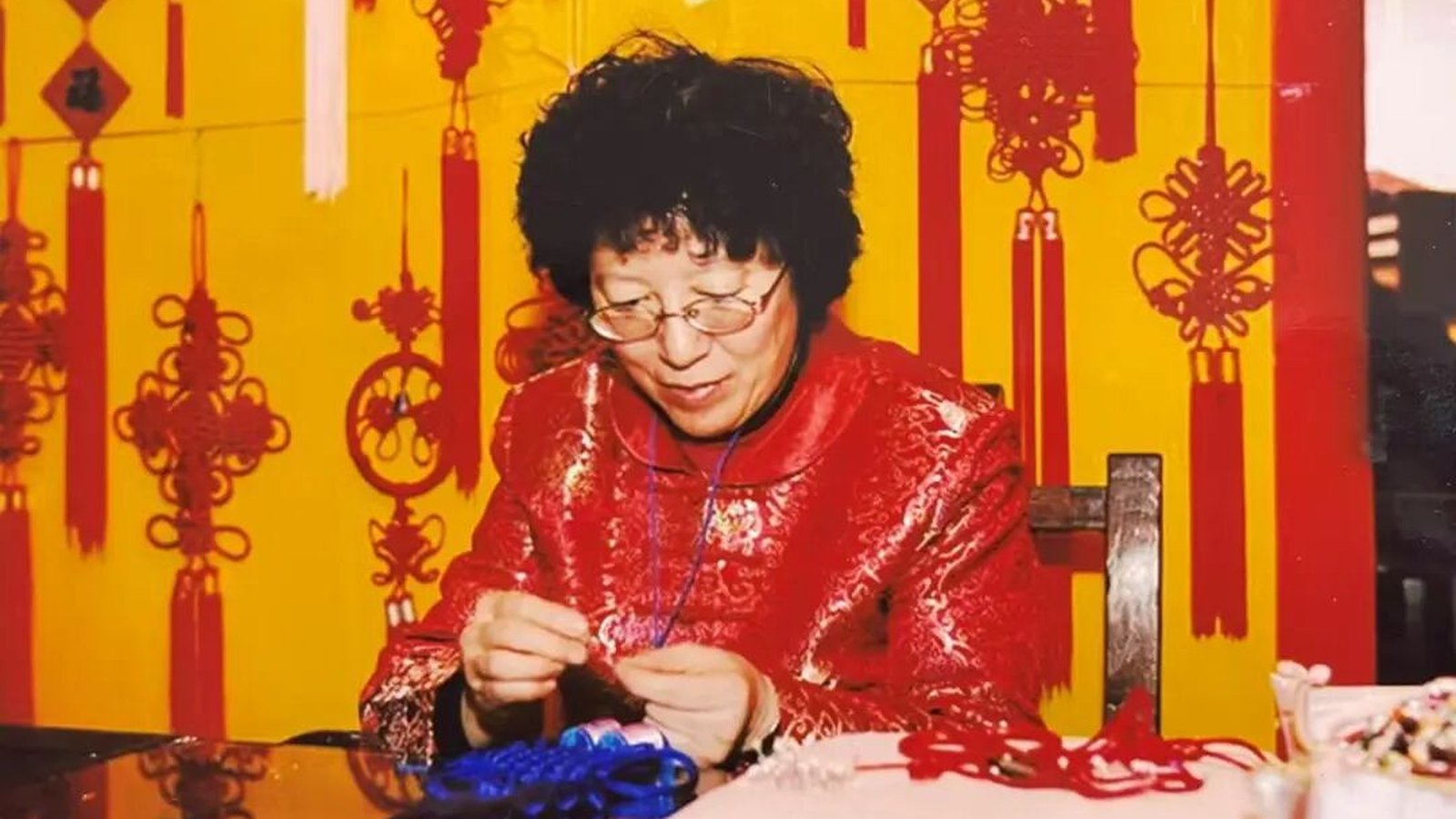
Zhou Qiaoyi and her mother, Beijing master of arts and crafts Xiong Dadi, have tied Chinese knots onto state banquets, postage stamps, and Olympic jade seals.
From fashion school back to mother's cords
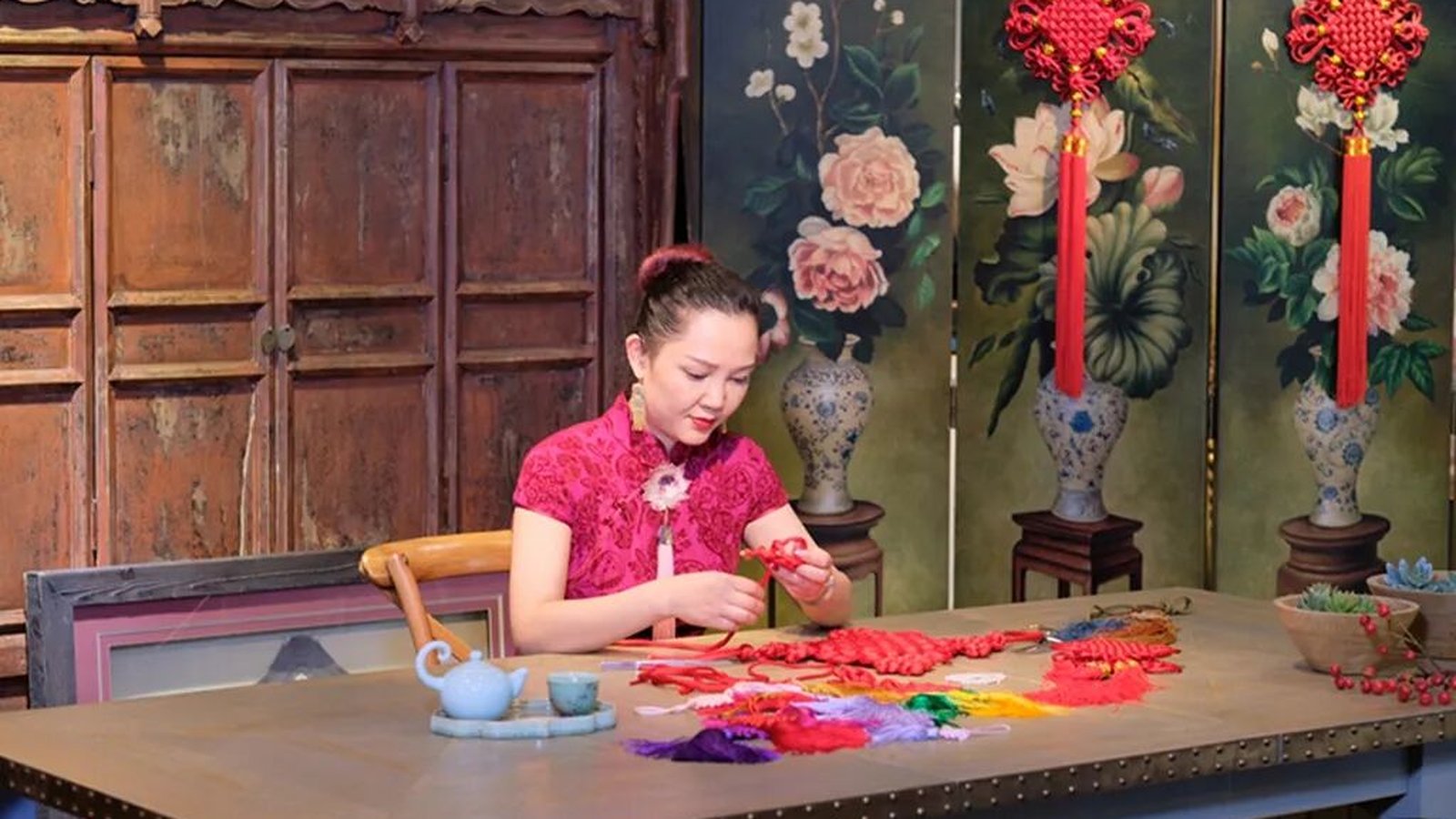
Zhou Qiaoyi was born in 1974 in Nanchang, Jiangxi. She is the county-level representative inheritor of "Nanchang rope knotting" and a Beijing third-grade master of arts and crafts [source:2]. Her skill is family learning: her mother Xiong Dadi is a renowned folk craft master, and their branch of the knot tradition — passed down by word and hand since the late Qing — is more than a century old [source:1].
From 1992, Zhou formally studied knotting under her mother [source:2]. In 1994 she entered the Central Academy of Arts and Design, majoring in fashion design. Systematic modern design training, layered over the family craft, gave her an idea: combine traditional culture with the present, and create new cultural objects. After long deliberation she chose her mother's specialty — the Chinese knot — as the point where design would begin: mother and daughter together, keeping the old tradition and opening a new enterprise [source:1].
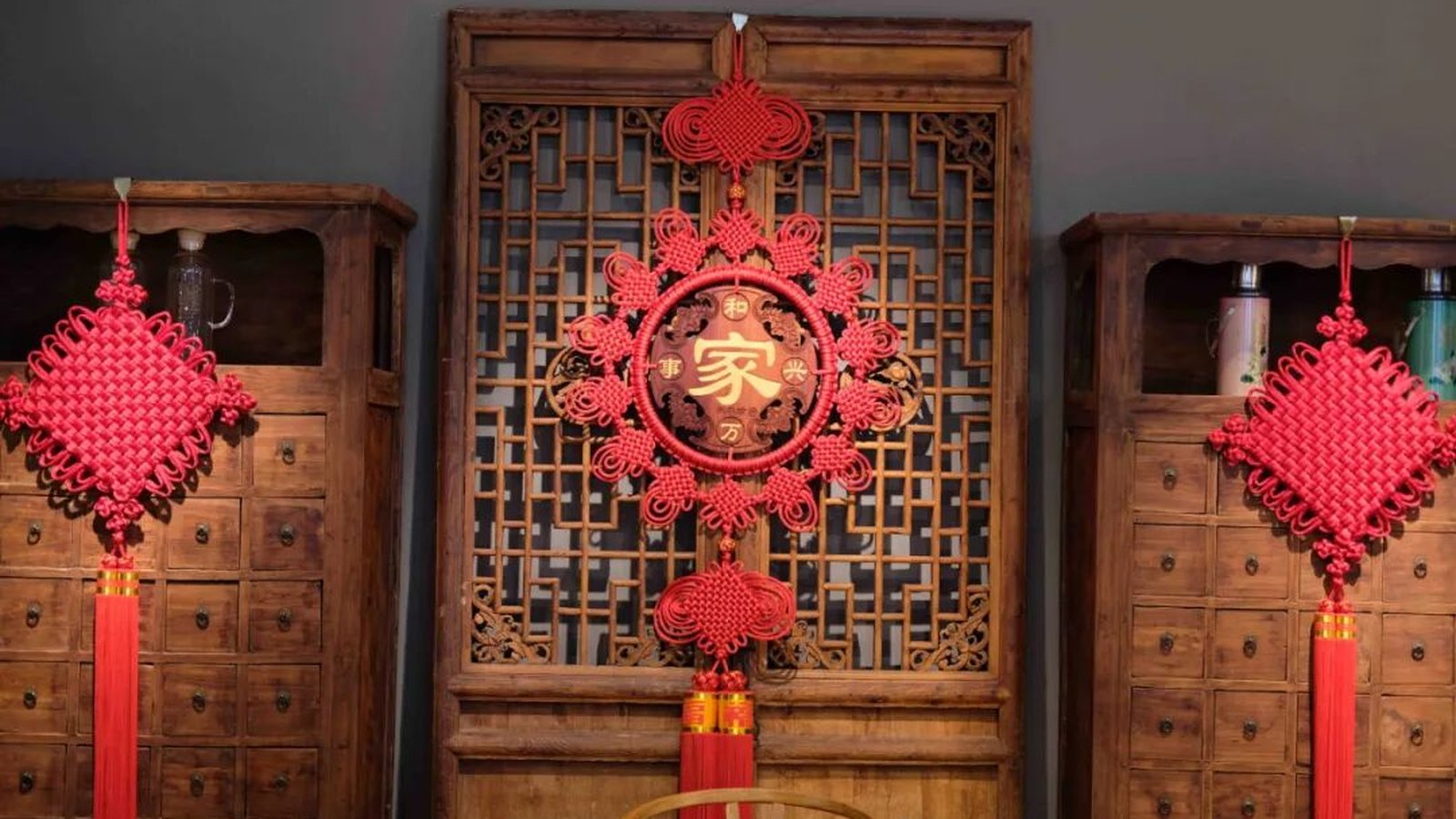
In 1995, the two did something nobody had done: they industrialized the Chinese knot. They scaled up small knot ornaments, combined them into large self-standing wall hangings, and built the "Qiaoyi" product line with themed batch production [source:2][source:1]. Those hangings went on to enter millions of homes as good-luck gifts for housewarmings, weddings, New Year, birthdays, and business openings; their extra-large spatial knots, one to three meters across, were custom-made for shopping malls and TV studios, serving the Beijing TV Spring Festival Gala and CCTV's Tell It Like It Is [source:1].
Knots for state occasions
What made the pair famous, though, is a string of knots tied for the nation [source:1]:
- 1997: the "Return Knot," designed and made for Hong Kong's return to China;
- 2000: the giant knot "Love Binds China," hung on the chairman's backdrop at the Cross-Strait Women's Development Symposium;
- 2001: Zhou appeared as a special guest on Beijing TV's "New Century, New Beijing" Spring Festival gala, knotting live on stage;
- July 2001: the giant knot "Lighting the 2008 Beijing Olympic Torch," plus dozens of designs and thousands of gift knots, taken by the bid committee to Moscow for the Olympic bid;
- June 2003: hundreds of large knots commissioned by the Beijing Party Committee's organization department to honor "heroes of the fight against SARS";
- 2015–2017: her carved-lacquer knots and cinnabar-button knots were selected three years running as Great Hall of the People banquet gifts for foreign experts.
Stamps, seals, and the Forbidden City
In January 2003, Xiong Dadi was commissioned by the State Post Bureau to design the "One-Heart Knot" special stamp — the first time a Chinese knot appeared on a dedicated national stamp. In August 2013, the mother-daughter team's knot stamp "Beautiful Blessings" was issued [source:1].
In July 2003, the Beijing Olympic emblem — the "Chinese Seal" jade stamp — was born, and its five-colored layered silk cords were designed and made by the pair. In January 2019 they made the cord tassels for the phoenix seal of the 2022 Winter Olympics emblem. And in June 2019 came the Forbidden City project: replicating the Qing dynasty's twenty-five imperial seals, with Zhou responsible for every seal's knotted cords [source:1][source:2].
Between the square inch of a stamp and the side of a jade seal, the Chinese knot is always present.
One cord, carried forward
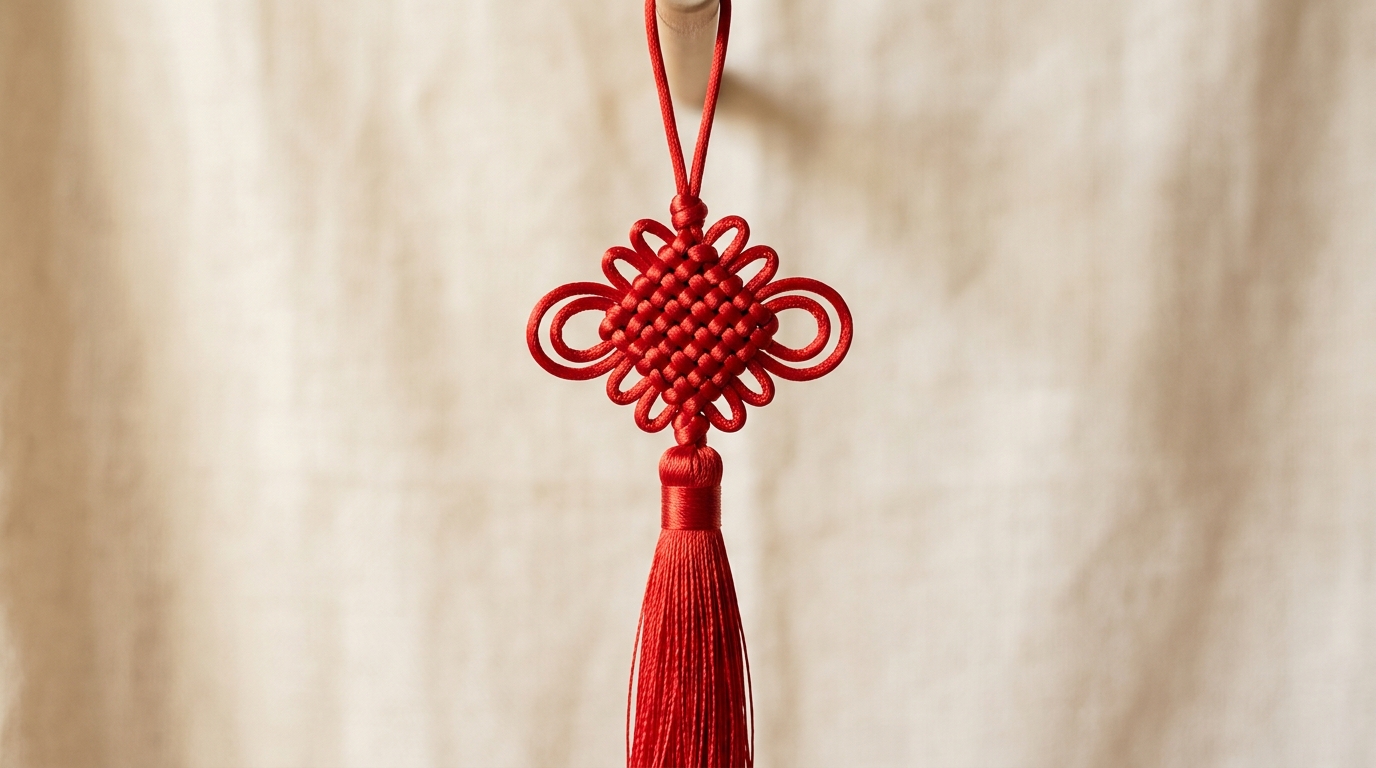
Zhou often says the Chinese knot's defining trait is "one cord from start to finish": every basic knot is woven from a single unbroken cord, through techniques of looping, knotting, threading, winding, wrapping, braiding, and drawing. It relies entirely on the maker's memory and years of hand-feel — tracking every turn of the silk, the tension of every pull, the evenness from knot to knot — and even then the finished piece must be carefully adjusted and set [source:1].
That hand skill runs in an unbroken line: from the Book of Songs, where a mother ties the bridal knot for her daughter — "she herself fastens the sash, with ninety rites" — through the Tang poet Meng Jiao's Knotting Love, "sitting I knot, walking I knot, knotting through a hundred years of moons," to the worktable of this mother and daughter today [source:1].
The work keeps traveling abroad: a 2004 solo exhibition of Xiong Dadi's knot art at the Jiangxi Provincial Museum; a gold award for "Full Moon, Full Bloom" at the 8th World Chinese Art Exhibition in Hong Kong that same year; a second prize for the knot "Dragon" at the 2006 Canberra Royal Show; a 2010 solo exhibition at the Powerhouse Museum in Sydney. In 2024, Zhou joined the China–Africa Forum's "Love in the Sunshine" summer camp, teaching knotting to children from Africa [source:1][source:2].
For another profile of a Beijing knot inheritor, read our article on Mi Lingzhu; for the names and meanings behind the knots themselves, see five common Chinese knots and their meanings.
Frequently asked questions
Who is Zhou Qiaoyi?
Zhou Qiaoyi (born 1974, Nanchang, Jiangxi) is the county-level representative inheritor of "Nanchang rope knotting," a Beijing third-grade master of arts and crafts, and a knot designer at Beijing Yuzhangjie Crafts Co. She studied under her mother, Beijing master Xiong Dadi; together they industrialized the Chinese knot, and their work has repeatedly become state gifts [source:2][source:1].
Who is Xiong Dadi?
Xiong Dadi is Zhou Qiaoyi's mother, a Beijing master of arts and crafts. Their family's knot tradition goes back to the late Qing dynasty. In 2003 the State Post Bureau commissioned her to design the "One-Heart Knot" special stamp, and in 2010 the Powerhouse Museum in Sydney held a solo exhibition of her work [source:1].
What did Zhou Qiaoyi make for the Forbidden City's seal replication project?
For the Palace Museum's 600th anniversary in 2019, the Qing dynasty's twenty-five imperial seals were replicated by a team of more than twenty national-level masters. Zhou Qiaoyi was responsible for the knotted silk cords — the shoudai — of all twenty-five seals [source:1][source:2].
Has the Chinese knot appeared on postage stamps?
Yes. In January 2003, Xiong Dadi was commissioned by the State Post Bureau to design the "One-Heart Knot" special stamp, and in August 2013 the Chinese knot stamp "Beautiful Blessings" was issued [source:1].
Sources and further reading
- Profile material on knot inheritor Zhou Qiaoyi (site material archive)
- Zhou Qiaoyi — Beijing Arts and Crafts Network master database