Suzhou Embroidery: The Art of Double-Sided Stitching
In a quiet studio in Suzhou, an embroiderer holds up a round silk panel. On one side, a cat sleeps among jasmine flowers, every whisker distinct, every shadow soft. She turns the frame over. The same cat appears on the back — not a mirror image, not a rough copy, but the same picture, stitched so cleanly that it is hard to tell which side was meant to be the front.
This is Suzhou embroidery (Su xiu), the silk-thread art of the Jiangnan water towns. It is one of China's four great embroidery schools, celebrated for a quality summed up in four words: fine, delicate, elegant, and pure [source:1]. And its most famous trick — double-sided stitching — makes it look almost impossible.
What is Suzhou embroidery?
Suzhou embroidery takes its name from Suzhou, the city of gardens and canals in Jiangsu province. For more than two thousand years, the region's soft climate, rich silk production, and concentration of painters and scholars created ideal conditions for a refined needle art [source:1].
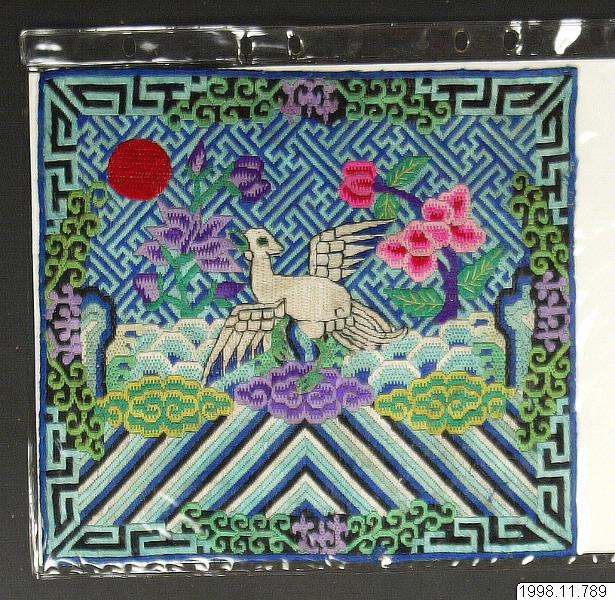
Unlike folk embroidery, which often favors bold symbols and protective magic, Suzhou embroidery grew up alongside literati painting. Embroiderers used the needle as a brush and colored silk as ink. They copied famous paintings of flowers, birds, ladies, and misty landscapes, aiming not only for likeness but for the spirit of the original [source:1].
The classic subjects are flowers and birds, ladies in gardens, cats, fish, and Jiangnan landscapes. A well-known saying describes the school's ambition: to make embroidered flowers seem fragrant, embroidered birds ready to sing, and embroidered cats appear to breathe.
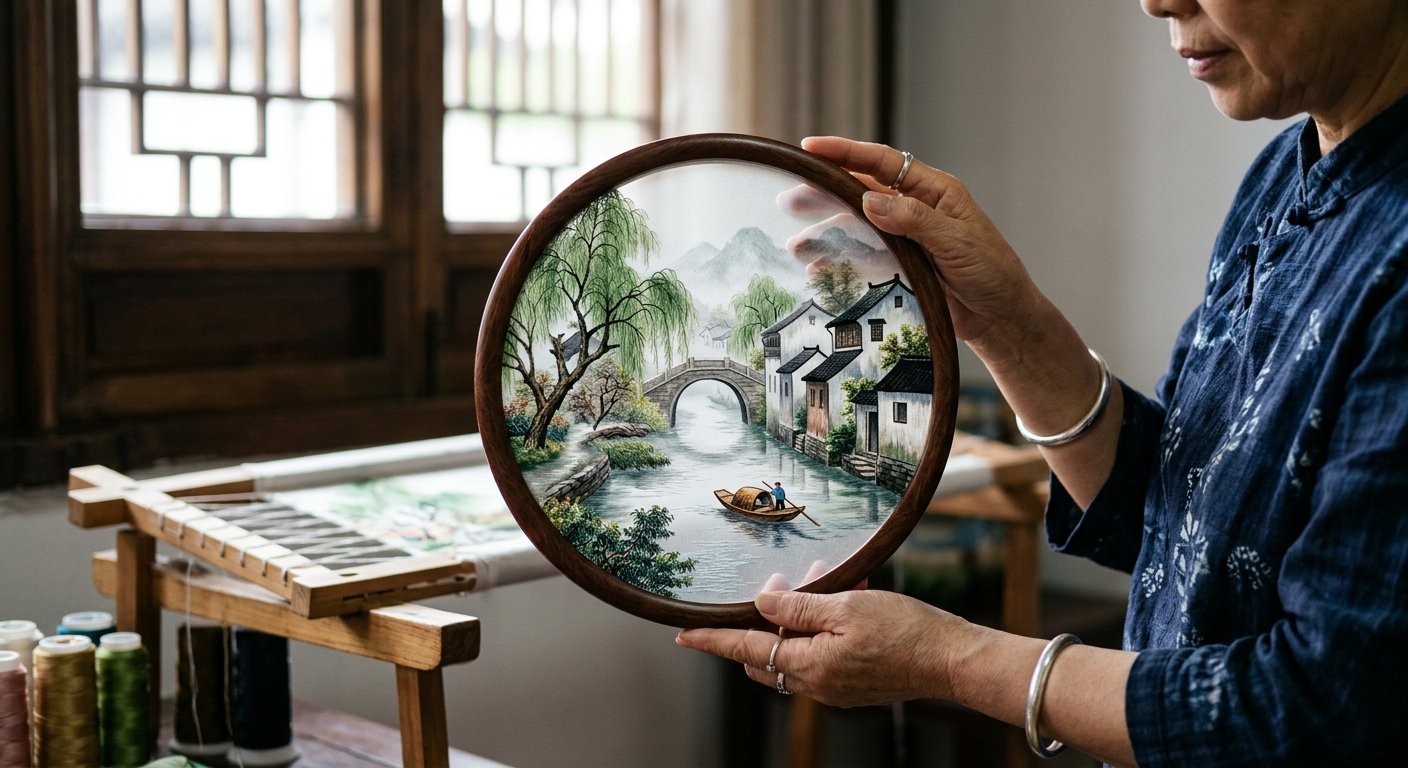
Suzhou embroidery is often called "painting with a needle" because it borrows compositions and moods directly from Chinese literati painting.
A thousand years of needle and silk in Jiangnan
The origins of Suzhou embroidery are hard to pin down, but surviving pieces from the Song dynasty and later show a continuous development of technique. A Yuan-dynasty fragment already used nine different stitches. By the Ming dynasty, Suzhou embroiderers were working from painters' designs, and a distinctive style emerged: dense, even stitches, soft colors, and restrained, elegant compositions [source:1].
The Qing dynasty turned Suzhou into an embroidery market. The city had so many embroidery workshops that it was called the "embroidery city." In the Daoguang period, a Suzhou woman named Ding Pei wrote the Xiupu (Manual of Embroidery), the first Chinese book devoted entirely to embroidery technique [source:1].
At the end of the Qing dynasty and the beginning of the Republic, two innovations reshaped Suzhou embroidery. Shen Shou developed fangzhen xiu, or simulation embroidery, which used Western ideas of light and shadow to make embroidered images look almost photographic. Her portrait work won recognition at the 1915 Panama–Pacific International Exposition. Decades later, in the 1930s, Yang Shouyu created luanzhen xiu, or random-stitch embroidery, using crisscrossing threads like oil-paint brushstrokes to create depth and movement [source:1].
In 2006, Suzhou embroidery was added to China's first national intangible cultural heritage list [source:1].
The double-sided miracle: how Suzhou embroidery hides its back
The technique that most astonishes newcomers is double-sided embroidery (shuangmian xiu). In ordinary embroidery, the back of the cloth is messy: knots, loose ends, and overlapping threads. In double-sided Suzhou work, both sides are finished surfaces.
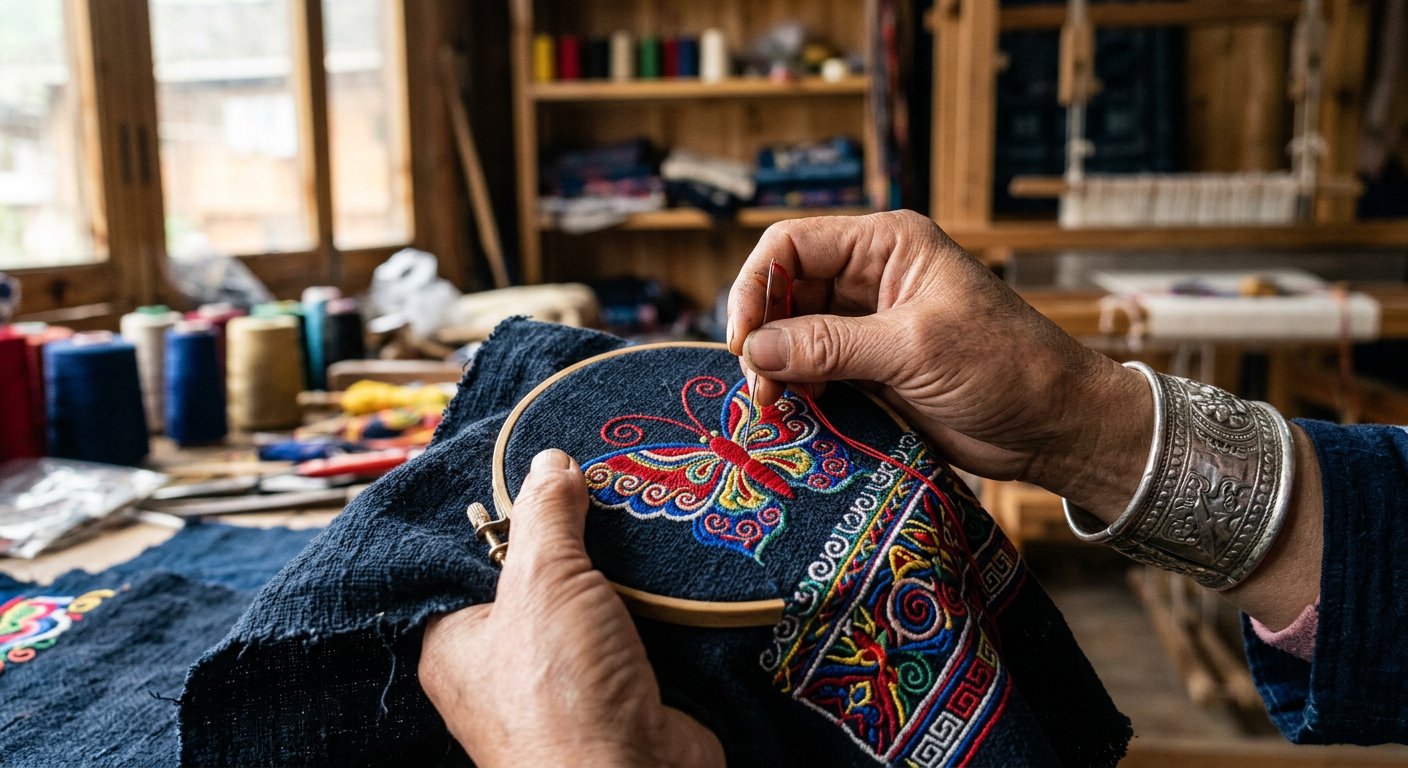
To achieve this, the embroiderer splits a single silk thread into as many as sixteen or even thirty-two filaments. Each stitch is planned so that the thread travels inside the fabric from one side to the other without leaving a trace. There are no knots; the ends are hidden between the warp and weft. The result is two matching pictures, one on each face of the cloth, both smooth enough to frame [source:1].
The most famous demonstration of this skill is the double-sided cat. Because the same image appears on both sides, the cat seems to have real fur, real depth, and a calm, breathing presence. It has become a symbol of the school.
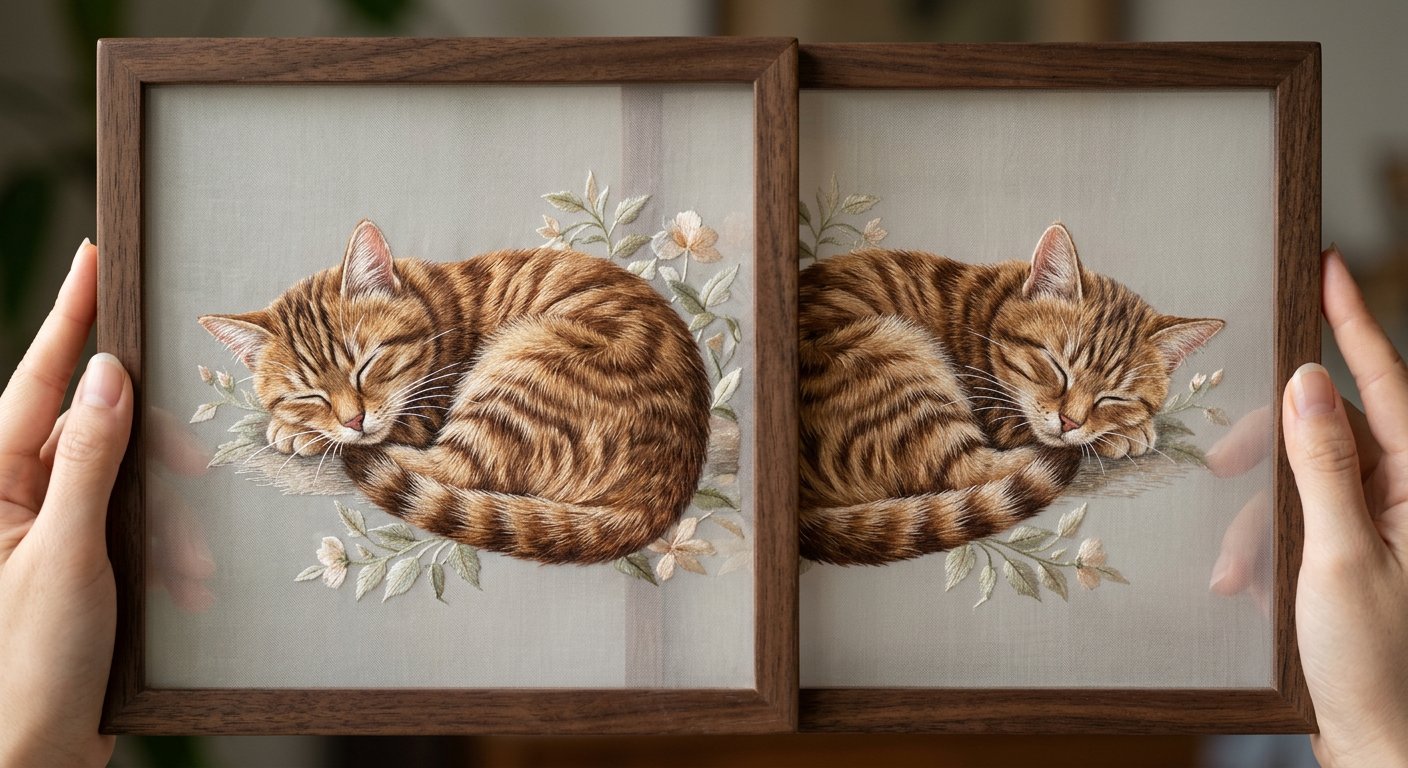
The double-sided cat is Suzhou embroidery's best-known showpiece: the same image, equally refined, appears on both the front and the back of the silk.
Even more advanced is double-sided, differently colored embroidery (shuangmian yi se xiu), in which the front shows one color scheme and the back another — a flower that is pink on one side and white on the other, for example. In the rarest form, double-sided, different-shaped embroidery, the two sides show entirely different subjects.
The eight qualities that define a masterwork
Suzhou embroidery is judged by eight traditional standards [source:1]:
- Flatness — the surface lies smooth, without puckers or bumps.
- Evenness — stitches are uniform in length and tension.
- Fineness — threads are split to extreme thinness.
- Density — stitches are close enough to hide the ground cloth.
- Harmony — colors blend softly, like watercolor washes.
- Luster — silk catches the light with a gentle sheen.
- Smoothness — the surface feels as good as it looks.
- Uniformity — the whole composition is consistent in quality.
When all eight are present, the embroidery does not merely depict a scene; it becomes a scene. A Suzhou landscape can seem to recede into mist. A fish appears to swim through water. A cat looks warm enough to touch.
Four branches of the Suzhou family
Although the name points to Suzhou, the Su embroidery tradition includes several regional branches, each with its own character [source:2][source:3][source:4][source:5].
Nantong simulation embroidery (Shen xiu). Developed by Shen Shou in Nantong, this branch absorbed Western realistic painting. It uses rotating and void-and-solid stitches to model form, light, and texture. Portraits are its strongest suit.
Yangzhou ink-wash embroidery. Yangzhou embroidery, which flourished in the Ming and Qing dynasties, specializes in the mood of ink-wash painting. The embroiderer "reads" a painting the way a calligrapher reads a poem, then translates brushstrokes into stitches. The result is described as "not painting, yet surpassing painting" [source:3].
Wuxi miniature embroidery (jingwei xiu). Wuxi work is tiny and precise. A single silk thread may be split into eighty parts; a human face may be no larger than a mung bean, with eyes, nose, and mouth all stitched without ink outlines. The school is famous for double-sided miniature pieces [source:5].
Changzhou random-stitch embroidery (luanzhen xiu). Created by Yang Shouyu in 1912, this technique abandons the orderly rows of traditional stitchery. Threads cross at different angles and lengths, building color and light in layers like oil paint. From up close the surface looks chaotic; from a few steps back, the image snaps into focus [source:4].
Together, these branches show that Suzhou embroidery is not frozen in tradition. It is a family of techniques that has repeatedly reinvented itself.
From the Song court to today: masters and revival
Suzhou embroidery has always had its master craftsmen and women. Shen Shou brought it to international attention in the early twentieth century. Yao Jianping, a national-level inheritor, has continued to innovate, developing a "fusion-needle" style that combines freehand brushwork feeling with precise realism [source:6].
Today, Suzhou embroidery faces the same pressures as many hand crafts: machine embroidery is cheaper and faster, and young people are less likely to spend years learning to split silk threads. Yet the art survives in studios, museums, and fashion collaborations. Contemporary designers adapt Suzhou motifs for handbags, scarves, and home décor, while training programs work to bring new embroiderers into the tradition.
How to recognize real Suzhou embroidery
If you are buying or studying a piece, look for these signs:
- Thread splitting. The finest Suzhou work uses threads far thinner than ordinary embroidery floss. Hold the piece to the light: the stitches should be dense and even.
- Color gradation. Suzhou embroidery builds color through tiny changes of thread, creating soft transitions rather than hard blocks.
- Double-sided finish. In a true double-sided piece, both faces are clean and complete. There should be no knots or loose ends visible on either side.
- Subject and mood. Landscapes, cats, fish, flowers, and ladies are classic subjects. The overall feeling should be refined and restrained, like a Jiangnan garden.
When these qualities come together, Suzhou embroidery lives up to its old reputation: a painting drawn not with brush and ink, but with needle and silk.
Sources and Further Reading
- 苏绣 - 中国非物质文化遗产网
- 苏绣(南通仿真绣) - 中国非物质文化遗产网
- 苏绣(扬州刺绣) - 中国非物质文化遗产网
- 苏绣(常州乱针绣) - 中国非物质文化遗产网
- 苏绣(无锡精微绣) - 中国非物质文化遗产网
- 国家级非遗项目(苏绣)代表性传承人姚建萍 - 中国非物质文化遗产网
- Suzhou embroidery - Wikipedia
This article was researched and written by the ChineseFolkCrafts.com editorial team. Claims are cross-checked against authoritative sources; see About Us for our editorial approach.