The fifteenth day of the first lunar month is the first full moon of the year. In China, that night belongs to the Lantern Festival, when families gather, eat sweet rice balls, and walk among thousands of glowing lanterns. It is the grand finale of the Spring Festival season — after this night, the new year celebrations officially close.
It is one of the most beautiful nights in the Chinese calendar. But the lanterns are doing more than decorating the streets. They are a language of light, and the festival surrounding them is two thousand years of history compressed into a single evening.
A festival two thousand years in the making
The Lantern Festival — Yuanxiao Jie (元宵节), also called the Shangyuan Festival or simply the "Festival of the Fifteenth" — has roots in the Qin and Han dynasties. By the late Qin, records describe burning lamps on the fifteenth night of the first month to honor Taiyi, the supreme deity of the Han pantheon. Folk memory adds a political story: when Emperor Wen consolidated his rule in 180 BCE, the decisive day fell on the fifteenth of the first month, and he ordered grand illuminations to mark it. When Sima Qian compiled the Taichu calendar, the festival was already fixed as a major date. In 2008, the Lantern Festival itself was inscribed on China's national list of intangible cultural heritage.
Each dynasty raised the spectacle. In the Tang capital, craftsmen built a "lantern wheel" some twenty zhang high — tens of meters — hung with tens of thousands of lamps and said to blaze like a flowering tree. The Song extended the display to five nights and added the lantern market and the riddle game; the poet Xin Qiji described the scene as "the east wind setting a thousand trees ablaze at night." The Ming stretched official illuminations to a full ten nights, the longest lantern season in Chinese history, while the Qing compressed the schedule but made the lanterns ever more exquisite. A folk saying captures the arc of the holiday season: "Fire on the thirtieth, lanterns on the fifteenth" — New Year's Eve belongs to the hearth, and the fifteenth belongs to light.
Light at the start of the year
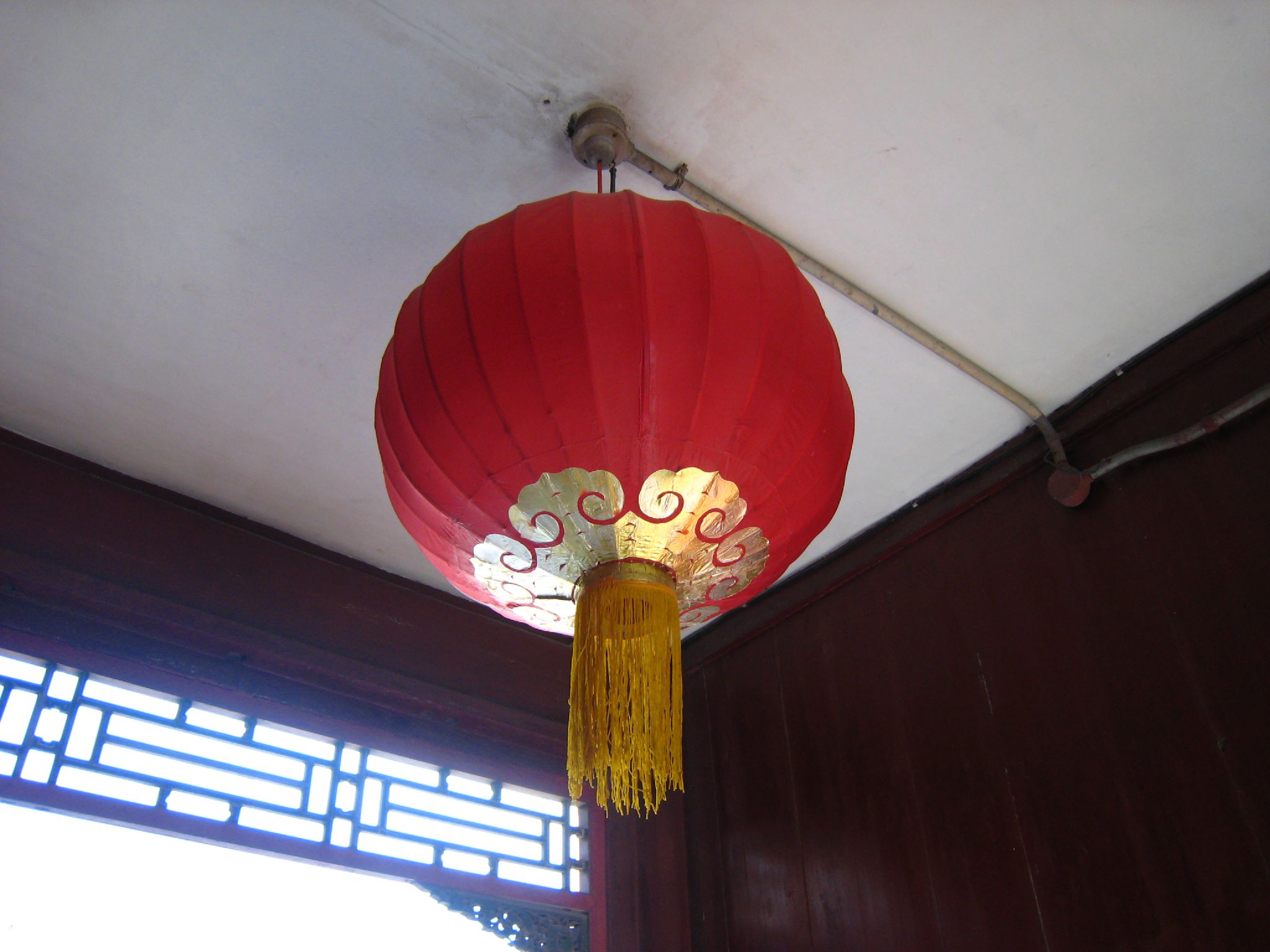
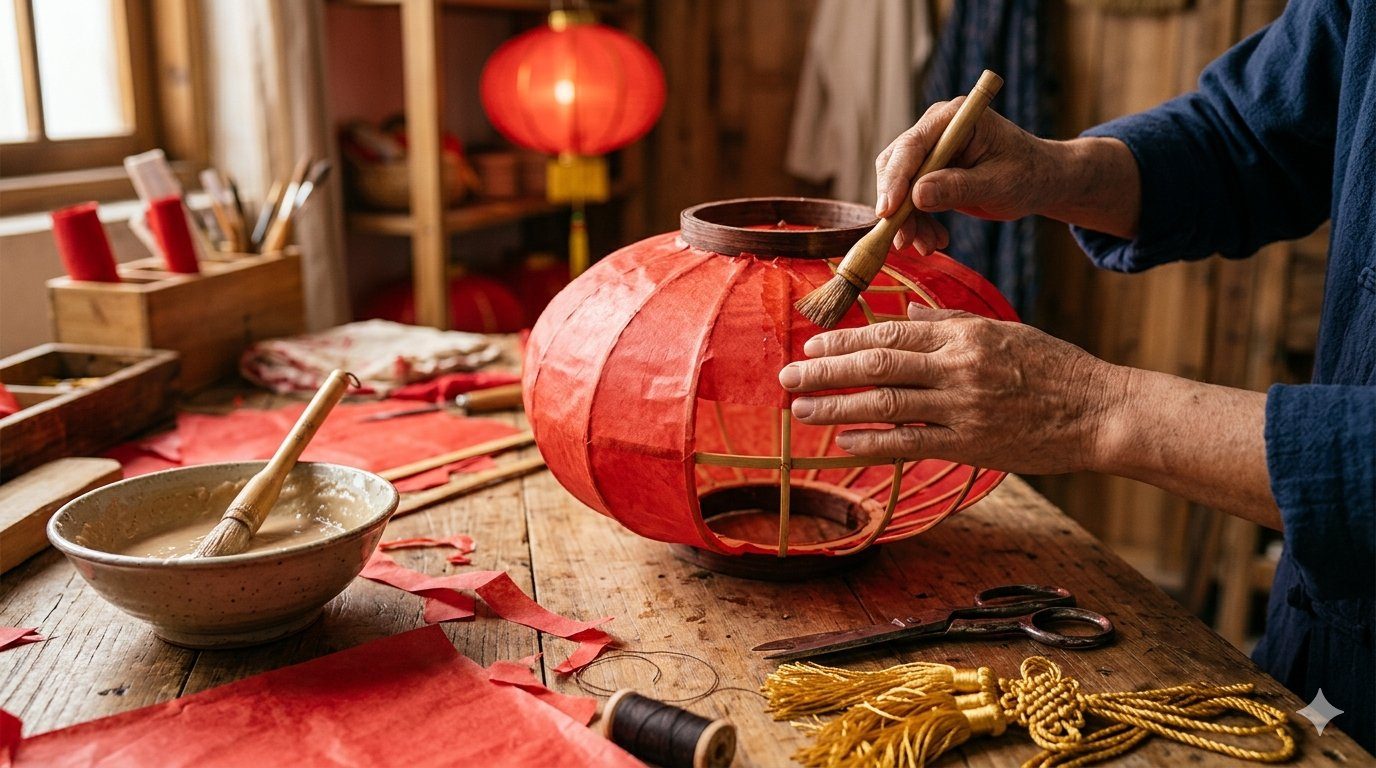
Lanterns have been part of Chinese festivals for at least two thousand years. Early lanterns were simple: paper or silk stretched over a bamboo frame, with a candle inside. Over time, they became more elaborate, taking the shapes of animals, flowers, palace halls, and even whole landscapes — a craft you can explore in our history of Chinese lanterns.
The light of the lantern symbolized many things at once: the return of longer days, the warmth of family, the hope for a bright year, and the guidance of ancestors and spirits. In several southern dialects the word for lantern sounds like the word for a new family member, so lighting a lantern also carried a wish for children and a growing household. Lighting lamps on the fifteenth thus meant more than decoration: it was a collective act of optimism at the turning of the year.
Riddle games and reunion
One of the most beloved Lantern Festival customs is guessing riddles. The game began in the Song dynasty, when puzzle-writers pasted strips of poetry and wordplay onto lanterns for passersby to solve, with small prizes for correct answers. The riddles often rely on homophones, character decomposition, and classical references, turning the festival into a public game of language that anyone literate could join.
The food of the night carries equal meaning. Round white rice balls in sweet soup echo the full moon, and their name plays on the word for reunion. Northerners eat yuanxiao — firm balls rolled in trays of glutinous rice flour until the coating builds up — while southerners eat tangyuan, softer balls wrapped by hand around fillings of black sesame, peanut, or red bean. Records of similar festival dumplings go back to the Southern Song. Whatever the technique, eating them together is a wish for the family to stay whole.
In traditional society the festival also had a romantic dimension. Women who rarely went out at night were free to view the lanterns, and the crowded lantern fairs became the one evening when young men and women might meet. Poets called it China's true night of love: "The moon rose above the willows; we promised to meet after dusk."
A night out: what people actually do
The key word of the festival is nao — "to make a lively noise." People speak of nao yuanxiao, rollicking through the fifteenth. Beyond lantern viewing and riddles, the night traditionally includes:
- Shehuo parades. In northern villages, troupes perform on stilts, dance dragons and lions, run "land boat" dances, beat waist drums, and twist yangge through the streets — a whole carnival of folk performance descended from ancient fire and earth rituals.
- Walking off illness. In many regions people — especially women — walk across bridges or along the city wall on the fifteenth or sixteenth, a custom called zou baibing, "walking away the hundred illnesses," to shed the old year's sickness.
- Fireworks and torches. The display traditionally peaks with fireworks, and in the southwest bonfires burn in the fields.
- Children's lanterns. Children pull rabbit lanterns on wheels or carry small lit lanterns through the lanes — in some places, lanterns gifted by their maternal grandparents year after year until the child turns sixteen.
Regional lantern styles
Different parts of China developed their own lantern traditions, and many of the great fairs are now protected as national intangible cultural heritage:
- Qinhuai (Nanjing): documented since the Eastern Jin, praised since the Ming as having "the finest lanterns under heaven," with painted boats on the Qinhuai River strung with lanterns. It was among the first entries on the national heritage list in 2006.
- Zigong (Sichuan): the modern giant of the form — vast silk-and-steel illuminated tableaux, dinosaur themes, and touring exhibitions that have shown in dozens of countries. Zigong's fair helped carry Chinese lantern art onto the world stage.
- Fengting (Fujian): a lantern procession dating to the Song, with costumed escorts, drum teams, and elaborate "hundred-opera float lanterns" unique to the town.
- Yongchang (Gansu): the "swastika maze" lantern ground, where 365 poles are planted in a labyrinth pattern — one for each day of the year — and visitors walk the spiral path between handmade lamps to earn a year of safe passage.
- Mawei–Mazu: lanterns sent across the strait between Mawei in Fujian and the Mazu islands, a shared festival custom binding both sides.
- Yuyuan (Shanghai): the temple-fair lantern show of the old city, opening on the thirteenth and "lowering the lanterns" on the eighteenth with formal sequences of lighting, parading, competing, and thanking the lamps.
- Guangdong: dragon lanterns carried in parades, while in northern courtyards the classic doorway lantern remains a bold red oval of paper or gauze.
Today, electric lights have replaced candles in most festival lanterns, but the shapes and meanings remain. In an age of neon signs, the soft glow of a paper lantern still feels like a reminder of something older and slower.
The festival today
The Lantern Festival has adapted remarkably well to the present. Heritage status has brought funding and attention: the Qinhuai fair has run for decades straight, drawing visitors by the tens of millions over its history, and Zigong's spectacle now tours internationally and streams online — one recent cloud-viewing season counted over half a billion views. When Spring Festival itself was inscribed on UNESCO's Representative List of the Intangible Cultural Heritage of Humanity in 2024, the lantern customs of its fifteenth night were part of what the world recognized.
Yet the festival's heart is still small and local: a family sharing a bowl of yuanxiao, a child tugging a rabbit lantern, a riddle strip trembling under a red shade. If you want to bring a little of that light home, our guide to making a simple red paper lantern takes about fifteen minutes.
Frequently asked questions
When is the Lantern Festival?
The Lantern Festival falls on the fifteenth day of the first lunar month — the first full moon of the lunar new year. In the Gregorian calendar it lands between early February and early March, two weeks after Chinese New Year's Day.
Why is it called the Lantern Festival?
The first lunar month was called yuan, and night was called xiao, so the fifteenth night was Yuanxiao. Because displaying, viewing, and carrying lanterns has been the festival's defining activity since at least the Han dynasty, it is also known as the Lantern Festival or the Festival of Lights.
What do people eat at the Lantern Festival?
Sweet glutinous rice balls in syrup. In northern China they are called yuanxiao and are made by rolling filling cubes in trays of rice flour; in the south they are called tangyuan and are wrapped by hand like dumplings. Common fillings are black sesame, peanut, and red bean. Their round shape mirrors the full moon and family reunion.
Is the Lantern Festival part of Chinese New Year?
Yes — it is the traditional closing day of the Spring Festival season. Celebrations run from the twelfth-month preparations through New Year's Day and end with the Lantern Festival on the fifteenth. After the lanterns come down, ordinary life resumes.
What is the difference between the Lantern Festival and the Mid-Autumn Festival?
Both involve lanterns and full moons, but the Lantern Festival closes the New Year season in late winter with great public lantern fairs, riddles, and rice balls, while the Mid-Autumn Festival in the eighth lunar month centers on moon-gazing, mooncakes, and family gatherings at home.
Author
This article was prepared by the team at ChineseFolkCrafts.com. We are not intangible-cultural-heritage inheritors or museum researchers. Our job is to find authoritative Chinese sources, understand them, and explain them clearly for international readers.
If you spot an error — a date, a translation, a misattributed custom — please let us know and we will correct it. Last updated 2026-07-12.