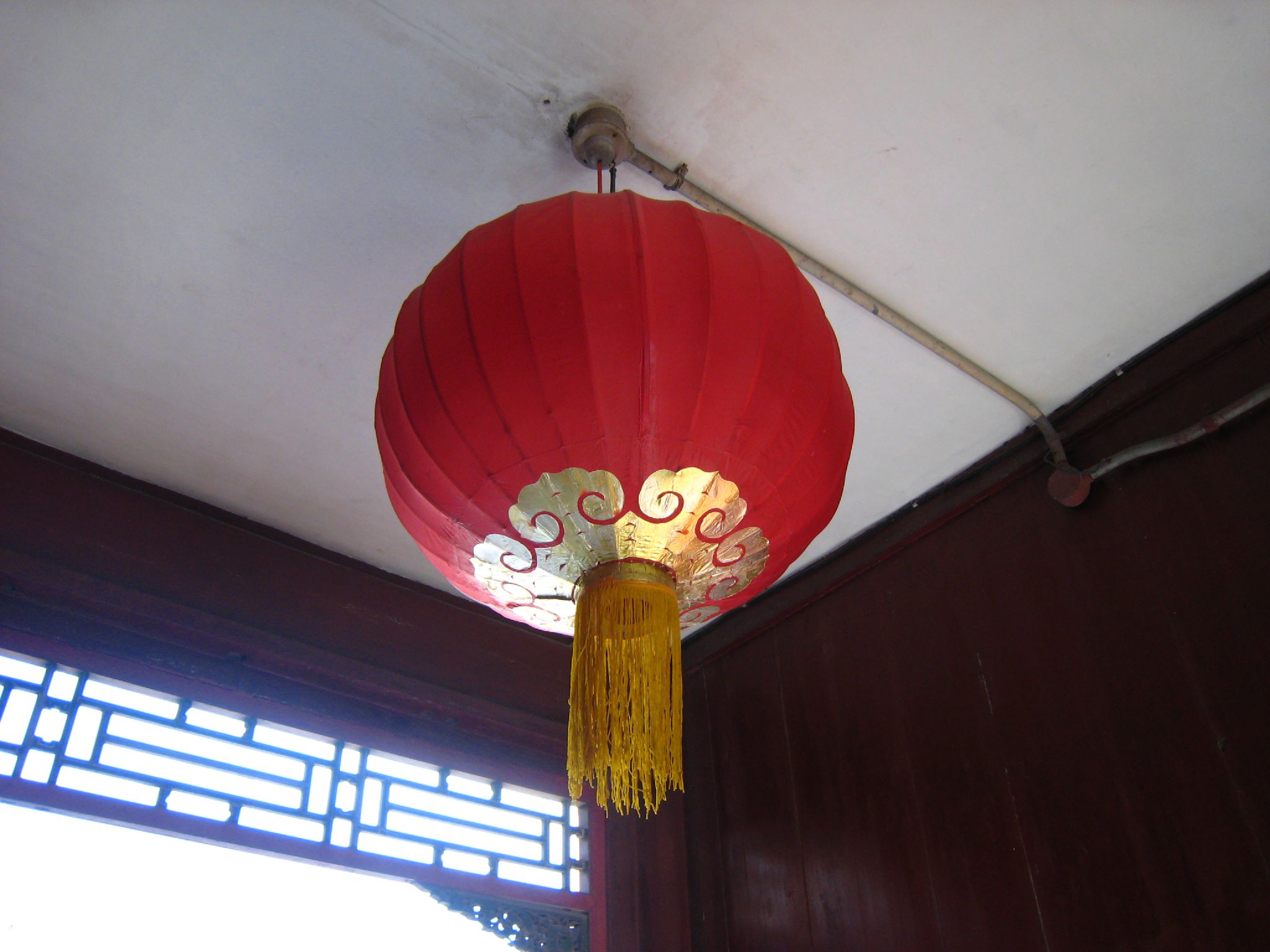
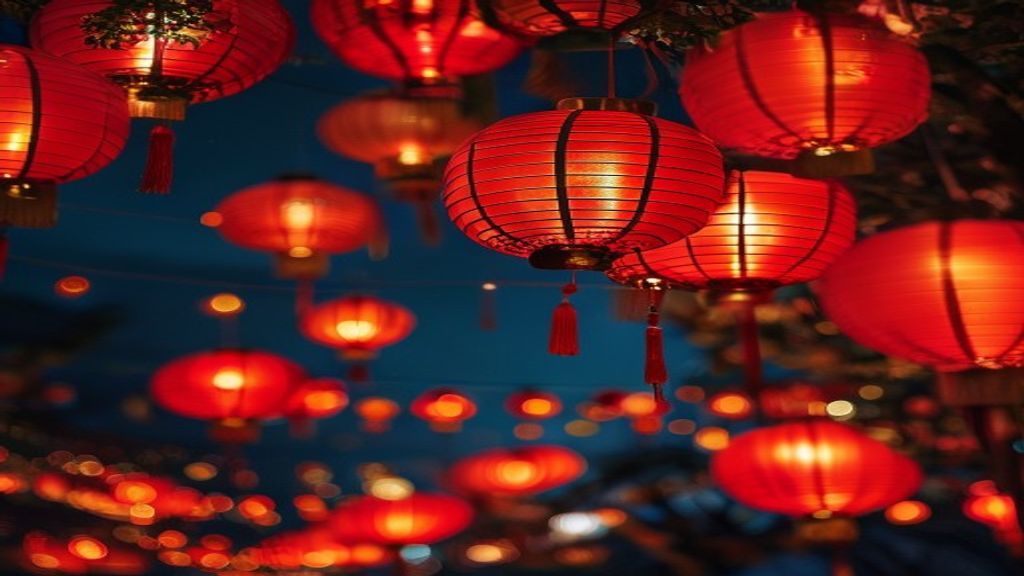
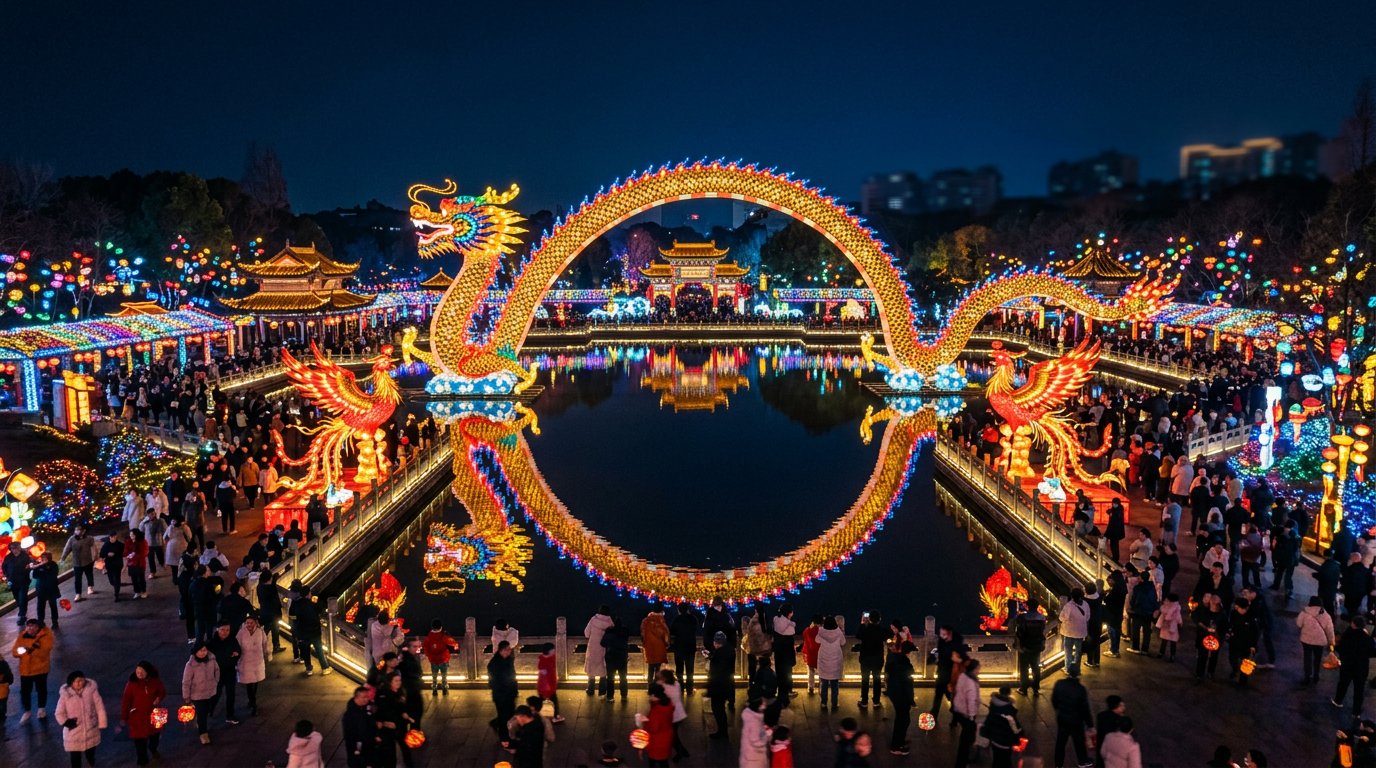
A Chinese lantern is far more than a candle in a bag. For more than two thousand years, the craft of dengcai—decorative lantern art—has turned a simple wind-shield for fire into portable sculpture, temple offering, palace furnishing, and festival icon. Today, when people picture a Chinese lantern they often picture one of three things: a painted palace lantern hanging in a courtyard, a revolving "galloping-horse" lamp whose figures seem to race in circles, or a round red lantern glowing above a doorway. Each image points to a real family of lanterns with its own materials, history, and meaning.
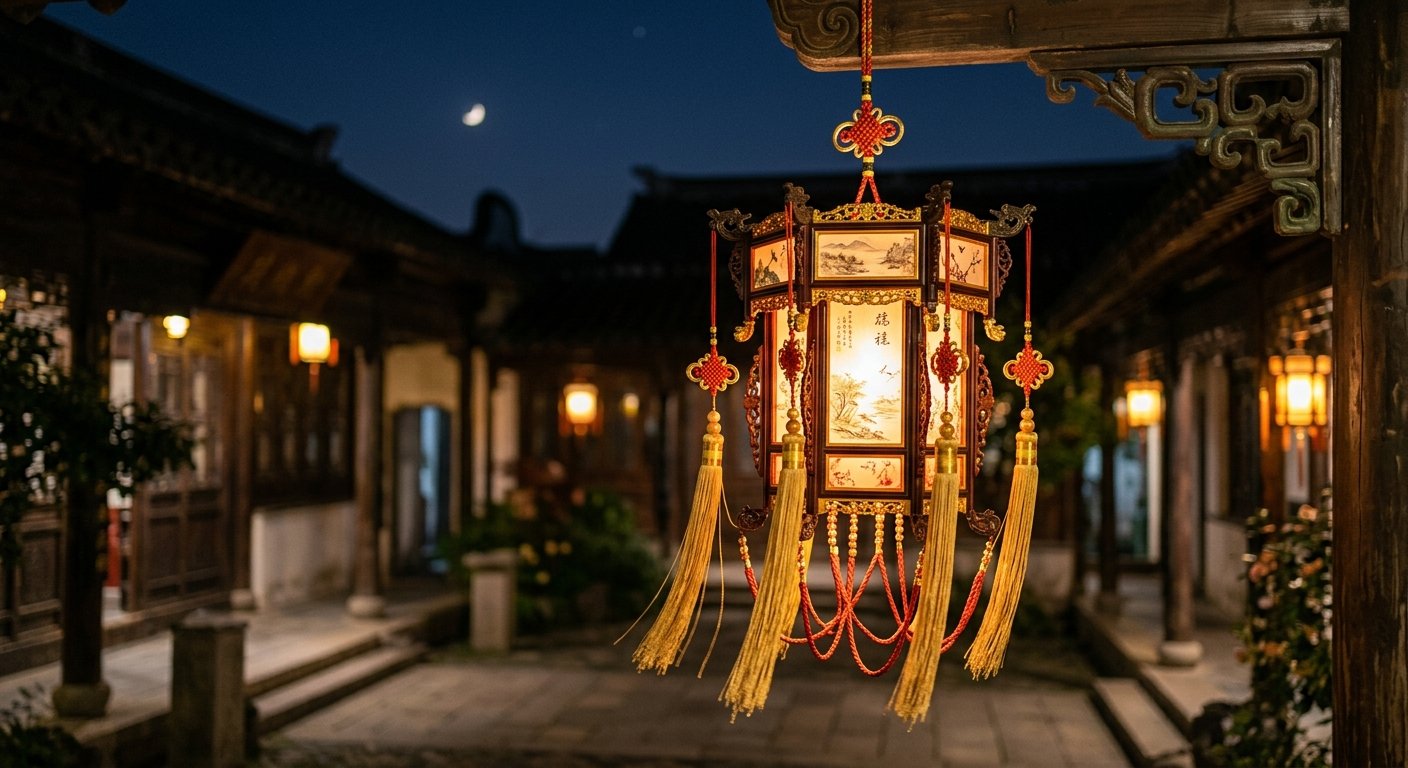
The palace lantern family combines a bamboo or wood frame with painted silk or gauze panels and a golden tassel fringe.
What is a Chinese lantern?
At its simplest, a Chinese lantern is a frame covered with something translucent. The frame blocks the wind; the covering lets the light through. Early examples used bamboo, wood, or metal ribs wrapped in silk, gauze, horn, or paper, with a hook on top so they could be carried through fields, hung in corridors, or placed before a deity [source:5][source:6]. Over time, the basic idea split into many regional traditions, and in 2006 the collective craft of dengcai entered China's first national list of intangible cultural heritage [source:1].
Because lanterns serve so many purposes—lighting a path, decorating a hall, honoring a god, celebrating a birth—craftsmen have always sorted them in more than one way. Beijing makers, for example, classify lanterns first by use into hanging lamps, standing lamps, wall lamps, and hand-carried lamps, and then by material into gauze lamps, palace lanterns, revolving lanterns, animal-shaped lanterns, metal lanterns, and filament lanterns [source:1].
Palace lanterns: court elegance for halls and temples
The palace lantern, or gongdeng (宫灯), began in the world that its name suggests: imperial palaces, ancestral halls, and temples. It is a formal, architectural lamp whose skeleton is usually made of bamboo or hardwood and shaped into a hexagon, octagon, or round pavilion; the sides are covered with fine gauze, silk, or glass and then painted with landscapes, flowers, calligraphy, or court scenes [source:2].
Luoyang, the ancient capital on the Yellow River, is one of the great homes of the palace lantern. Local tradition says the craft began in the imperial court and later spread to the city, so Luoyang gongdeng absorbed both court refinement and folk practicality [source:2]. The classic product is a round gauze lamp whose flexible green-bamboo frame can be opened for display or folded flat for storage. A single traditional Luoyang palace lantern passes through more than seventy steps before it is finished, from splitting the bamboo to mounting the painted gauze [source:2].
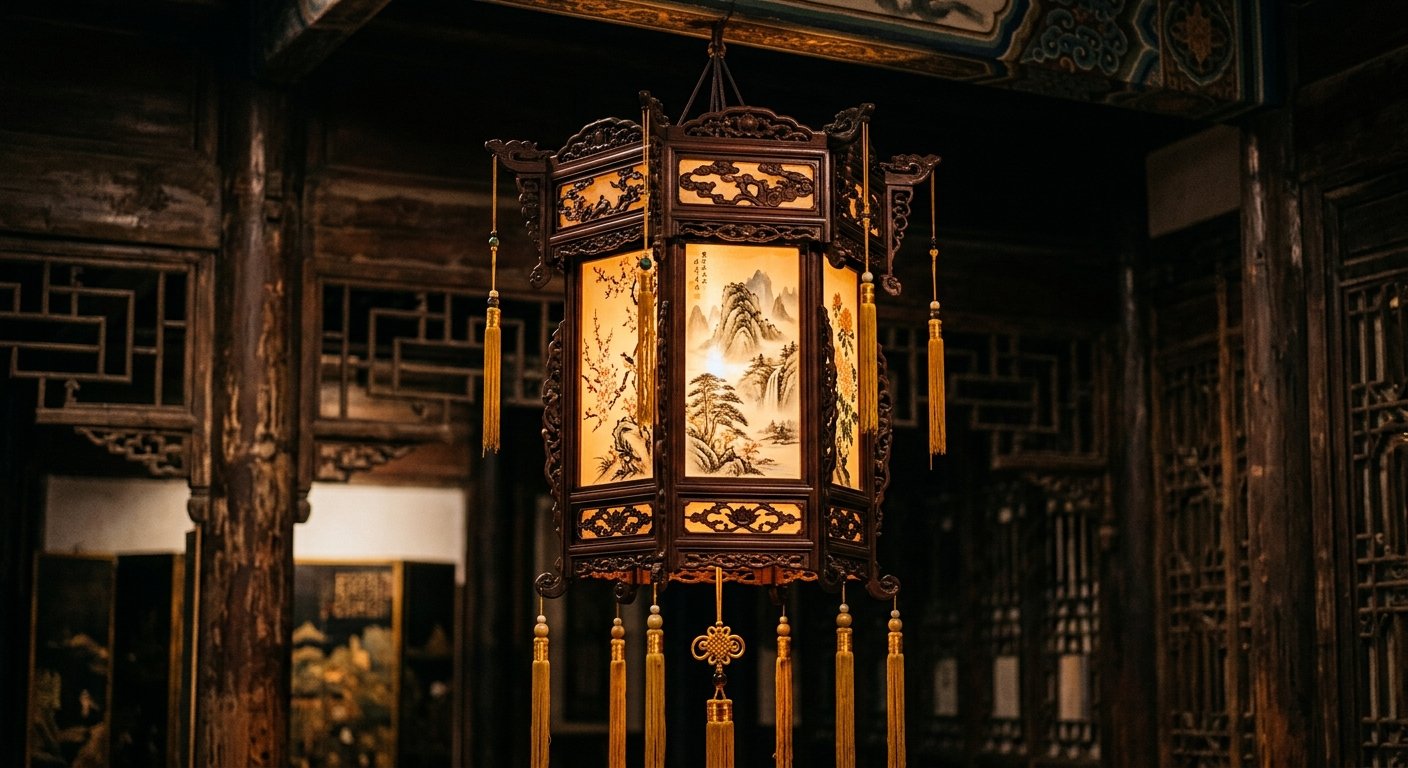
A hexagonal palace lantern shows the architectural quality of the *gongdeng* tradition: rigid frame, painted panels, and tasseled base.
Beijing palace lanterns share the same dignified spirit but draw on a wider toolkit. Imperial workshops and later folk ateliers combined bamboo framing, paper mounting, knotting, embroidery, carving, paper cutting, calligraphy, and painting to produce lamps that could stand in a palace corridor or beside a family altar [source:1]. You can read more about how this craft developed across dynasties in our article on a brief history of Chinese lanterns.
Revolving lanterns: the galloping-horse lamp
If the palace lantern is still and architectural, the revolving lantern is pure motion. Known as zou ma deng (走马灯), the "galloping-horse lantern," it hides a small paper wheel inside the shade. When a candle or lamp heats the air, the hot air rises through the top of the frame and sets the wheel spinning. Cut-paper silhouettes of horses, riders, soldiers, or mythic figures are pasted to the wheel, so they appear to gallop endlessly around the light [source:1].
By the Tang dynasty, craftsmen were already building elaborate versions, and the device became a regular feature of court and festival displays. The same principle later appeared in Shanghai lantern craft, where revolving lanterns are grouped as one of the four main local types alongside canopy lanterns, palace lanterns, and three-dimensional animal lanterns [source:3]. In festival sets today, a large revolving lantern is often the centerpiece that draws crowds: as the heat of the bulb turns the drum, dragons chase pearls or opera figures act out a scene.
Red lanterns: the color of celebration
No Chinese lantern is more recognizable than the round red one. Red is the color of joy, luck, and protection in Chinese culture; a red lantern at the door announces a celebration and is believed to ward off evil [source:5]. The round shape echoes the full moon and the family reunion it represents. Together, the color and shape turned the red lantern into the universal emblem of festival China—hung at New Year, weddings, shop openings, temple birthdays, and the Lantern Festival.
The modern globe-shaped red lantern with a gold tassel is so familiar that it is easy to assume it has always looked this way, but Chinese sources note that this particular form became widespread as a popular modern image rather than an ancient fixed design [source:5]. What has not changed is the meaning. In southern dialects, the word for lantern (deng, 灯) sounds like the word for a male child or family member (ding, 丁), so "adding a lantern" came to mean "adding to the family" [source:5]. In Foshan, families who welcomed a newborn son traditionally hung a lantern in the ancestral hall to announce the news—a custom called bao ding.
Red lanterns also appear in the great festival displays, from the Qinhuai lantern fair in Nanjing to the colossal installations of Zigong in Sichuan [source:4]. For more on what lanterns symbolize in daily and ritual life, see our guide to Chinese lantern meaning and symbolism.
How the types overlap: materials, shape, and use
Palace, revolving, and red are useful categories, but real lanterns often blur the lines. A palace lantern can be painted red; a red lantern can be hexagonal; a revolving lantern can be mounted inside a palace-style frame. What unites them is a shared grammar of materials and techniques.
Most traditional lanterns begin with a skeleton of bamboo or wood, split, shaved, bent, and tied into shape. Over this frame goes a skin of paper, gauze, or silk, pasted in sections and then decorated with painting, calligraphy, paper cutting, or needle-pierced patterns [source:1][source:2]. Finally comes the hardware: a top hoop for hanging, a base for standing, tassels for ornament, and a candle, oil dish, or—today—an LED. The same craftsman who makes a palace lantern may use the same bamboo knife and the same paste to make a revolving lantern or a red festival lantern; only the geometry and the story change.
Regional schools add their own accents. Suzhou lanterns borrow the pavilions of classical gardens; Xiashi lanterns from Haining are famous for needle-pierced patterns that glow like lace; Xianju "boneless" lanterns fold paper panels together without a frame at all. These local styles are all part of the larger family of dengcai, and many are protected as national intangible cultural heritage [source:1]. For one spectacular modern branch of that family, read about the Zigong Lantern Festival.
Related crafts behind the glow
A finished lantern is a small collaboration of many folk arts. The cut-paper silhouettes inside a revolving lantern come from paper cutting. The painted panels of a palace lantern share their brushwork with new-year pictures. The tassels and hanging knots draw on Chinese knots, and some lantern shades are embroidered or appliquéd in traditions close to cloth art. Learning to read a lantern means noticing all of these crafts at once.
Sources and Further Reading
- 灯彩(北京灯彩) - 中国非物质文化遗产网 [source:1]
- 灯彩(洛阳宫灯) - 中国非物质文化遗产网 [source:2]
- 灯彩(上海灯彩) - 中国非物质文化遗产网 [source:3]
- 灯会(自贡灯会) - 中国非物质文化遗产网 [source:4]
- 灯笼 - 维基百科 [source:5]
- Paper lantern - Wikipedia [source:6]