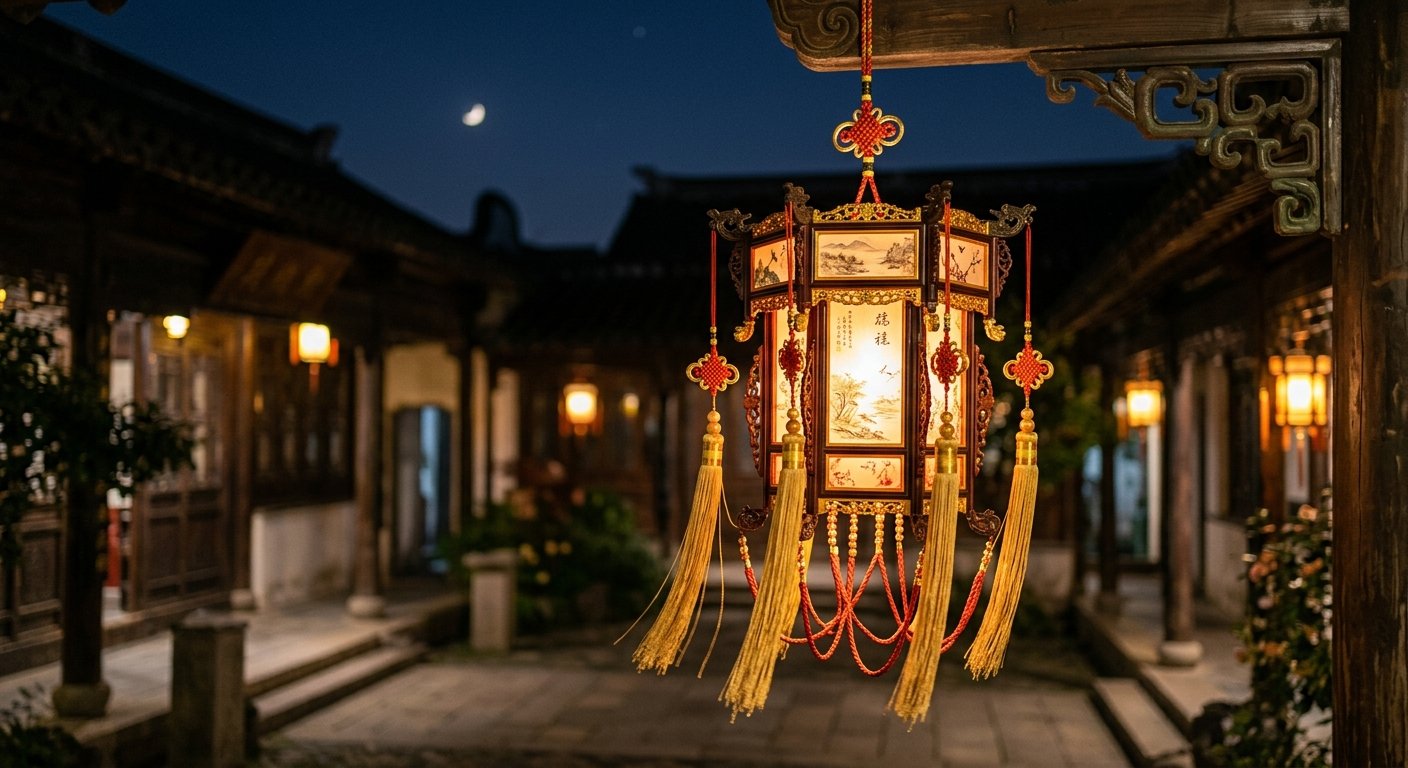
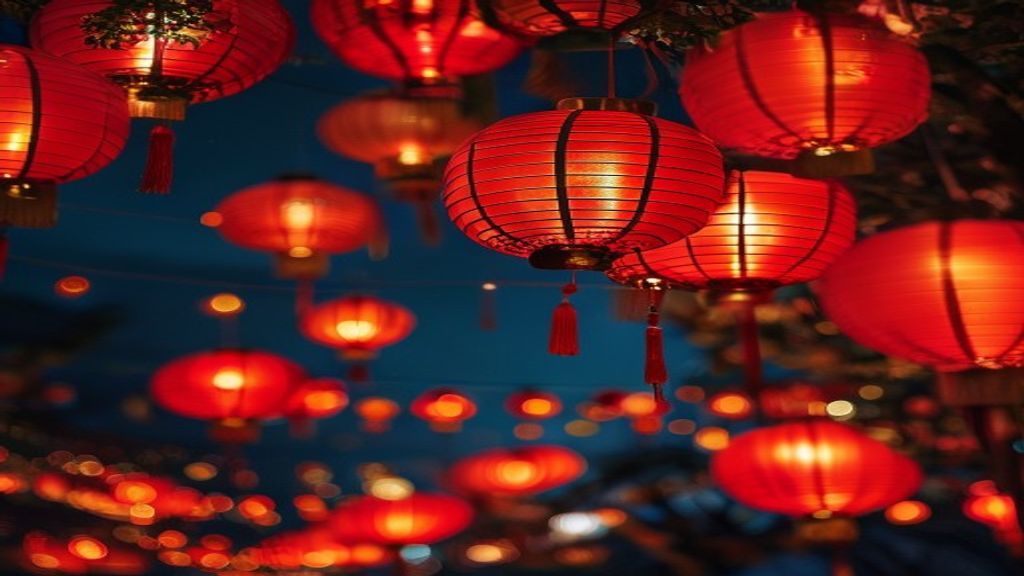
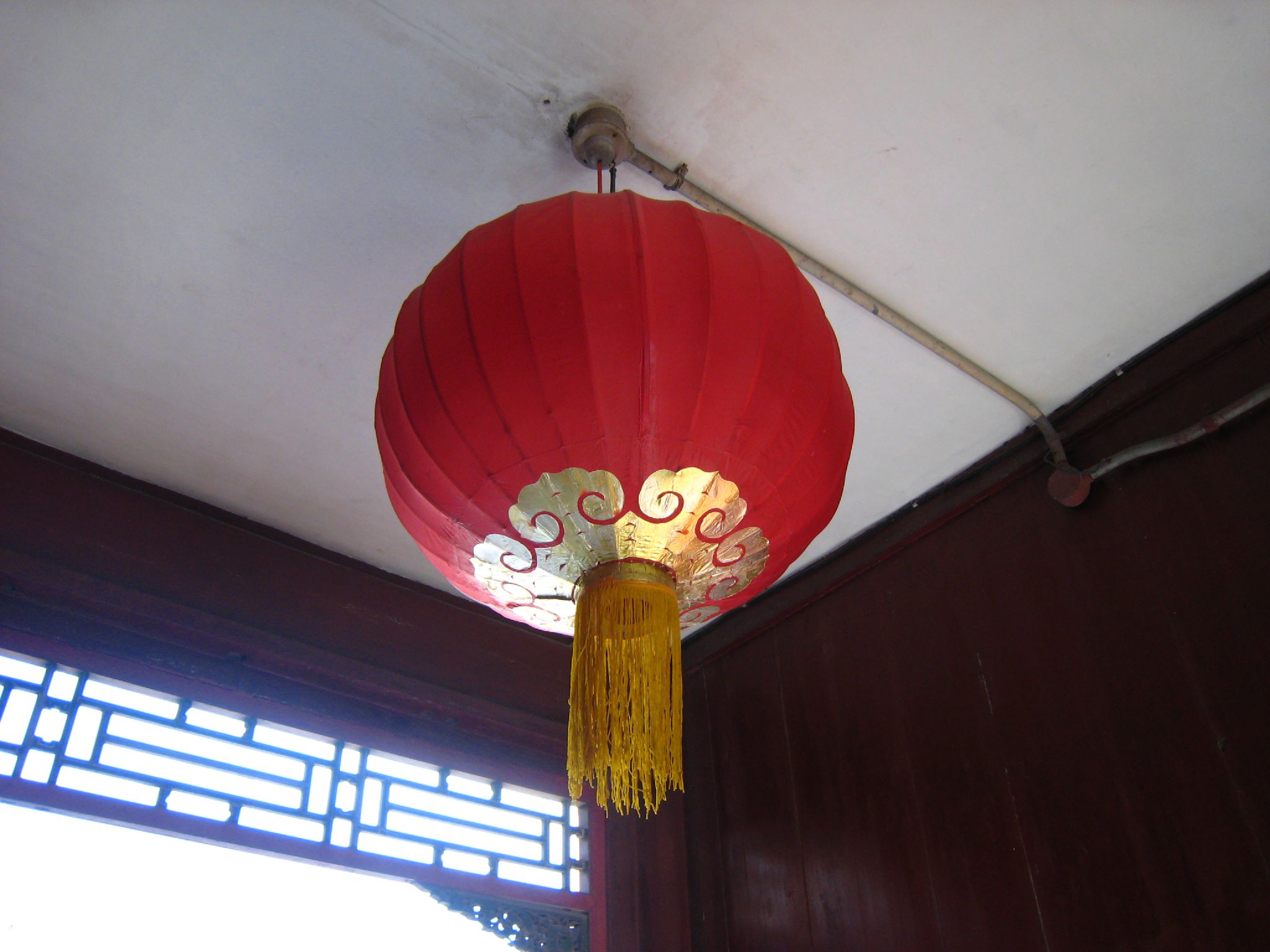
Zigong Lantern Festival: A Thousand Years of Chinese Light
On a winter night in Zigong, Sichuan, the sky disappears behind a second sky made of silk and light. Dragons coil over reflecting pools. Phoenixes spread wings of fire. Palaces, flowers, and fairy tales rise from the dark in red, gold, and electric blue. The crowd moves slowly, phones lifted, children on shoulders, everyone looking up.
This is the Zigong Lantern Festival, often called the finest lantern show on earth. What began as a local New Year custom more than 800 years ago has become a global light-art phenomenon, drawing millions of visitors and touring more than 80 countries [source:2][source:6].
Why Zigong is called the Lantern City
Zigong sits in the southern Sichuan basin, along the Fuxi River. For centuries, its wealth came from salt wells, and where there were salt wells, there were workers who needed light. The story goes that the bamboo frames and oil lamps used around the wells slowly turned into decoration, and decoration turned into festival.
By the Tang and Song dynasties, Zigong already had a New Year tradition of lighting lamps. In the middle of the Qing dynasty, local celebrations multiplied: the Lion Lantern Market, the Lantern Pole Festival, the Lantern Parade, and other folk events filled the streets [source:1]. The city had found its favorite art form. Today, Zigong produces roughly 80 percent of China's lantern displays and over 90 percent of those shown abroad [source:2].
From salt wells to festival lights: origins of the Zigong Lantern Festival
The deeper roots of the festival lie in the Lantern Festival, or Yuanxiao, which falls on the fifteenth day of the first lunar month. The custom of lighting lanterns on this night began in the Han dynasty, grew in the Tang and Song, and reached its peak in the Ming and Qing [source:1]. People hung colored lamps to celebrate the first full moon of the year, pray for family unity, and welcome a prosperous spring.
Zigong gave this national tradition a local accent. Salt merchants funded displays. Temples hosted competitions. Families passed down lantern-making skills the way other families passed down recipes. In 1964, the city government organized the first official Zigong Spring Lantern Festival, uniting the scattered customs under one name: the Zigong Lantern Festival [source:2].
In 2008, the festival was added to China's national intangible cultural heritage list as "Lantern Festival (Zigong Lantern Festival)" [source:1].
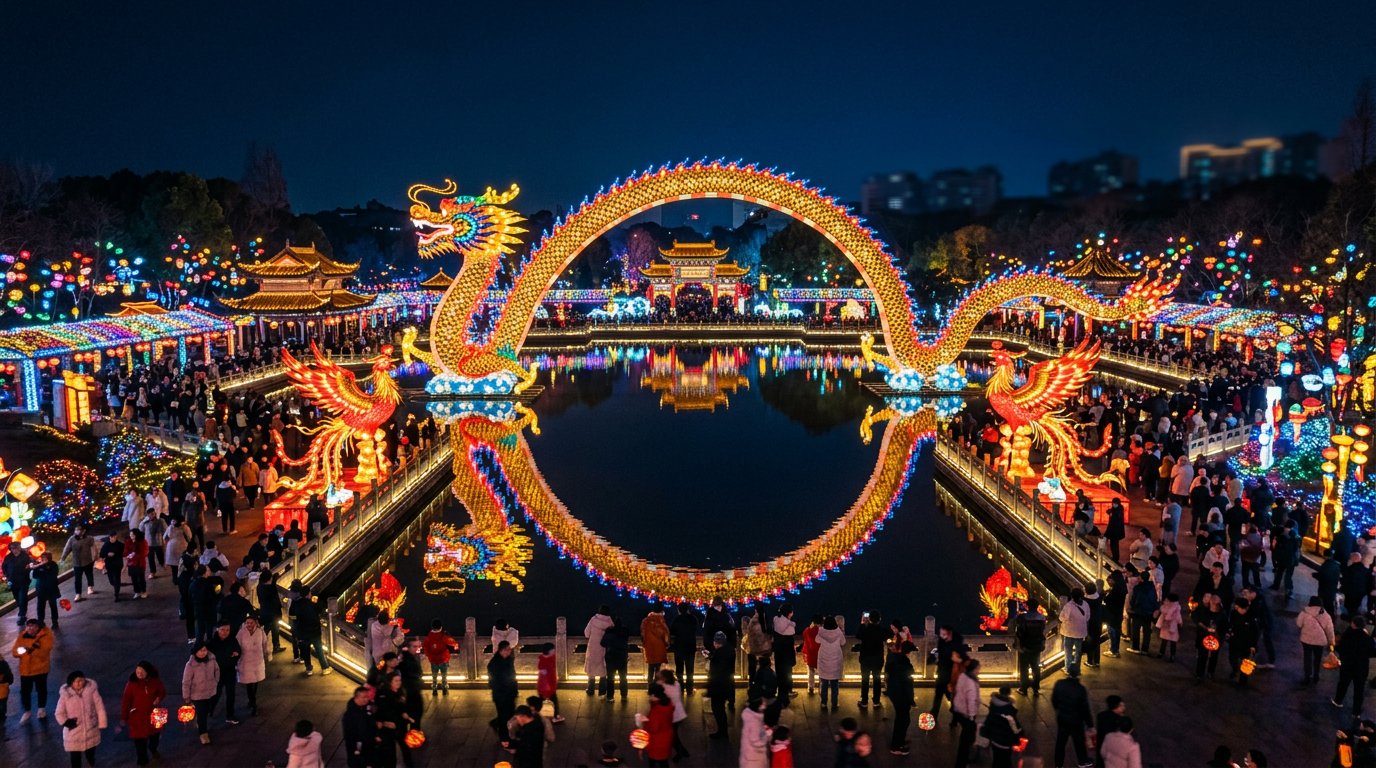
The Zigong Lantern Festival is famous for its enormous group lanterns, such as dragons and phoenixes, set above water and walkways.
Three faces of a Zigong lantern: craft, group, and spectacle
Zigong lanterns are usually divided into three types [source:1]:
Craft lanterns (gongyi deng) are small, detailed works — animals, flowers, figures from opera or myth. They show the skill of an individual maker and are often displayed indoors or along paths.
Seat lanterns (zuo deng) are larger installations that sit on the ground. They may represent buildings, trees, or auspicious symbols, and they serve as landmarks within the show.
Group lanterns (zu deng) are the stars of the festival. These are vast, walk-through scenes made of many connected pieces. They illustrate Chinese history, classical novels, myths, or modern themes, and they can move, change color, or respond to music. A single group lantern can stretch across a lake or tower over a building.
If you have never seen a Chinese lantern festival, you might also enjoy our guide to the types of Chinese lanterns and the meaning behind lantern colors and shapes.
What Zigong lanterns are made of
The magic of Zigong lies not only in size but in materials. Traditional lanterns use bamboo frames, rice paper, silk, and colored cloth. But Zigong craftsmen have always been inventive. A lantern might be covered in porcelain teacups, glass bottles, silkworm cocoons, or dyed fabric [source:1].
Porcelain lanterns are especially striking. Hundreds of small bowls, plates, and cups are tied to a frame so that their glazed surfaces catch the light. When the lantern is lit from within, the porcelain glows like stained glass. Bottle lanterns work the same way, turning ordinary glass into shimmering scales.
Modern Zigong has added LEDs, moving parts, projection mapping, and interactive sensors. The result is a marriage of ancient bamboo-and-paper craft with contemporary light art [source:4].
From temple fair to world stage: the festival's modern revival
The modern turning point came in 1989, when Zigong lanterns traveled to Singapore for the first time [source:2]. Since then, the festival has visited every continent. In 2017, a Zigong display in Hamburg during the G20 summit drew 300,000 visitors. France, the United States, Britain, Australia, Canada, Mexico, India, Dubai, and dozens of other countries have hosted their own Zigong lantern shows [source:2][source:4].
The numbers are striking. Zigong lantern displays have attracted more than 400 million viewers at home and abroad [source:2]. In 2024, the city organized 255 domestic shows and 104 overseas shows, generating cultural export revenue of over 77 million US dollars [source:5]. Zigong is now home to more than 600 lantern companies, with an annual output value exceeding 2 billion yuan and over 40,000 people working directly in the industry [source:2].
This success has turned a folk festival into a city-defining industry. As one official put it, the goal is to move "from festival lantern to year-round scenic park, from local culture to local industry, and from a simple exhibition to city-building through light" [source:4].
Visiting the Zigong Lantern Festival today
The main annual event is the Zigong International Dinosaur Lantern Festival, held from roughly January through March at the China Colorful Lantern World, a purpose-built park on the city's eastern edge. Each year carries a new theme: the Year of the Snake, the Silk Road, classical poetry, or China's technological achievements.
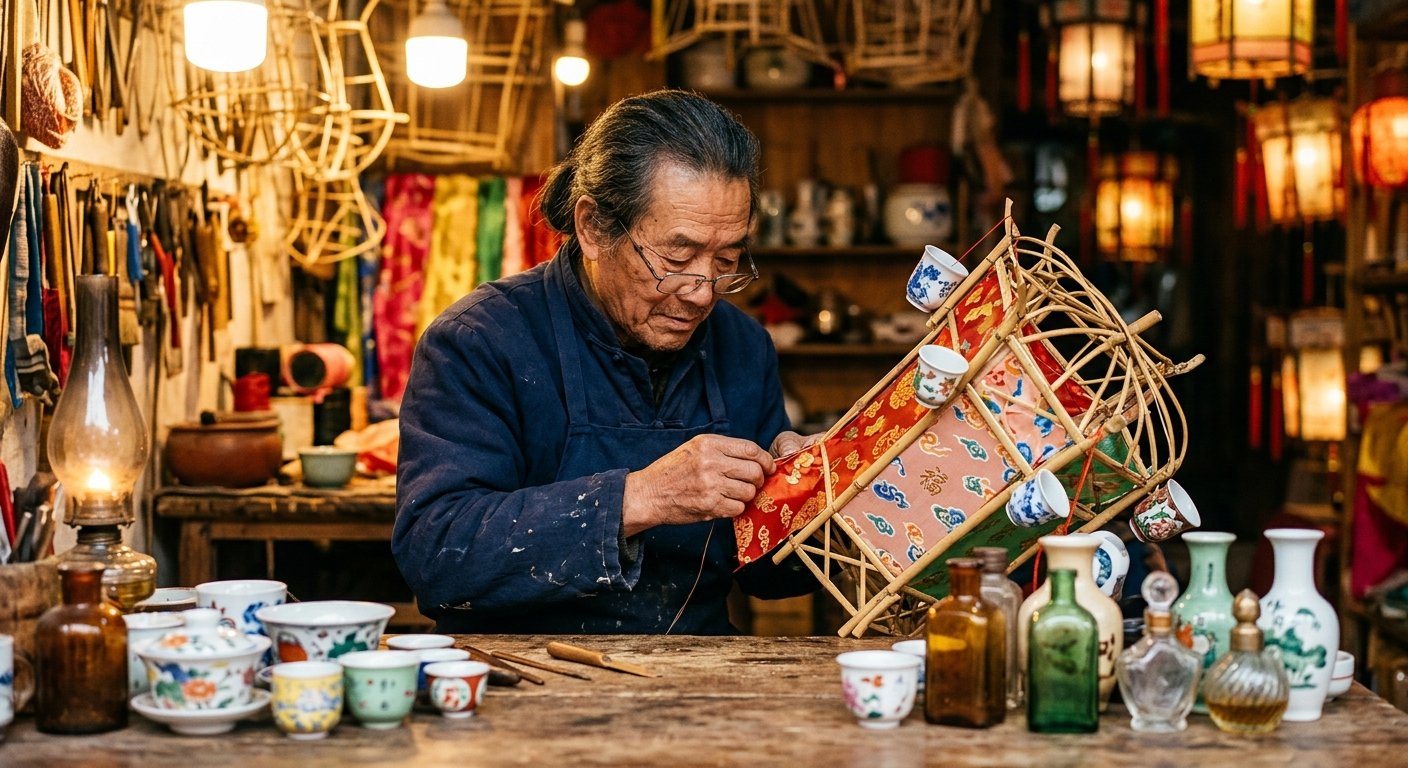
Zigong lantern makers use bamboo frames, silk, porcelain, and even glass bottles to create surfaces that glow from within.
For visitors, the experience is immersive. Paths wind through forests of light. Music and smoke add drama. Food stalls sell Sichuan snacks. The scale can be overwhelming: a single show may cover more than 100 hectares and include hundreds of lantern groups [source:2].
If you plan to go, arrive early in the evening to avoid the largest crowds, wear comfortable shoes, and dress warmly. The best photos come after full dark, when the lanterns reflect in the park's many ponds.
Sources and Further Reading
- 灯会(自贡灯会) - 中国非物质文化遗产网
- 从自贡走向世界的“中国灯” - 中国非物质文化遗产网
- 从自贡走向世界的“中国灯” - 中国非物质文化遗产网(news)
- 四川自贡彩灯“点亮”全球 - 中国非物质文化遗产网
- 藏在非遗中的“马到成功” - 中国非物质文化遗产网
- Tourists visit 31st Zigong Int'l Dinosaur Lantern Show - Xinhua
This article was researched and written by the ChineseFolkCrafts.com editorial team. Claims are cross-checked against authoritative sources; see About Us for our editorial approach.