A Chinese oil-paper umbrella is waterproof, yes, but it is never just a tool. It is a painted flower that opens in the rain, a bamboo skeleton that bends without breaking, and a red canopy under which a bride steps into marriage. For more than a thousand years, it has sheltered heads, decorated rooms, and carried wishes.
The craft combines three humble materials — bamboo, paper, and tung oil — into an object that is both useful and beautiful. Making one requires patience. Using one requires care. Keeping one requires the right climate. In every way, the umbrella asks its owner to slow down.
What is an oil-paper umbrella
An oil-paper umbrella, or youzhisan (油纸伞), is a traditional Chinese umbrella made by stretching paper over a bamboo frame and then brushing the paper with layers of tung oil. The oil makes the paper waterproof, flexible, and slightly translucent.
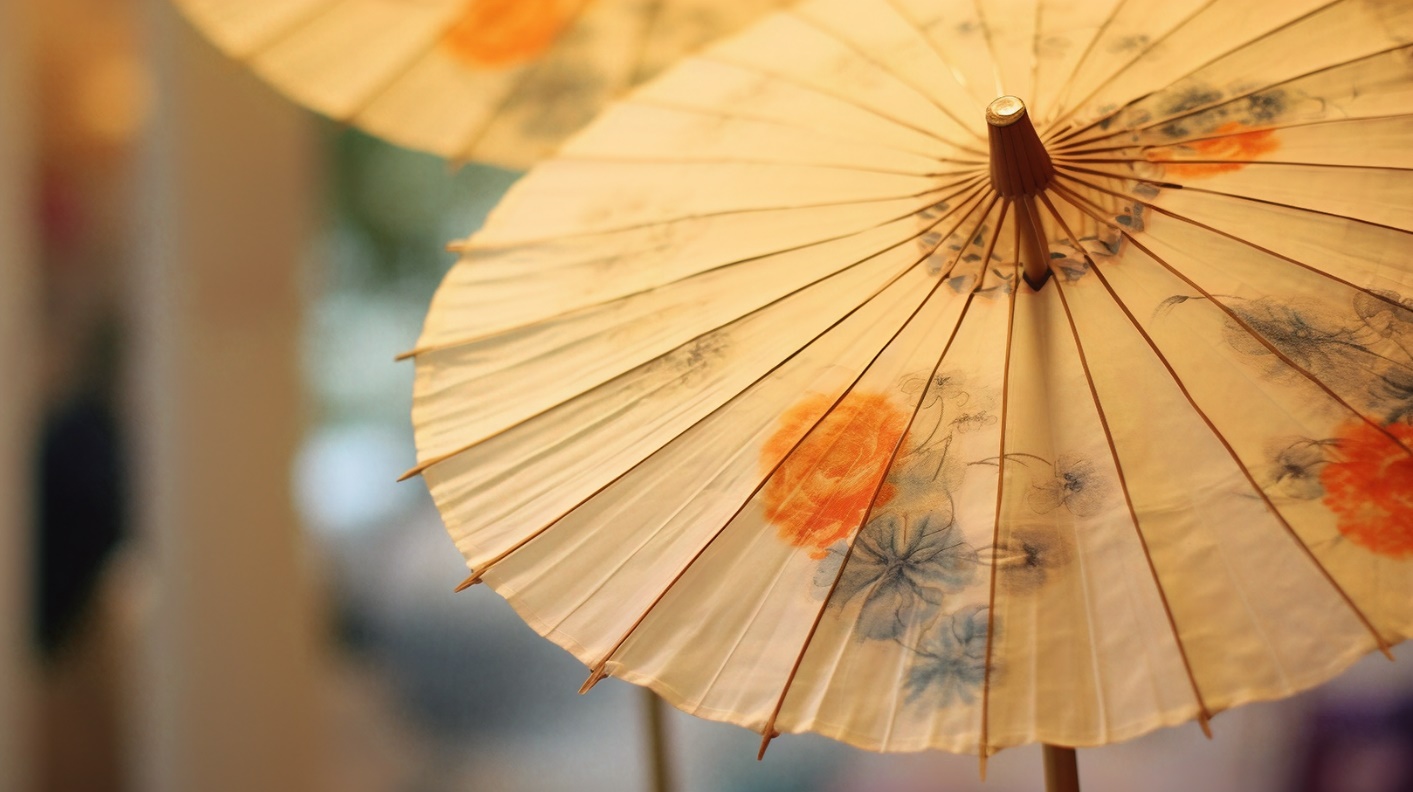
The result is lighter than a modern umbrella and far more fragile. It cannot be folded into a pocket or left in a car on a hot day. But it is also more beautiful. The paper surface is painted with flowers, birds, landscapes, or calligraphy. When light passes through the oiled paper, the colors soften into something close to watercolor.
A well-made umbrella can last for years if it is kept slightly humid. In dry northern China, the paper can crack. In the damp south, it stays supple. This is why the craft is strongest in provinces such as Sichuan, Zhejiang, and Fujian.
A thousand years of rain
The oil-paper umbrella appeared during the Tang dynasty and became common in the Song. The Song text Dream Pool Essays mentions covering something with "fresh red oil-paper umbrella" in the midday sun. The Ming dynasty encyclopedia Tiangong Kaiwu describes the paper and oil used for umbrellas and fans.
Literature and legend kept the umbrella close to daily life. In the Legend of the White Snake, the heroine meets her husband on a bridge in the rain, sheltered by an umbrella. That single image has made the oil-paper umbrella a symbol of romance for centuries.
Over time, the umbrella spread through East Asia. Japan, Korea, and Vietnam developed their own versions, often based on Chinese techniques. Each country adapted the shape, decoration, and oil formula to its own climate and taste.
How it is made
Traditional production involves more than seventy steps, all done by hand. The main stages are frame making, paper covering, painting, and oiling.
The frame. Craftspeople split bamboo into thin, even strips. The ribs must be flexible enough to bend into the umbrella's curve but strong enough to support the paper. A single umbrella may use dozens of ribs. The top of the frame is fitted with a wooden hub that holds everything together.
The paper. Handmade paper, often from mulberry bark or bamboo pulp, is cut into panels and glued over the ribs. The paper is stretched tight so it will not sag. Any wrinkles or bubbles are smoothed away before the glue dries.
The painting. Once the paper is dry, an artist paints the design. Popular subjects include peonies, plum blossoms, lotus flowers, bamboo, dragons, and phoenixes. Some umbrellas carry poems or the name of a shop. The paint must be compatible with the oil that follows.
The oil. Tung oil is brushed onto the paper in several thin coats. Each coat must dry before the next is applied. The oil waterproofs the paper and gives it a warm amber color. A final coat of oil and pigment can add a slight sheen.
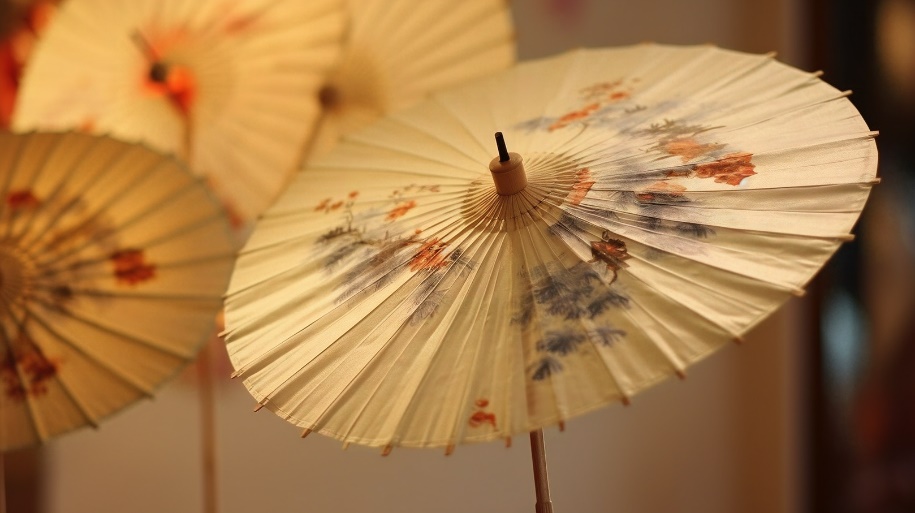
The bamboo ribs and hand-painted paper of an oil-paper umbrella. Each rib must be bent to exactly the right curve.
Patterns and their meanings
The decoration on an oil-paper umbrella is not random. Each pattern carries a wish.
Peonies mean wealth, honor, and a prosperous household. A bridal umbrella painted with peonies wishes the new couple abundance.
Plum blossoms mean endurance and purity. They are appropriate for scholars or for anyone facing a difficult time.
Lotus flowers mean purity and harmony. A lotus umbrella is often given as a wedding gift because "lotus" (lian) sounds like "continuous" (lian).
Bamboo means integrity. Like bamboo, the ideal person bends without breaking and stays green through winter.
Dragons and phoenixes appear on formal or imperial umbrellas. Together they represent power, nobility, and marital harmony.
Red is the most common umbrella color because it means joy and wards off evil. Other colors include yellow, green, blue, and plain oiled brown.
More than rain protection
The oil-paper umbrella has always done more than keep rain off. In traditional Chinese life, it appeared at births, weddings, funerals, and festivals.
At weddings, a red umbrella was held over the bride as she left her parents' home. The umbrella protected her from bad spirits and from the rain, which was thought to bring tears. The round shape symbolized completeness, and the red color announced joy.
In some Taoist and folk religious processions, umbrellas were held over sacred statues. The umbrella created a kind of portable roof, separating the divine from ordinary space.
The umbrella also appeared in theater and dance. Performers in classical dance often use a painted umbrella as a prop, opening and closing it to suggest rain, shyness, or departure.
Luzhou and Yuhang
Two places are especially famous for oil-paper umbrellas.
Luzhou, Sichuan, has made umbrellas for more than four hundred years. The local craft was recognized as national intangible cultural heritage in 2008. Luzhou umbrellas are known for their strong frames and traditional tung-oil finish. The Fenshui area is home to one of the last workshops that still uses the old methods.
Luzhou artisans are proud of the manchuan umbrella, whose ribs are threaded with thousands of stitches of colored silk. This detail is purely decorative, but it shows the level of patience the craft demands.
Yuhang, Zhejiang, also has a long umbrella tradition. Yuhang umbrellas tend to be lighter and more finely painted than their Sichuan cousins. The region's wet climate helped the craft develop, since the paper stays flexible there.
Oil-paper umbrellas today
Cheap nylon umbrellas almost replaced the oil-paper umbrella in the late twentieth century. A plastic umbrella costs little and can be thrown away when it breaks. A paper umbrella must be made, maintained, and respected.
But the old craft has not disappeared. It survives as heritage, as decoration, and as a symbol of traditional taste. Tourists buy small painted umbrellas as souvenirs. Brides still choose red oil-paper umbrellas for traditional weddings. Photographers and filmmakers use them to evoke old China.
Some workshops now offer classes where visitors can make a small umbrella. Others sell umbrellas that are intended for display rather than rain. The challenge for the craft is to remain useful, not only beautiful.
FAQ
Can you use an oil-paper umbrella in the rain? Yes, if it has been properly oiled. The tung oil makes the paper waterproof. However, the umbrella is not as durable as a modern one and should be dried carefully after use.
Why do oil-paper umbrellas crack in dry climates? The paper needs a small amount of moisture to stay flexible. In very dry air, the paper becomes brittle and may crack. Storing the umbrella in a slightly humid place helps prevent this.
What does a red oil-paper umbrella mean at a wedding? Red means joy and protection. The umbrella held over the bride shields her from bad spirits and rain, and its round shape symbolizes a complete, happy marriage.
Are oil-paper umbrellas only made in China? No. Variations exist in Japan, Korea, Vietnam, and other parts of East Asia. Many of these traditions were influenced by Chinese techniques.
Author
This article was prepared by the team at ChineseFolkCrafts.com. We are not intangible-cultural-heritage inheritors or museum researchers. Our job is to find authoritative Chinese sources, understand them, and explain them clearly for international readers.
If you spot an error — a date, a translation, a misattributed custom — please let us know and we will correct it. Last updated 2026-07-27.