A peony in a Chinese paper cut is never just a peony. It is wealth. A lotus is never just a lotus. It is purity, and when paired with a fish it becomes abundance year after year. Flowers are the quietest speakers in paper cutting, but they speak clearly once you know the code.
Unlike animals, which often carry meaning through sound, flowers usually carry meaning through season, habit, and old poetry. A flower that blooms in winter means endurance. A flower with many petals means glory. A flower that floats on muddy water means the soul stays clean.
Not just pretty
Chinese paper cutters choose flowers the way poets choose images. The flower must be recognizable, beautiful, and layered with meaning. A cut of a peony surrounded by smaller buds says more than the word "rich." It says wealth, rank, children, and a full house — all in one red sheet.
This habit of reading plants as wishes comes from a long tradition. Scholars painted the "four gentlemen" — plum, orchid, bamboo, chrysanthemum — as symbols of virtue. Folk cutters borrowed the same plants and gave them a more practical job: to bless the household.
Peony
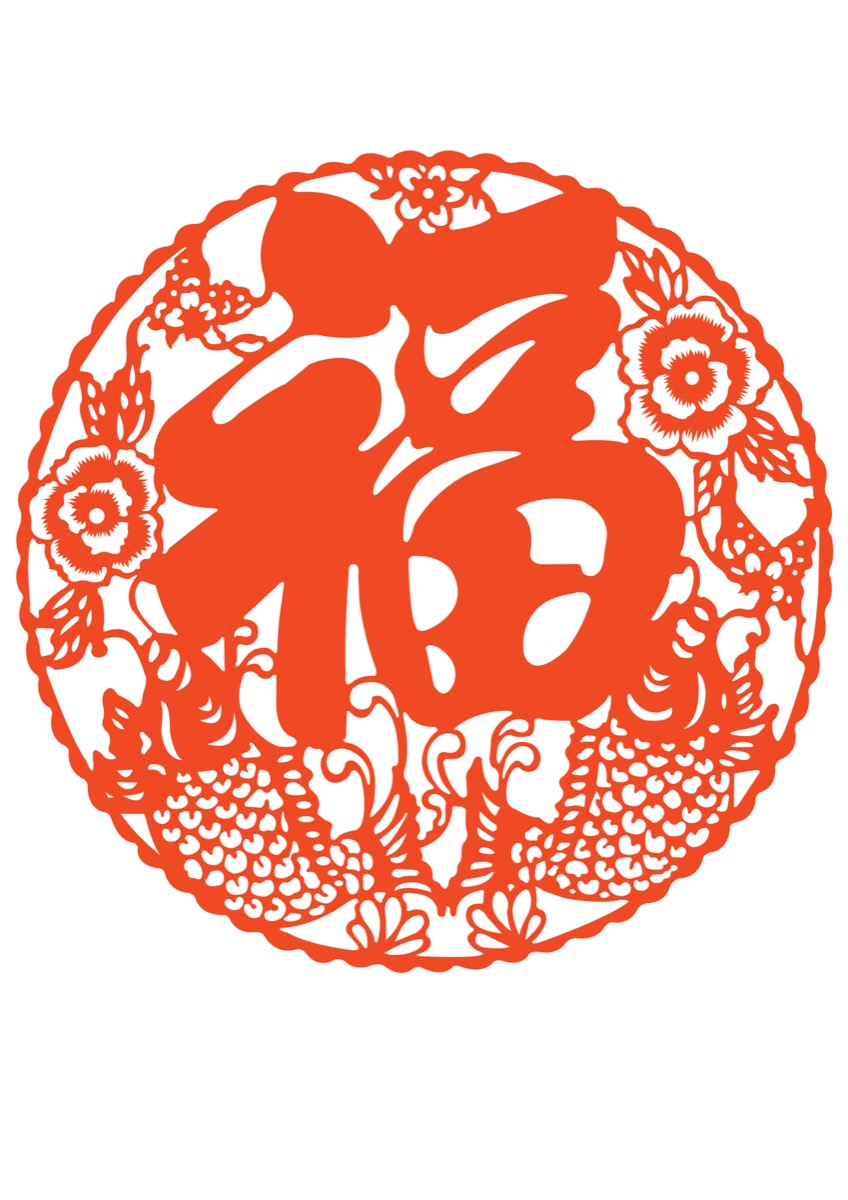
The peony is the king of flowers in Chinese culture and the queen of paper-cut wishes. Its full, layered blooms mean wealth, honor, and high status. A peony with a phoenix means a noble woman. A peony with a bat means "blessing and wealth." Peonies around the character fu turn a simple blessing into a wish for a prosperous household.
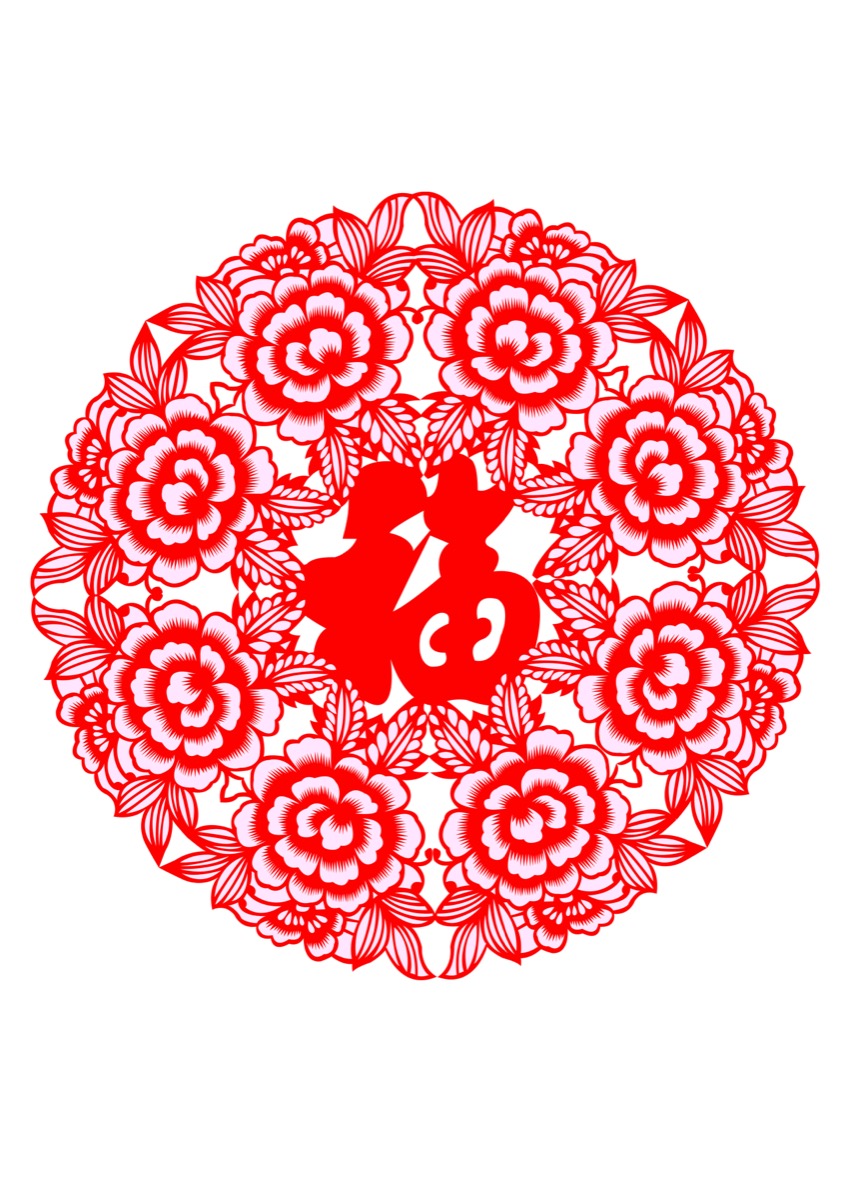
Peonies surrounding the character for blessing. The peony is the most common flower for wishes of wealth and honor.
Peonies are also feminine and fertile. A bride's paper cuts might show peonies with pomegranates to wish for both beauty and many children.
Lotus
The lotus grows from mud but stays clean, so it means purity. In Buddhist art, the lotus is the seat of the enlightened. In folk paper cutting, it means something more down-to-earth: a clean heart and a harmonious home.
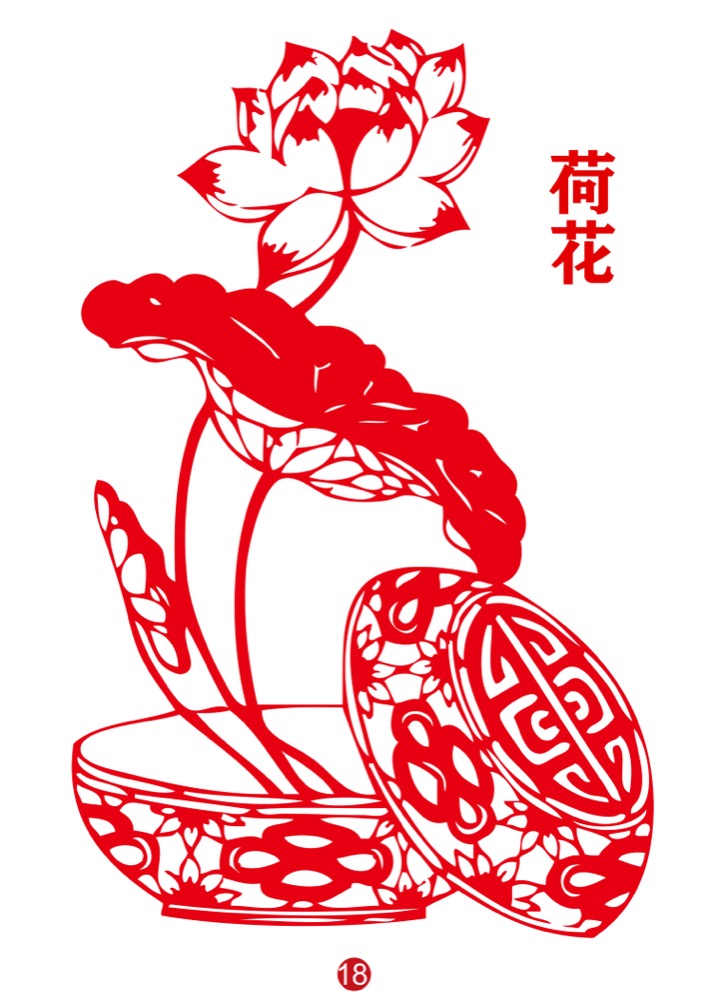
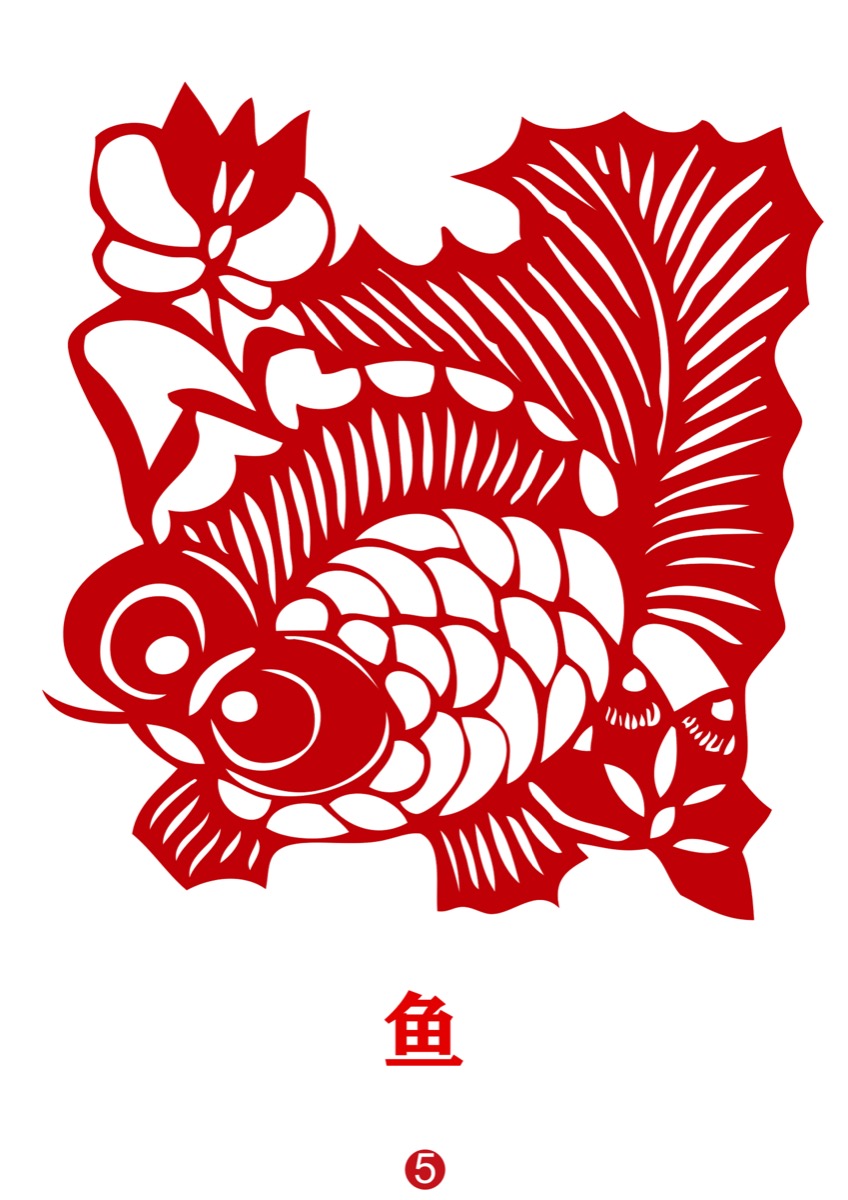
A lotus paper cut. The lotus rises from mud without stain, so it stands for purity.
The lotus also loves homophones. Lian (莲, lotus) sounds like lian (连, continuous) and lian (廉, honest). Two lotuses mean "year after year" (lian nian). A lotus with a fish means "abundance year after year" (nian nian you yu). A lotus with a duck means a faithful marriage.
Plum blossom
The plum blossom is the first flower to open in winter, sometimes while snow is still on the branches. It means endurance, courage, and the ability to thrive when things are hard.
Paper cuts of plum blossoms often show thin branches with a few small flowers. The design is sparse on purpose: the empty space is the cold, and the flowers are the life that refuses to stop. A plum blossom with a magpie means "joy on the eyebrow," because mei (梅, plum) sounds like mei (眉, eyebrow).
Chrysanthemum
The chrysanthemum blooms in autumn, after the heat has passed. It means longevity, retreat, and the dignity of old age. In Daoist tradition, it is one of the plants that grant long life.
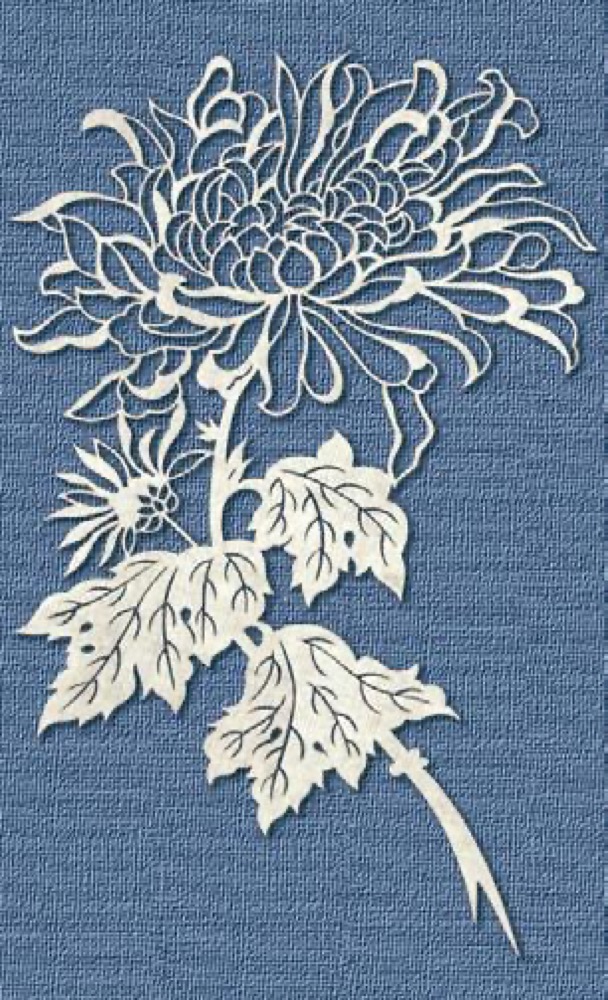
A chrysanthemum paper cut. The chrysanthemum blooms late, so it stands for longevity and endurance.
In paper cutting, chrysanthemums often appear with crabs or wine cups to mean "autumn joy." They also pair with pine trees and cranes for birthday wishes, because all three are emblems of long life.
Other flowers and what they mean
Orchids mean modesty and refinement. They are one of the four gentlemen and appear in scholarly paper cuts more often than folk ones.
Bamboo is not a flower, but it is grouped with them. It means integrity because it bends without breaking, and it stays green in winter.
Pomegranates are technically fruit, but paper cutters treat them as flowers of fertility. A pomegranate bursting with seeds means "may there be many children."
Peach blossoms mean romance and spring. A peach itself means long life, thanks to the mythical peaches of the Queen Mother of the West.
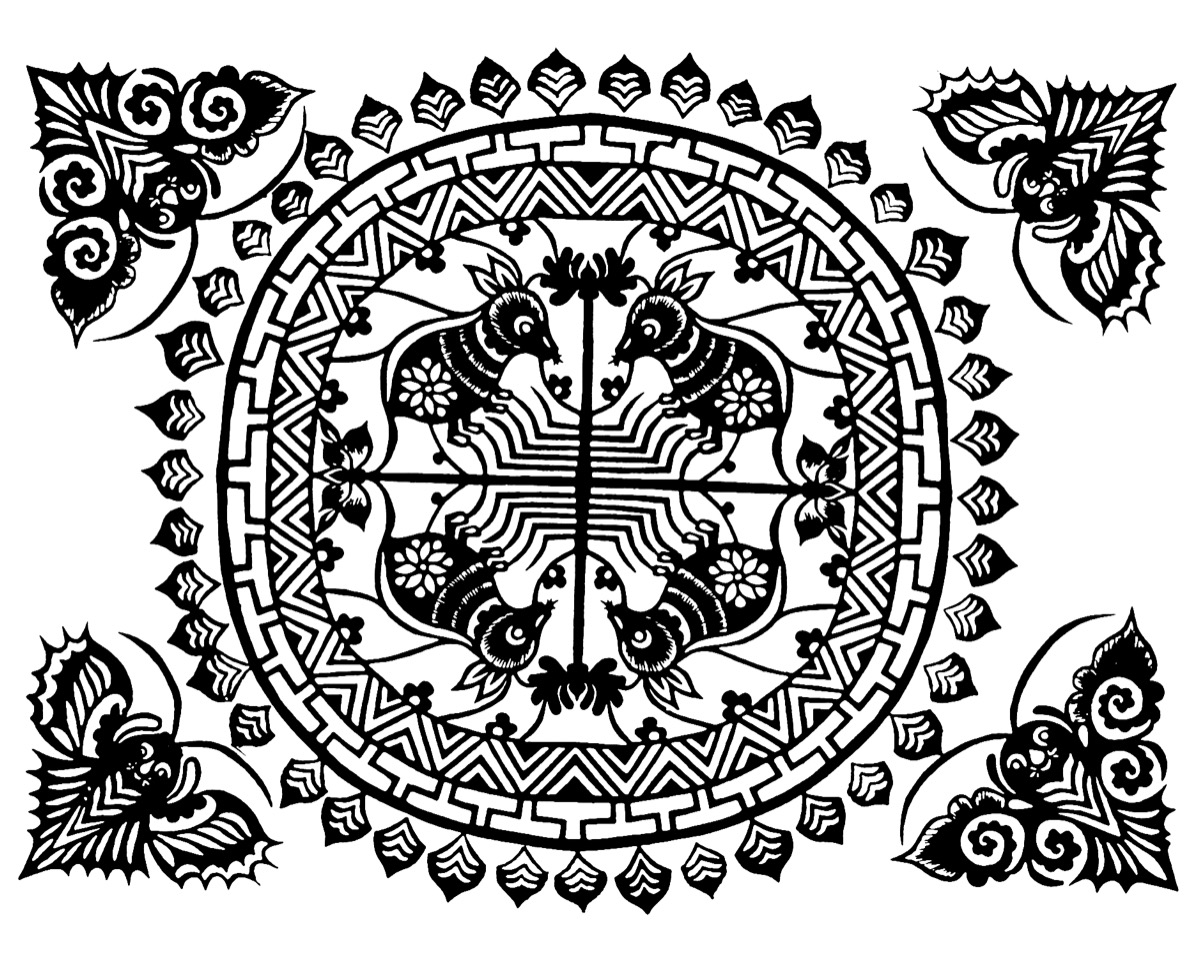
Butterflies are not flowers either, but they often travel with them. A butterfly among flowers means love, joy, and the playfulness of spring.
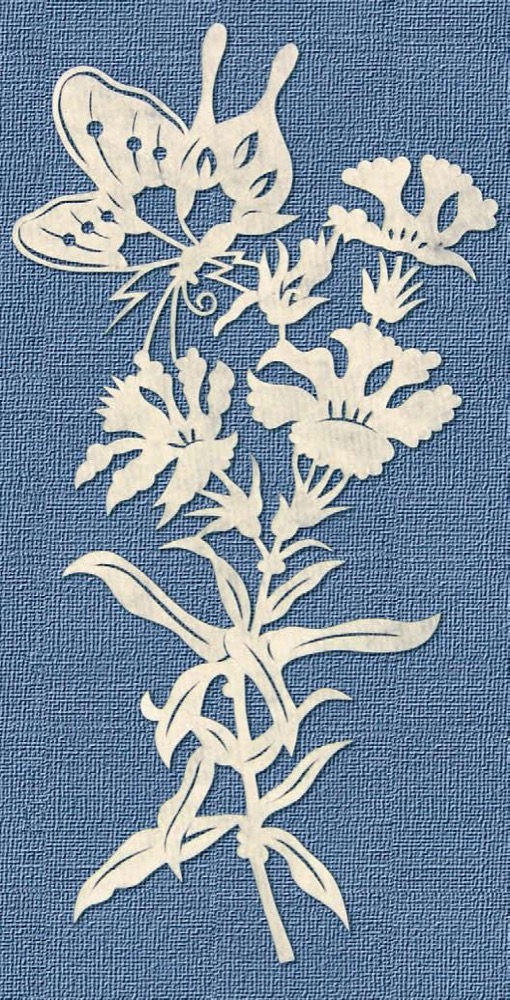
A butterfly among flowers. Butterflies bring the idea of spring and joyful change.
Flowers in combination
Cutters rarely use one flower alone. They combine them to make fuller wishes:
- Peony + bat = blessing and wealth
- Lotus + fish = abundance year after year
- Plum blossom + magpie = joy on the way
- Chrysanthemum + pine + crane = long life
- Peony + pomegranate = wealth and many children
The combinations turn a simple decoration into a sentence. A paper cut becomes a kind of greeting card without words.
The four gentlemen
The most famous flower group in Chinese art is the "four gentlemen": plum, orchid, bamboo, and chrysanthemum. Each stands for a season and a virtue:
- Plum = winter, endurance
- Orchid = spring, modesty
- Bamboo = summer, integrity
- Chrysanthemum = autumn, dignity
When all four appear in one paper cut, the wish is broader: may the household have virtue through every season of life.
In the end, a flower in a Chinese paper cut is a wish pressed flat. The cut is beautiful, but the beauty is there to carry the wish.
Seasonal flower customs
Different flowers dominate different festivals. Spring Festival windows fill with peonies and plum blossoms to welcome the new year. At the Dragon Boat Festival, iris and mugwort leaves appear beside paper-cut tigers to ward off evil. The Mid-Autumn Festival is celebrated with osmanthus and chrysanthemum cuts for harvest and reunion.
A bride's trousseau might include a set of twelve flower cuts, one for each month, so that every season of her new married life begins with a blessing. An elder's birthday set uses pine, chrysanthemum, and peach blossoms to cover the full cycle of long life.
How cutters represent flowers
Paper cutters reduce a flower to its most recognizable features. A peony becomes a ruffled disk with layered petals. A lotus becomes a flat seed pod surrounded by pointed petals. A plum blossom becomes five small circles on a thorny branch.
The technique matters. In northern scissor cutting, flowers are often built from folded paper, so the petals repeat symmetrically. In southern knife cutting, a single sheet is carved with tiny lines to suggest veins and texture. A Yuxian color-dyed cut might show a peony in pink, red, and green, while a Shaanxi cut keeps the same flower in plain red.
Regional flower styles
- Shaanxi and Shanxi — bold red flowers with thick stems and large centers. The peonies here look hearty and rural.
- Yangzhou — delicate flowers with hair-thin branches and many small petals. The plum blossom is especially fine.
- Yuxian, Hebei — color-dyed flowers in bright mineral pigments. A single cut may show a peony in five colors.
- Foshan, Guangdong — gold-foil backed flowers used in temples and shops. The lotus here often appears with fish and water waves.
Modern use and gifts
Today, flower paper cuts appear on greeting cards, wedding invitations, tea packaging, and home decor. A peony cut framed in red makes a popular housewarming gift. A lotus-and-fish cut is given to someone starting a business. A plum blossom cut is appropriate for anyone facing a challenge, because it means endurance.
Many contemporary artists also use flower motifs in large installation pieces, cutting giant peonies or lotus panels from red paper and hanging them in galleries. The ancient vocabulary of wishes has become modern art.
Frequently asked questions
What is the most important flower in Chinese paper cutting?
The peony. It is called the "king of flowers" and represents wealth, honor, and prosperity. It appears more often than any other flower in blessing cuts.
Why do paper cuts pair flowers with animals?
Because the combination creates a pun or layered wish. A bat with peonies means "blessing and wealth." A magpie on a plum branch means "joy on the eyebrow." The flower names the theme; the animal adds the action.
Can I use any flower in a Chinese paper cut?
You can, but traditional cuts use flowers with established symbolic meanings. If you invent a new combination, it may be beautiful, but it will not carry the traditional wish unless the viewer understands your personal code.
What do the four gentlemen represent?
Plum (winter, endurance), orchid (spring, modesty), bamboo (summer, integrity), and chrysanthemum (autumn, dignity). Together they represent virtue through all seasons of life.
Free printable flower paper-cutting templates
Want to try cutting the flowers from this article? Download three ready-to-print A4 templates: a round floral medallion, a plum blossom window flower, and a flower basket.
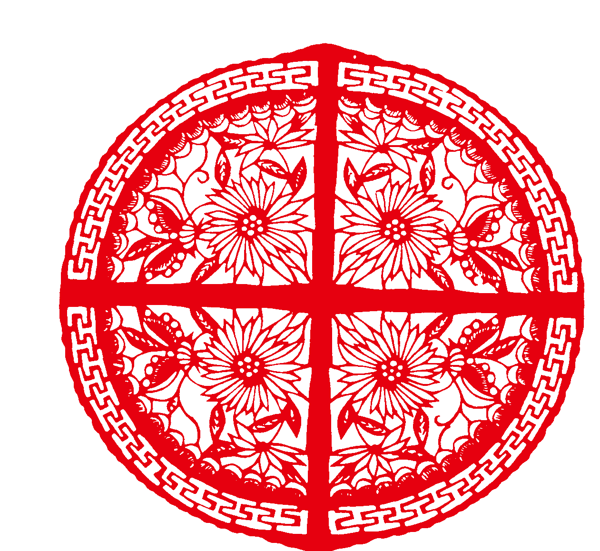
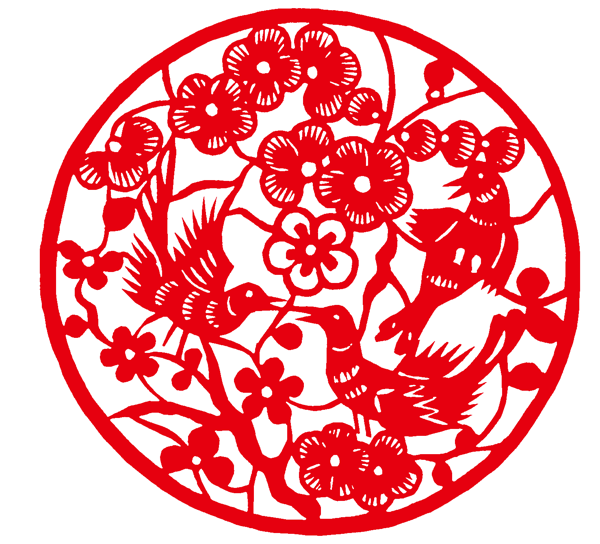
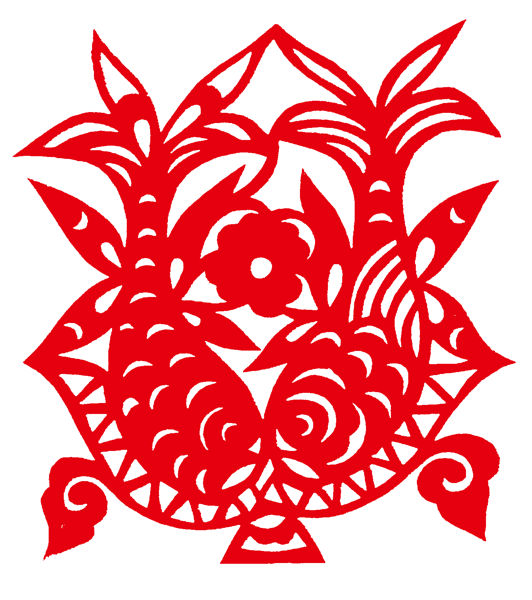
Print at 100% scale on red or white A4 paper. Each page includes the design and a light footer with printing instructions.
Author
This article was prepared by the team at ChineseFolkCrafts.com. We are not intangible-cultural-heritage inheritors or museum researchers. Our job is to find authoritative Chinese sources, understand them, and explain them clearly for international readers.
If you spot an error — a date, a translation, a misattributed custom — please let us know and we will correct it. Last updated 2026-07-25.