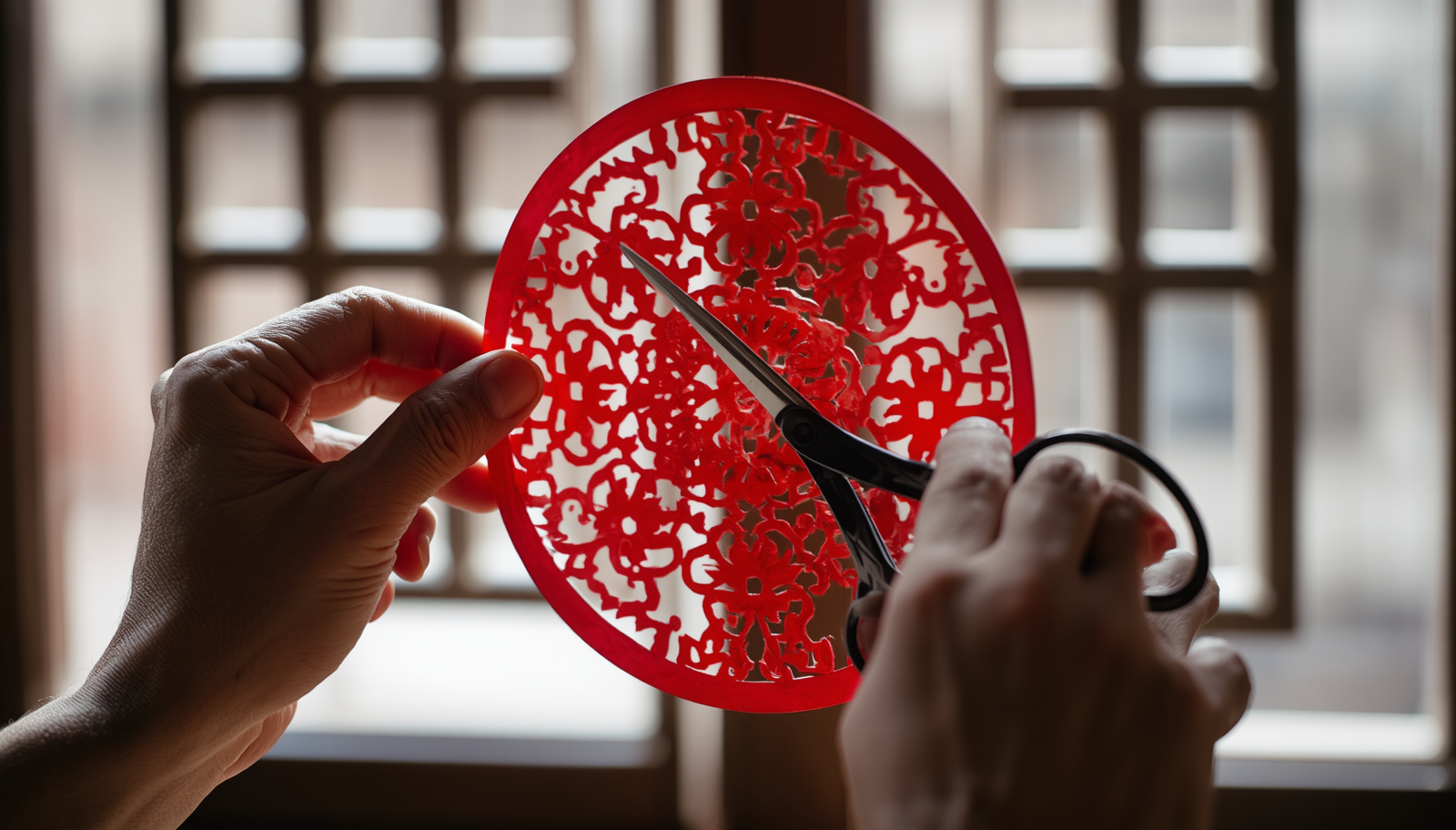
A woman in a Shaanxi village will tell you paper cutting is the red goat on her window. A cutter in Yangzhou will show you a sheet so thin that light comes through it like lace. Both are called jianzhi (剪纸), but they are not really the same thing.
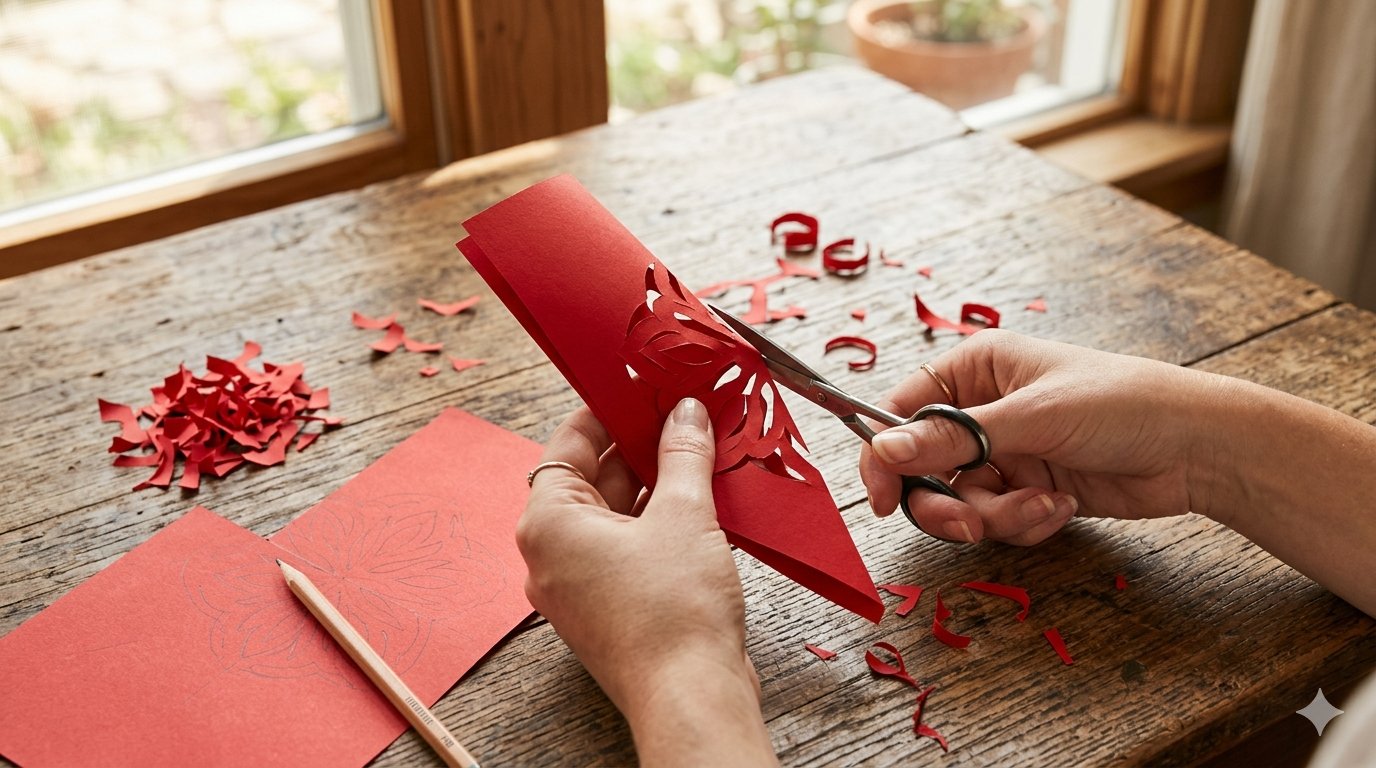
Paper cutting was never taught in art schools. It grew up in kitchens and bedrooms, so people sorted it the way folk art usually gets sorted: by how it is cut, what color it is, where it goes, and what wish it carries. Knowing the types won't make you a master, but it will help you look at a paper cut and understand what it is trying to say.
More than one kind of red
There is no official taxonomy. Museums and heritage groups tend to group paper cutting in five ways:
- Technique — how the empty parts and the solid parts relate
- Color — how many sheets and how the color is applied
- Use — where the finished cut ends up
- Region — the village or province that shaped the style
- Subject — the picture and the blessing behind it
These groups overlap. A red window flower from Shaanxi can be positive-cut, monochrome, northern in style, and carved with a monkey all at the same time. Think of them as lenses, not boxes.
By technique: what the scissors take away
The basic split is simple: what stays, and what falls to the floor.
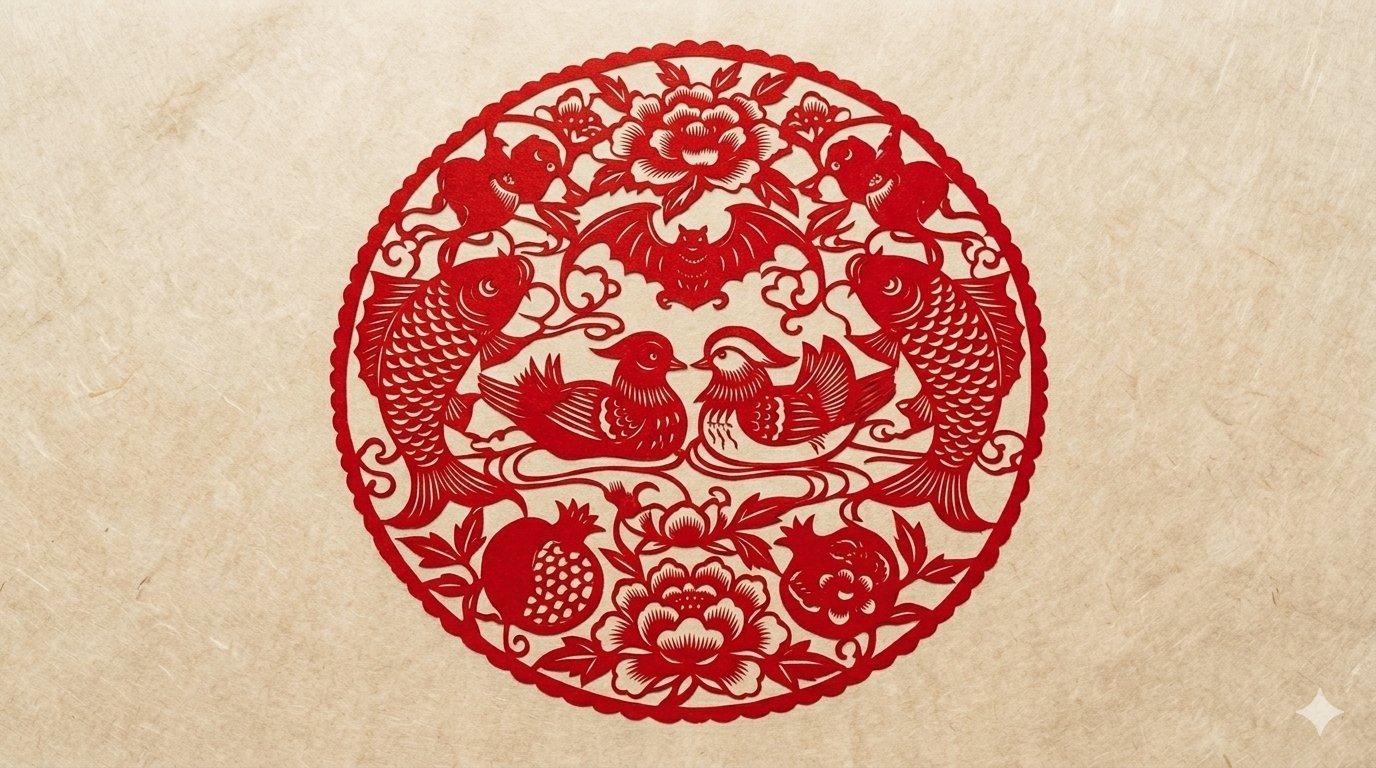
Positive cut (阳刻, yang ke) keeps the lines. The picture is made from the red paper that remains, and the background is cut out. This is the style most outsiders picture: clean silhouettes, strong edges, easy to read from across a room.
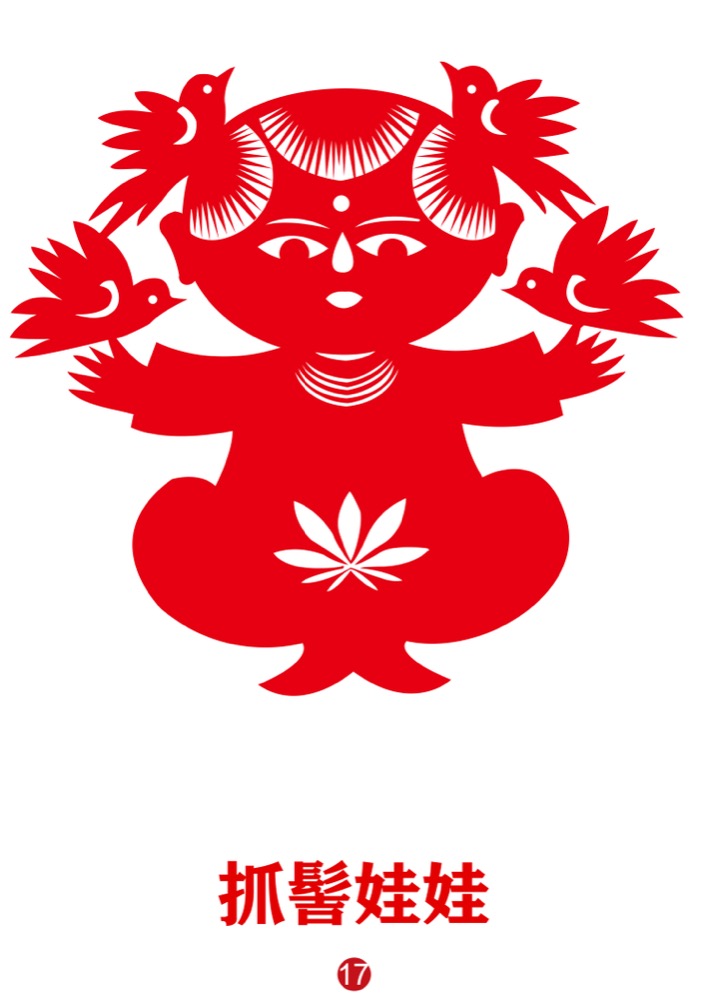
A positive-cut folk figure. The red paper that remains forms the face, birds, and flowers.
Negative cut (阴刻, yin ke) does the opposite. The background stays, and the lines are cut away. The picture is made of holes, and the whole sheet holds together like a web. Up close, it looks quiet; against a lamp, it throws a sharp shadow.
Combined cut (阴阳结合, yin yang jiehe) mixes both. A face might be positive-cut while the robe surrounding it is negative-cut, so the figure seems to glow against a darker ground. Most skilled village cuts use this mix.
There are also engraved cuts (刻纸, kezhi), done with a small knife instead of scissors. Knife work allows very fine lines and is common in the southern schools.
By color: one sheet or many
Color is part of the meaning, not just decoration. Red means joy and keeps evil away, so the single red sheet is still the classic form.
Monochrome (单色剪纸) uses one color, almost always red. This is the form people paste on New Year windows, bridal beds, and festival gates.
Dyed paper cutting (染色剪纸) starts as a pale cut and is brushed with color afterward. The dye bleeds softly at the edges, giving the work a washed look. Jiaodong, in eastern Shandong, is known for this.
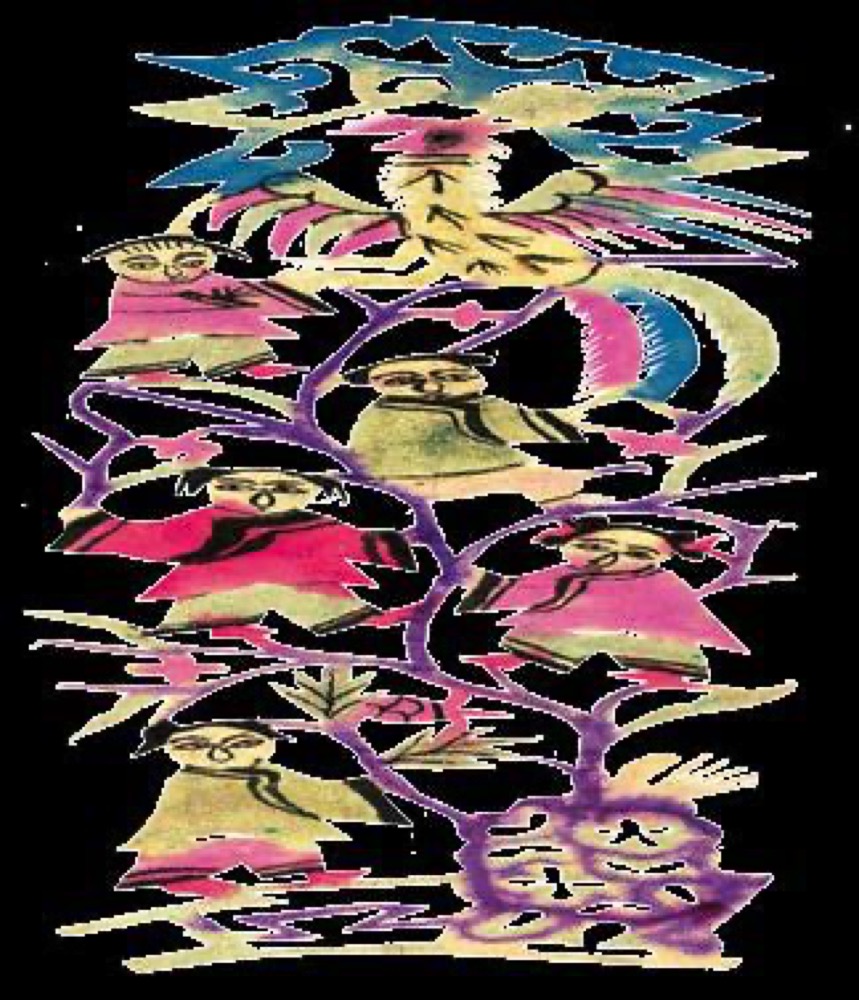
A dyed paper cut from the Jiaodong region, where color is brushed onto the finished cut.
Multi-layered or split-color cuts stack sheets of different colors. A red peony may sit on a green stem, each layer cut separately and then glued together. The result looks more like collage than silhouette, but the grammar is still paper cutting.
By use: where the paper goes
Most paper cuts were made for a specific place or moment.
Window flowers (窗花, chuanghua) are the best known. Cut to catch the morning light, they turn a paper window into a colored lantern. Many are symmetrical so they look the same from inside and outside.
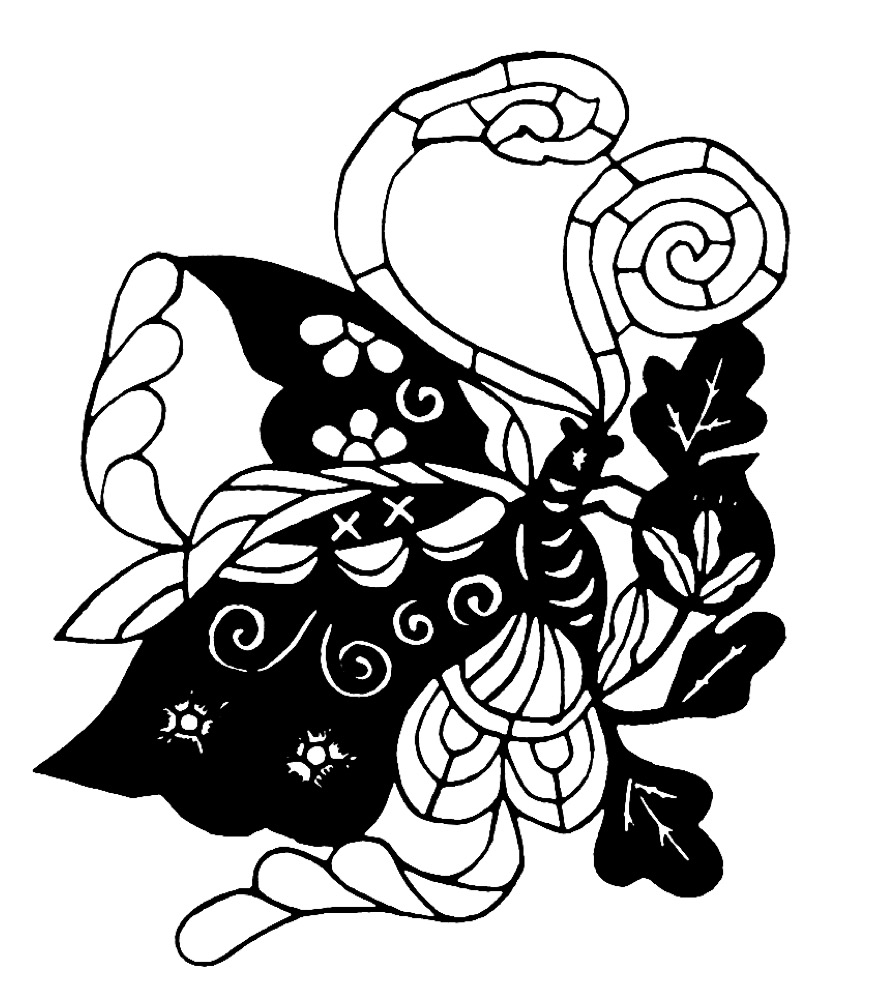
A window-flower design. These cuts are made to glow when light passes through them.
Door strips (门笺, menjian) hang above doorframes. They are long, narrow, and often printed with gold characters on red paper.
Happy flowers (喜花, xihua) appear at weddings — on gifts, cakes, candles, and the bridal bed. They pair dragons with phoenixes, mandarin ducks, or the double-happiness character.
Shoe flowers (鞋花, xiehua), hat flowers (帽花, maohua), and pillow flowers (枕花, zhenhua) were used as embroidery patterns. A woman pasted the cut onto cloth, stitched over it, and washed the paper away.
Gift patterns (礼花, lihua) decorated boxes and wrappings. New Year cakes without a paper cut on top looked bare.
Lamp flowers (灯花, denghua) were pasted onto lanterns, so the candle heat made the cut flicker.
By region: north, south, and everything between
Climate, paper, and local habit shaped different voices.
Northern cuts are usually bold, loose, and large. The Loess Plateau, especially Ansai in Shaanxi, produced cuts with thick lines and strong gestures — almost like cave paintings done in red paper.
Southern cuts are finer and more decorative. Yangzhou cutters became known for knife engraving so delicate that the paper looked like silk gauze.
Yuxian, in Hebei, developed dyed cuts: white paper is cut, then brushed with bright mineral colors. The work keeps the crisp outline of paper cutting but adds the saturation of folk painting.
The northwest, including Gansu and Ningxia, favored round medallions and animal totems. The closed shapes suited a mobile life.
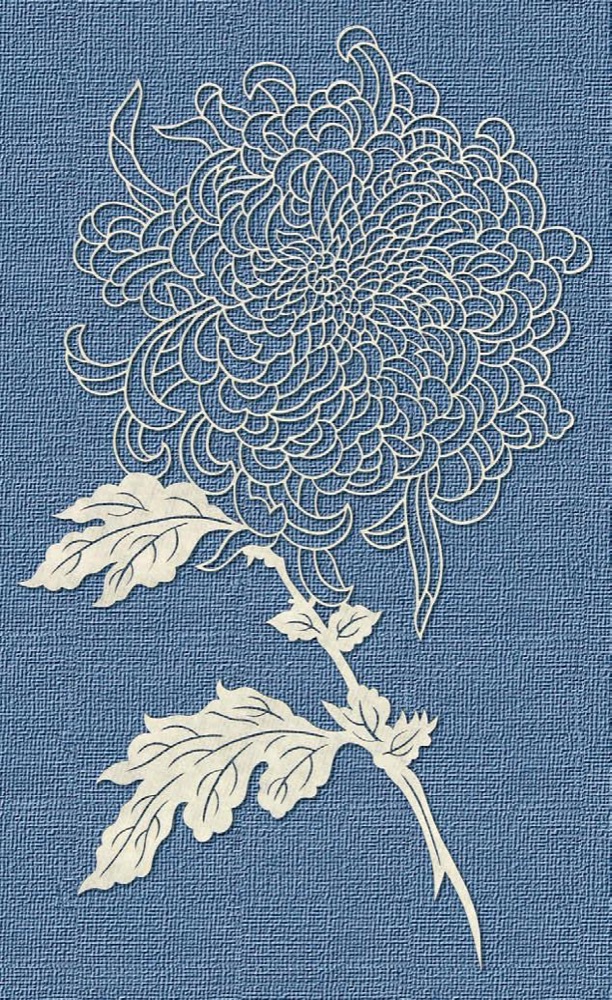
Fine-line flower cutting, typical of the delicate southern style.
Every region also had its favorite pictures. Shaanxi cutters liked tigers and dolls; southern cutters preferred peonies and opera figures; coastal villages cut fish and boats.
By subject: the grammar of wishes
The subject is rarely just decorative. It is a wish made visible.
Animals carry meaning through sound and habit. A bat (fu) sounds like "good fortune." A fish (yu) sounds like "abundance." A pomegranate, full of seeds, prays for many sons. A tiger guards a child.
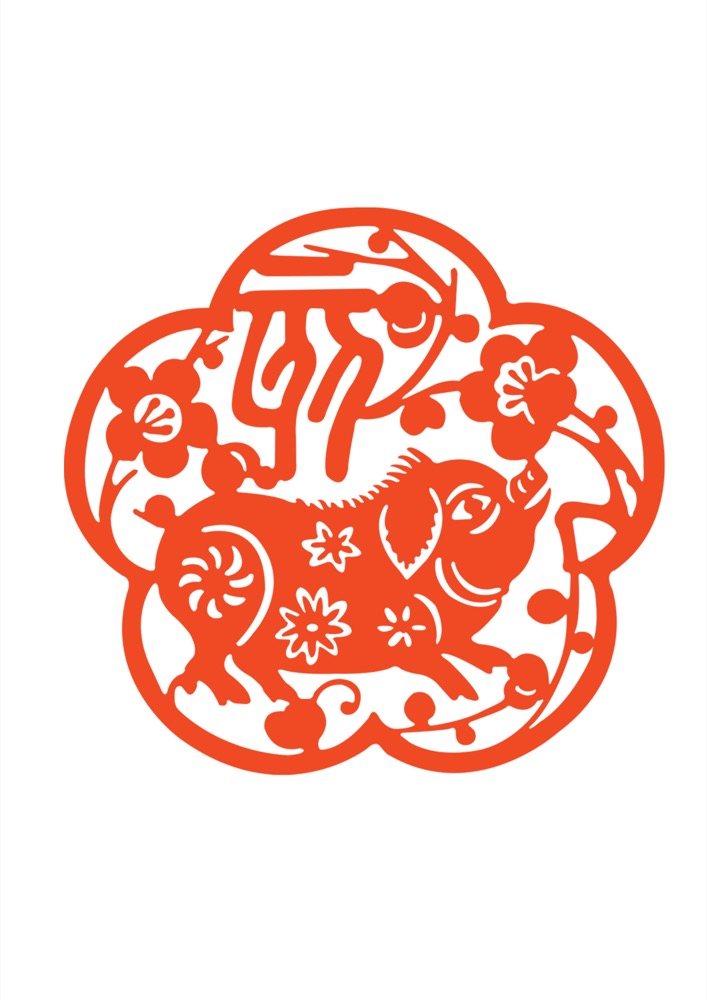
A zodiac pig paper cut surrounded by plum blossoms, a typical New Year subject.
Plants follow the calendar and the heart. Peonies mean wealth and honor. Plum blossoms mean endurance. Lotus means purity, and when paired with fish they say "abundance year after year."
Figures include opera heroes, the twelve zodiac animals, and the folk doll with topknots. Some teach a moral — Mulan joining the army, the White Snake — while others just bring good cheer.
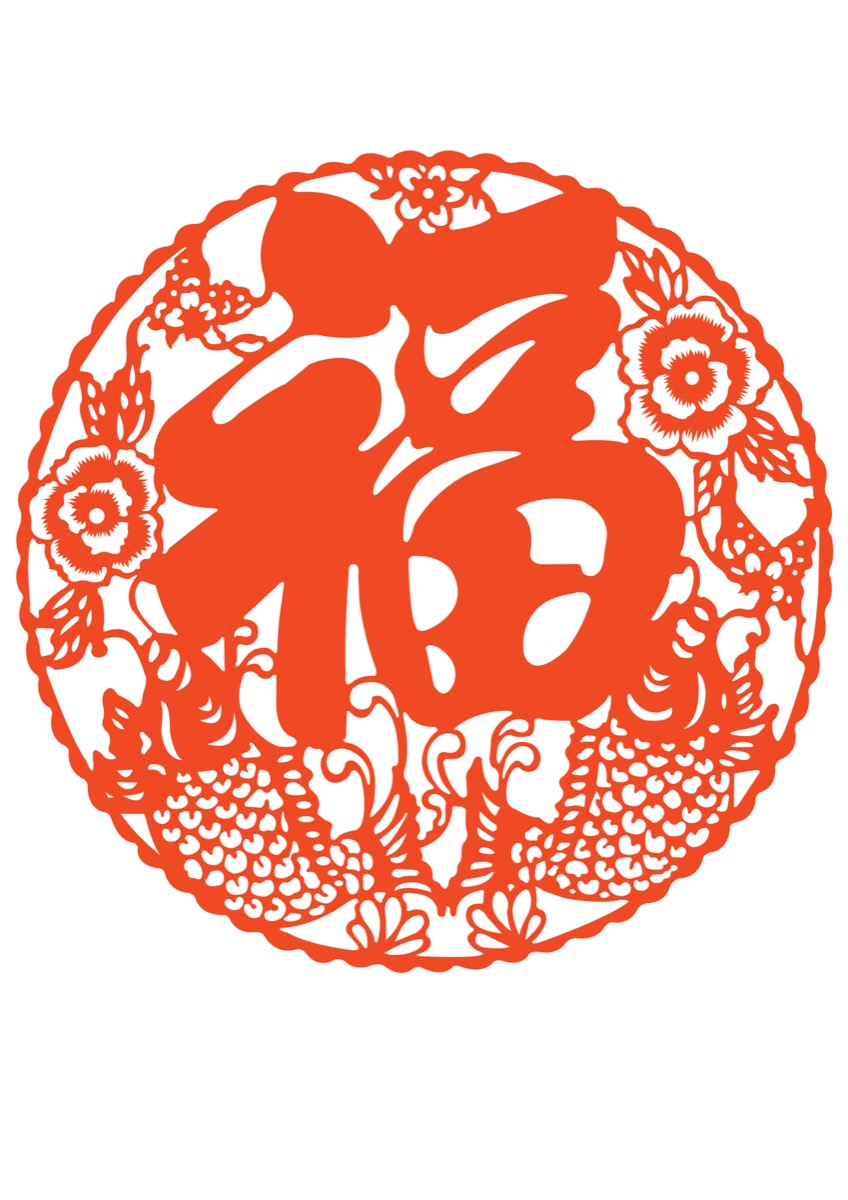
Characters and symbols are the most direct. The character fu (福, blessing), often hung upside down so that "fortune arrives," is the single most common paper-cut image in China.
How to read a paper cut at a glance
When you look at a paper cut, ask five questions:
- Is the picture built from red lines or from holes? That tells you positive versus negative cut.
- How many colors do you see? One color points to classic monochrome; layered colors suggest dyed or split-color work.
- What shape is the paper? Round medallions often hang on windows; long strips hang above doors; small squares are meant for shoes or gifts.
- Where would this have been pasted? A fierce tiger might guard a child; a pair of ducks blesses a wedding.
- What wish is being asked? If you can name the subject, you can usually name the blessing.
Pick a style and start
If you are new to paper cutting, start with a positive-cut, monochrome window flower. The lines are bold, mistakes are forgiving, and one finished piece on a window is enough to understand why the craft lasted so long.
If you want a challenge, try a negative-cut lamp flower or a dyed Jiaodong-style flower. If you want speed, cut a zodiac animal for the coming lunar year. And if you only want to look, compare an Ansai tiger with a Yangzhou peony: two temperaments, one red sheet.
Author
This article was prepared by the team at ChineseFolkCrafts.com. We are not intangible-cultural-heritage inheritors or museum researchers. Our job is to find authoritative Chinese sources, understand them, and explain them clearly for international readers.
If you spot an error — a date, a translation, a misattributed custom — please let us know and we will correct it. Last updated 2026-07-25.