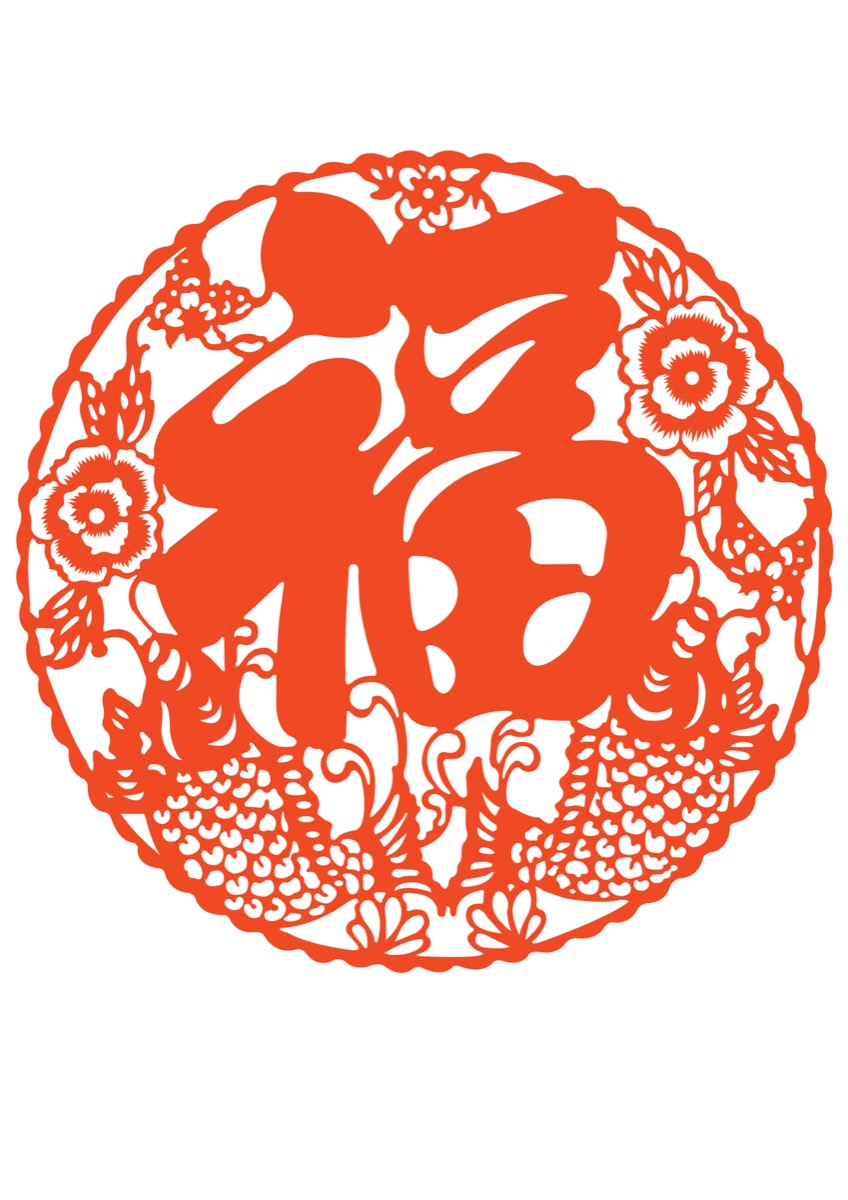
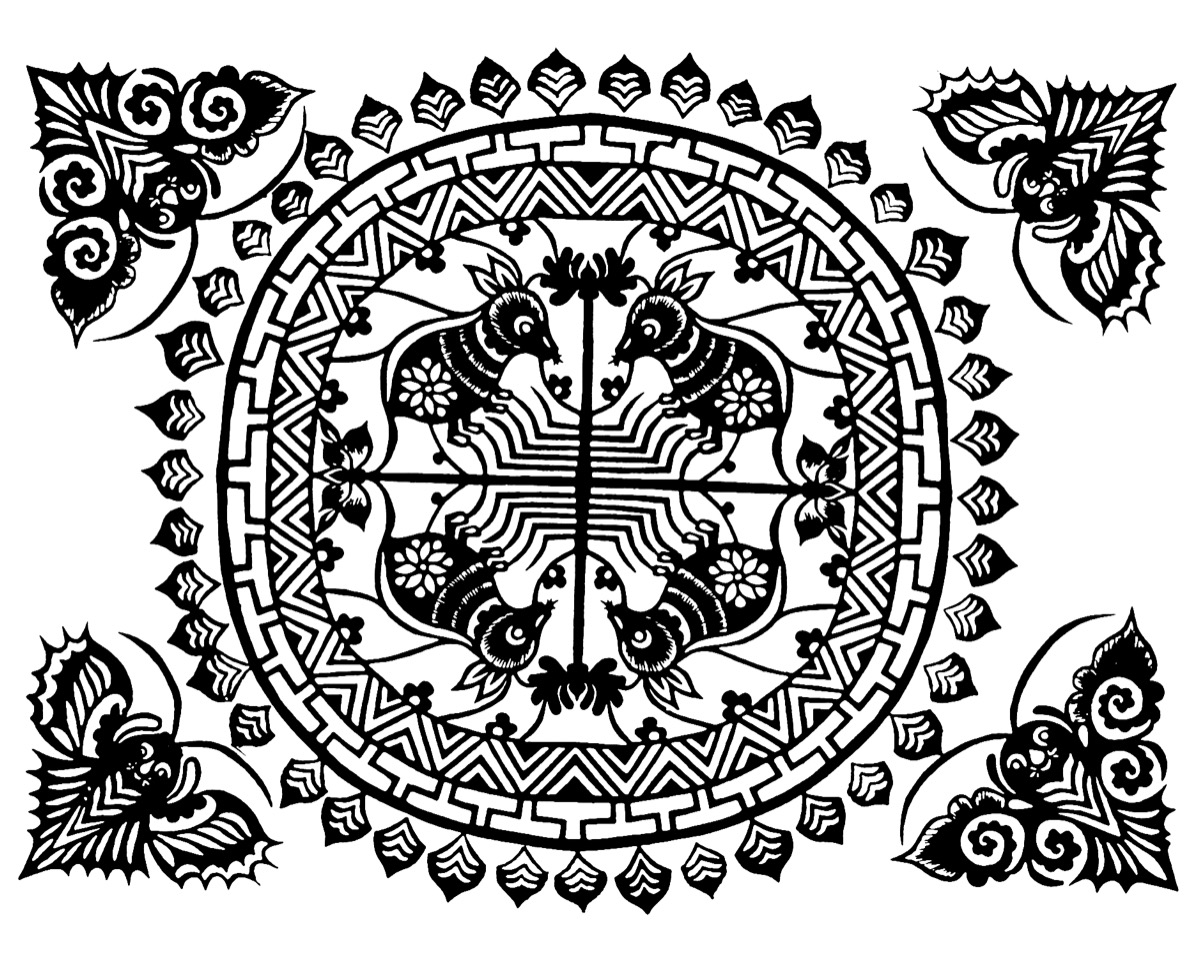
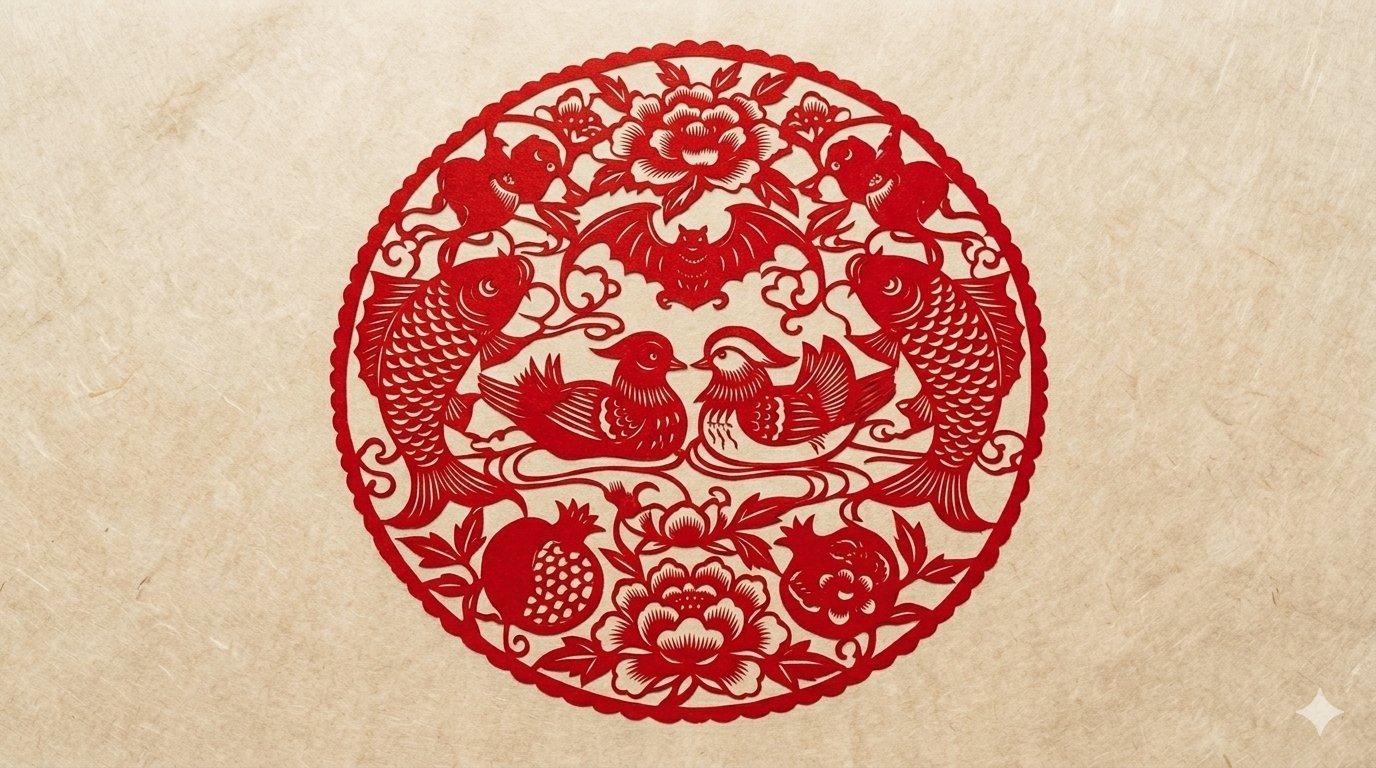
A paper cut of a bat does not mean a paper cut of a bat. It means good fortune. A fish does not mean a fish. It means abundance. In Chinese paper cutting, animals are rarely drawn for what they are; they are drawn for what they sound like, how they behave, or what old stories say about them.
This habit of reading animals as wishes makes the paper cut a kind of code. Once you learn a few of the codes, a window full of red animals turns into a room full of hopes.
Not just decoration
Chinese is full of homophones. Words that sound alike carry each other's meanings. A cutter who wants to wish a family luck does not always write the word "luck"; she cuts a bat, because fu (蝠, bat) sounds like fu (福, blessing).
Animals also carry meaning through behavior. Tigers are feared, so they protect. Fish swim in pairs, so they bless marriage. Magpies chatter loudly, so their arrival is treated as news. The animal is a small story, and the paper cut tells it in one glance.
Bats
Bats are the most misunderstood animal in Chinese folk art. In the West, bats are dark. In China, a bat is lucky.
The reason is sound. Fu (蝠) for bat sounds like fu (福) for blessing. One bat means good fortune. Five bats together mean the five blessings: long life, wealth, health, virtue, and a peaceful death. A bat flying over a peach means "blessing and long life." A bat near a coin means "fortune before your eyes."
Once you start looking for bats in Chinese paper cuts, you see them everywhere.
Fish
Fish are almost as common as bats. The word yu (鱼, fish) sounds like yu (余, surplus). A pair of fish means "abundance year after year." A fish swimming toward a lotus means "wealth and honor year after year." A child holding a fish means "may the family have plenty."
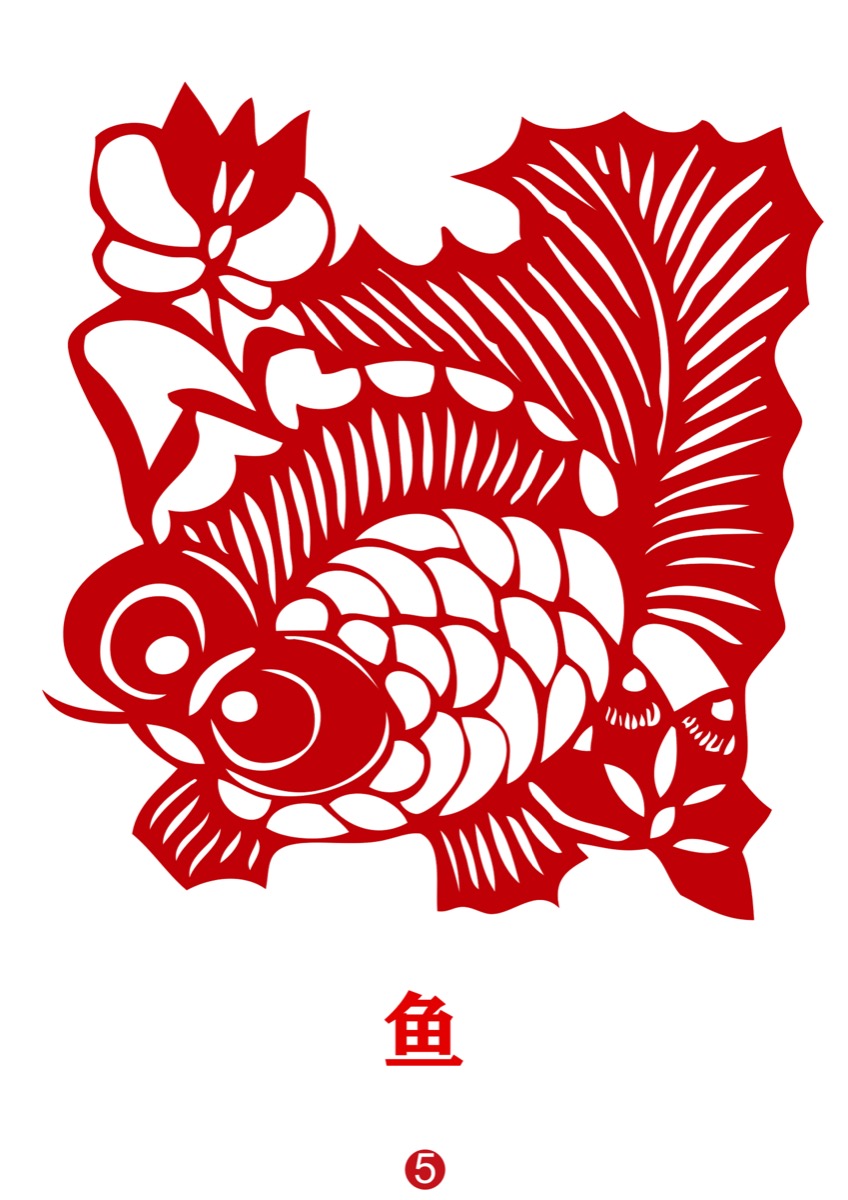
A pair of fish. In Chinese, "fish" sounds like "surplus," so two fish wish for abundance year after year.
Fish also pair well with other images. A fish shown with a dragon refers to the dragon gate legend: a carp that swims upstream becomes a dragon, a metaphor for passing the imperial exams. Fish paired with water mean harmony, because fish cannot live without water.
Tigers
Tigers in paper cutting are guardians. Their job is to scare away evil spirits and protect children. In Shaanxi and other northern regions, a tiger cut might be pasted on a child's door or stitched onto a baby's shoe.
The tiger is rarely drawn realistically. It has a round head, wide eyes, and striped body. The style is closer to a friendly monster than to a real cat. The point is not accuracy; the point is power. A fierce-looking tiger is a good tiger.
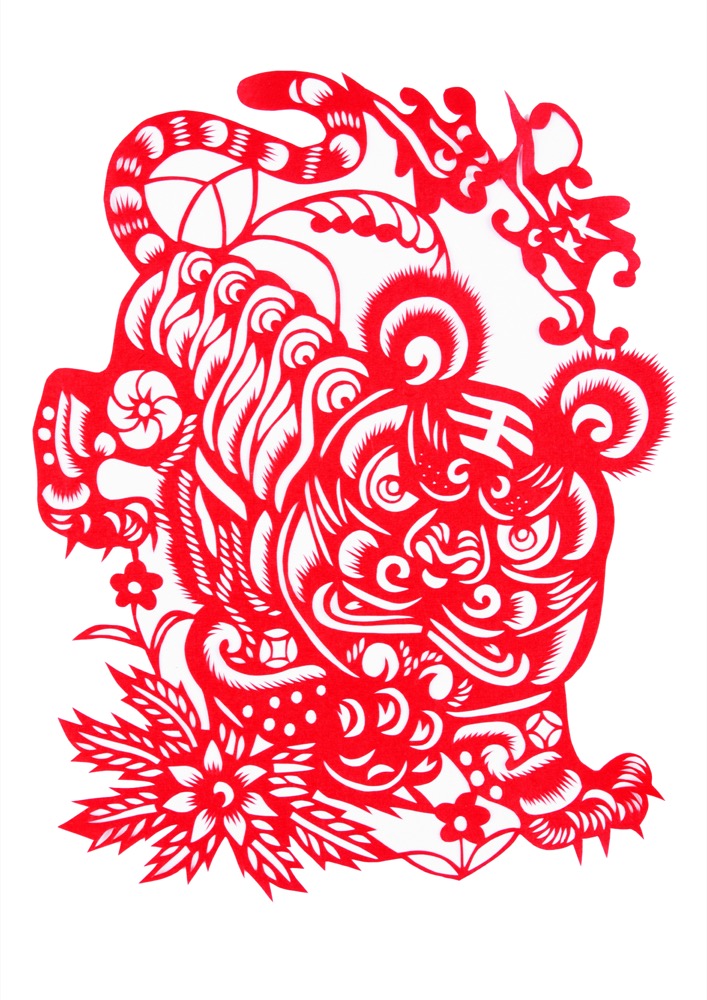
A stylized paper tiger. These are pasted near children or doorways to ward off evil.
Dragons
The dragon is the only mythical animal in the zodiac, and it dominates Chinese paper cutting during Dragon years. Unlike the Western dragon, the Chinese dragon is wise, powerful, and associated with rain and imperial authority.
In paper cuts, dragons usually appear with clouds, pearls, or phoenixes. A dragon chasing a pearl means the pursuit of wisdom. A dragon with a phoenix means a harmonious marriage. A dragon coiled among waves means control over water and weather.
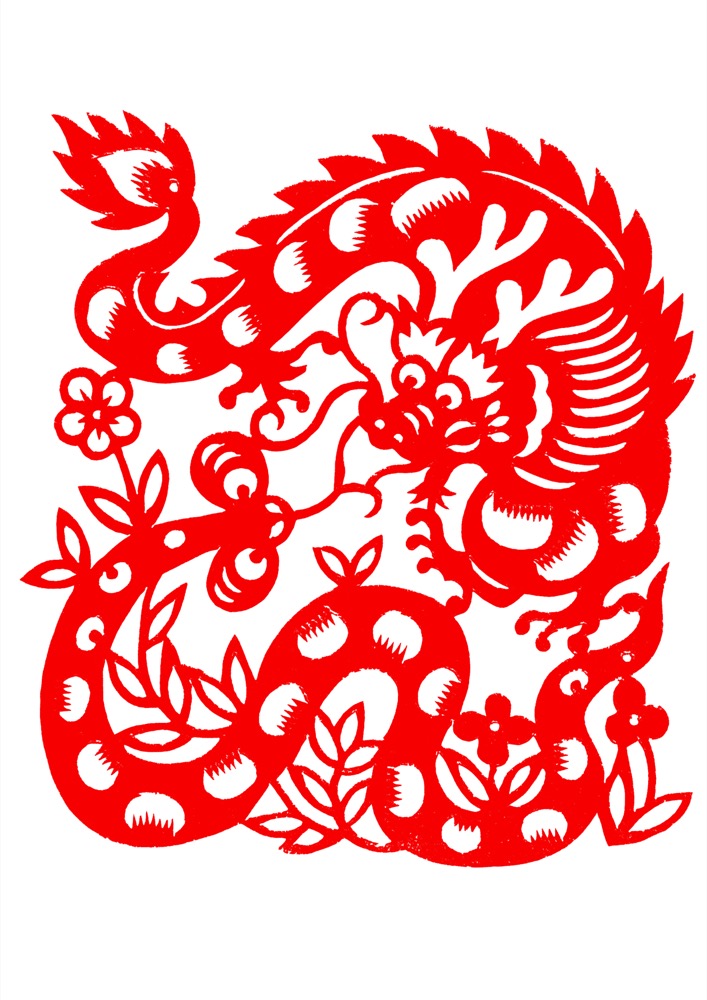
A dragon paper cut. Dragons control rain and water, so they often appear in farming regions.
Magpies and birds
Magpies are the news-bearers. The name itself means "happy bird" (xi que). A magpie on a plum branch means "joy on the eyebrow," because "plum" (mei) sounds like "eyebrow" (mei). Two magpies facing each other mean double happiness.
Other birds carry their own messages. Mandarin ducks are a pair, so they bless weddings. Cranes live long, so they mean longevity. Swallows return in spring, so they mean renewal. Phoenixes appear with dragons to bless marriages.
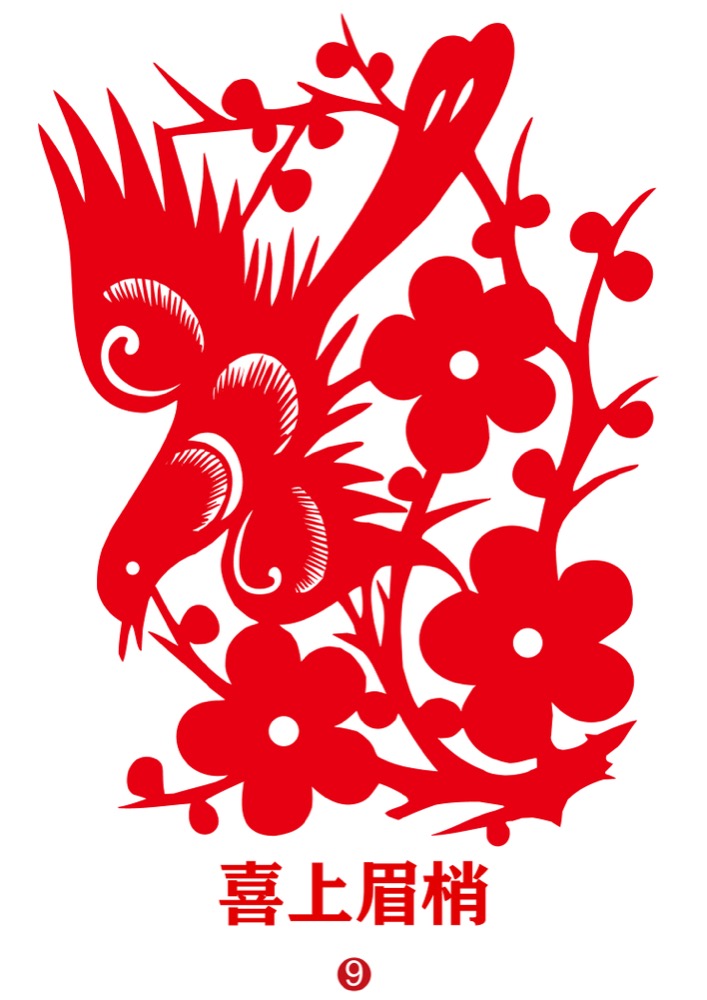
A magpie on a branch. Magpies are called "happy birds" and announce good news.
Rabbits
Rabbits mean fertility and gentle good fortune. In folk belief, the jade rabbit pounds medicine on the moon, so rabbits are linked to the Mid-Autumn Festival. A rabbit with cabbage means a peaceful household, because "cabbage" (bai cai) sounds like "a hundred wealth."
During Rabbit years, rabbit cuts replace dragon cuts on windows and greeting cards. The style is usually softer, with long ears and round bodies.
The twelve zodiac animals
Every lunar year belongs to one of twelve animals. Each has its own character:
- Rat: clever, resourceful
- Ox: steady, hardworking
- Tiger: brave, protective
- Rabbit: gentle, lucky
- Dragon: powerful, noble
- Snake: wise, secretive
- Horse: energetic, free
- Goat: calm, artistic
- Monkey: clever, playful
- Rooster: punctual, honest
- Dog: loyal, just
- Pig: wealthy, content
Zodiac paper cuts are most common at New Year, but they also appear at weddings and birthdays to honor the animal of the person being celebrated.
The role of animals in zodiac and festival paper cuts
Chinese festival paper cuts are rarely random. The animal on the window usually matches the occasion. At Spring Festival, the zodiac animal of the coming year takes center stage on windows, doors, and red envelopes. A Tiger year brings fierce tiger cuts; a Dragon year fills shops with dragons coiled through clouds. These images do more than announce the year; they borrow the animal's spirit to protect the household for the next twelve months.
Weddings favor pairs. A bride's quilt or wedding chamber might be decorated with dragon and phoenix cuts, mandarin ducks, or paired fish. Each pair repeats the same wish: harmony, fidelity, and many children. Birthday celebrations, especially for elders, turn to cranes, deer, and tortoises—creatures associated with long life. A set of window flowers for a seventieth birthday might show a crane carrying a peach, or a deer beneath a pine tree.
Seasonal festivals have their own animal vocabulary. The Mid-Autumn Festival brings rabbits, since the jade rabbit lives on the moon. The Dragon Boat Festival is less tied to paper cutting, but some southern families still paste small tiger or five-poison cuts near doorways to ward off summer illness. For a broader look at how these traditions developed, see our article on Chinese paper cutting history.
Auspicious animal pairs and combinations
Single animals send single wishes, but combinations multiply the meaning. The most famous pair is the dragon and phoenix (long feng). Together they represent the emperor and empress, husband and wife, cosmic balance. A wedding cut showing a dragon and phoenix facing each other is one of the most powerful marital blessings in Chinese folk art.
Mandarin ducks (yuan yang) are another wedding staple. Unlike many birds, mandarin ducks were believed to mate for life, so a pair of ducks on a wedding gift is a direct wish for fidelity. Two fish work the same way: because "fish" sounds like "surplus," a pair of fish wishes the couple abundance year after year.
Bats are especially flexible partners. A bat above a peach says "blessing and longevity." A bat above a coin says "fortune before your eyes." Five bats arranged around a character for longevity form the "five blessings surrounding longevity," one of the most common compound designs in northern paper cutting.
Some combinations are protective rather than celebratory. A tiger surrounded by the "five poisonous creatures"—snake, scorpion, centipede, toad, and spider—was pasted in homes during summer to frighten away real illness and imagined evil. These combinations are part of a larger symbolic vocabulary that also includes plants, knots, and the eight auspicious symbols in Chinese paper cutting.
Regional animal styles
Chinese paper cutting is not one style. It is many local traditions, and each region cuts animals in its own voice.
Shaanxi tigers are among the most recognizable. In the Loess Plateau, where life was hard, and child mortality was a real fear, tigers were cut as protective spirits. Shaanxi tigers have square heads, wide-open eyes, exaggerated whiskers, and bodies filled with flower, cloud, and spiral patterns. They look almost Cubist—powerful rather than pretty. A Shaanxi tiger cut is meant to stare evil straight in the eye.
Yangzhou fish come from a very different world. The Jiangnan region around Yangzhou had a wealthy, literate culture, and its paper cuts reflect that refinement. Yangzhou fish are cut with long, flowing fins, delicate scales, and curved bodies that suggest movement through water. They often appear with lotus flowers or water weeds, turning the paper cut into a small pond scene.
Hebei and Fengning cuts, especially from the north, tend toward bold symmetry. A Fengning tiger or horse is often cut as a single, balanced silhouette with decorative patterns punched or snipped inside. These cuts were made for window flowers and New Year decorations, so they needed to read clearly from across a courtyard.
Yuxian paper cuts from Hebei are famous for being dyed. The animal is first cut from white paper, then colored with transparent vegetable dyes. A Yuxian rooster might have a red comb, green tail, and yellow body, turning a simple silhouette into a bright folk painting.
Guangdong and Foshan cuts, especially those used in rituals, often employ gold foil or red-and-gold paper. Lions, dragons, and phoenixes appear on temple decorations and wedding banners with dense, intricate detail. The climate and urban culture of the Pearl River Delta gave these cuts a more theatrical, ornamental character than their northern cousins.
How to read an animal paper cut
Reading a Chinese animal paper cut is easier than it looks. Start with three questions.
1. What does it sound like? Homophones are the fastest clue. Fish (yu) means surplus. Bat (fu) means blessing. Deer (lu) means official salary. If the animal's name sounds like a good word, the paper cut is probably wishing for that good thing.
2. What does the animal do? Behavior matters. Tigers guard. Cranes live long. Mandarin ducks stay paired. Swallows return each spring. The cutter uses the animal's real nature as a metaphor for human life.
3. What is it paired with? Context changes everything. A bat with a peach means "blessings and long life." A bat with a coin means "fortune before your eyes." A fish with lotus means "abundance year after year," while a fish with dragon means "success in examinations." Animals in paper cutting are social creatures; they rarely appear alone.
Direction can also matter. An animal facing inward, toward the center of the window, is often said to bring blessings into the home. An animal facing outward may guard against what comes from outside. For more on how plants and animals share space in these designs, see our guide to flowers in Chinese paper cutting.
FAQ
Why are bats considered lucky in Chinese paper cutting? The Chinese word for bat, fu (蝠), sounds exactly like the word for blessing, fu (福). A bat is therefore a visual pun for good fortune. Five bats together represent the five blessings: long life, wealth, health, virtue, and a peaceful death.
Can any two animals be combined in a paper cut? Not really. Combinations work because of shared sound, shared symbolism, or a well-known story. A dragon and phoenix pair makes sense because both are noble and because the pair represents marital harmony. A random pairing of, say, a rat and a crane would confuse the viewer unless a local story or pun connects them.
Do different regions prefer different animals? Yes. Farming regions favor rain-bringing dragons and abundance-wishing fish. Northern pastoral areas favor protective tigers and horses. Southern coastal regions use more dragons, phoenixes, and lions in ritual and temple art. Local climate, livelihood, and dialect all shape which animals appear most often.
Are zodiac animal paper cuts only for Chinese New Year? No. They are most common at New Year, but they also appear at weddings, birthdays, and baby showers to honor the animal sign of the person being celebrated. A child born in a Rabbit year might receive rabbit cuts on every birthday, and a Dragon-year couple might use dragon cuts at their wedding.
Free printable animal paper-cutting templates
Want to try cutting the animals from this article? Download three ready-to-print A4 templates: a rooster, a lion, and a crane.
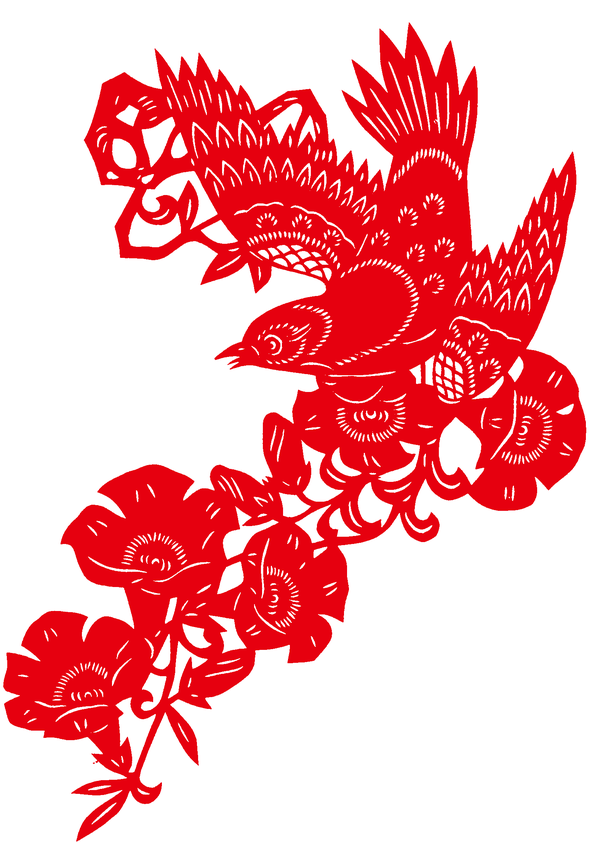
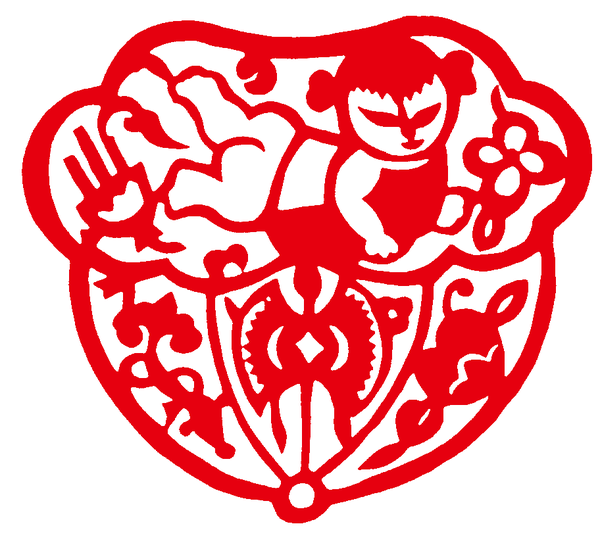
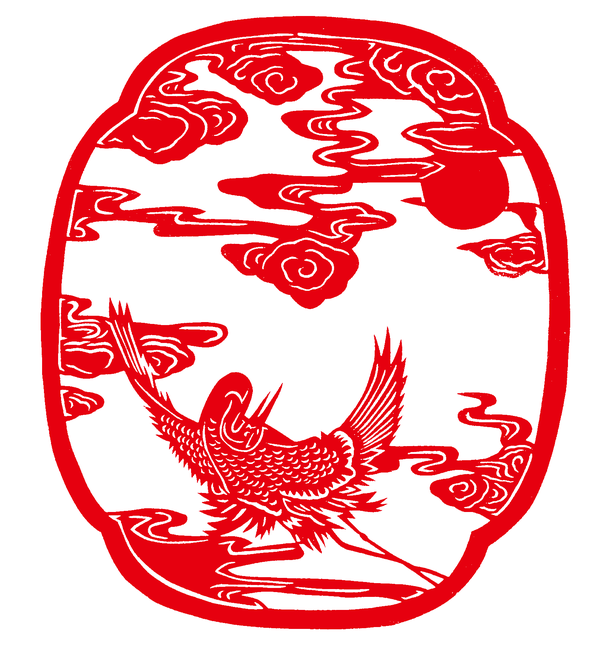
Print at 100% scale on red or white A4 paper. Each page includes the design and a light footer with printing instructions.
Author
This article was prepared by the team at ChineseFolkCrafts.com. We are not intangible-cultural-heritage inheritors or museum researchers. Our job is to find authoritative Chinese sources, understand them, and explain them clearly for international readers.
If you spot an error — a date, a translation, a misattributed custom — please let us know and we will correct it. Last updated 2026-07-30.