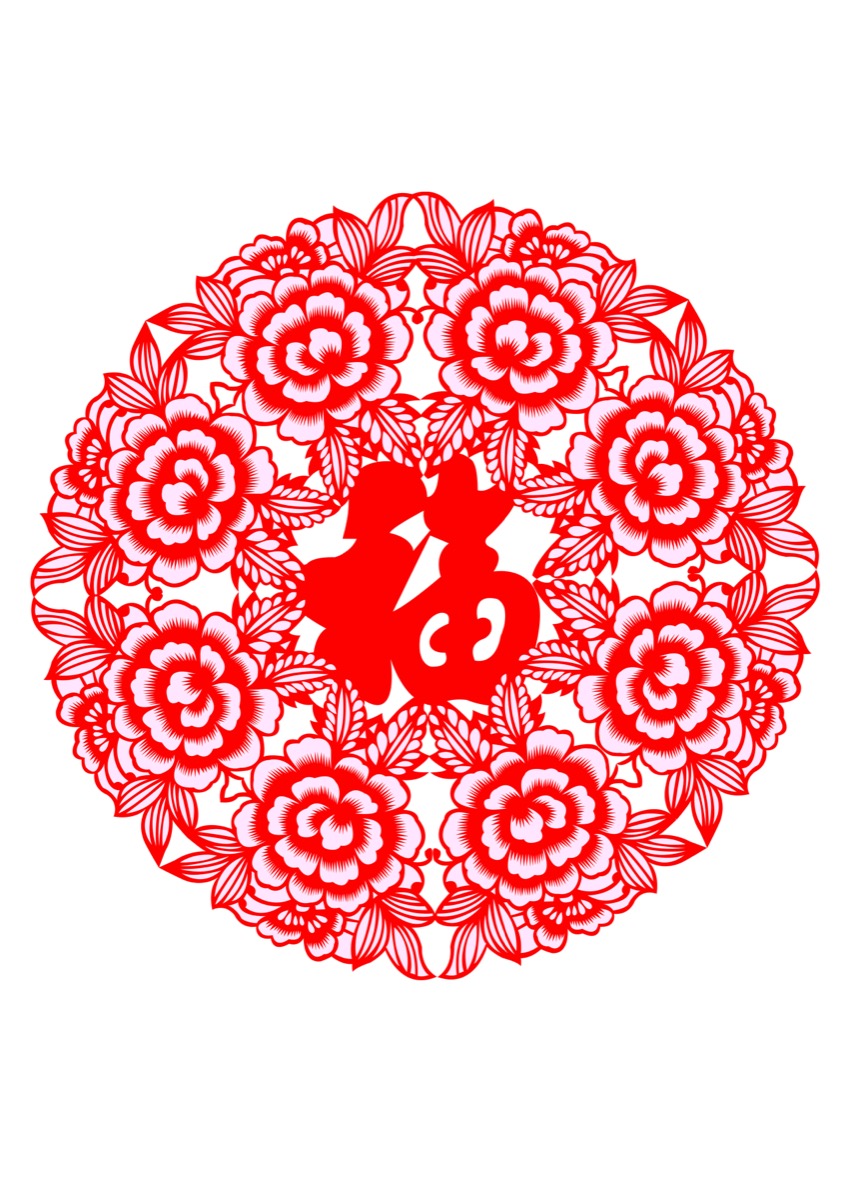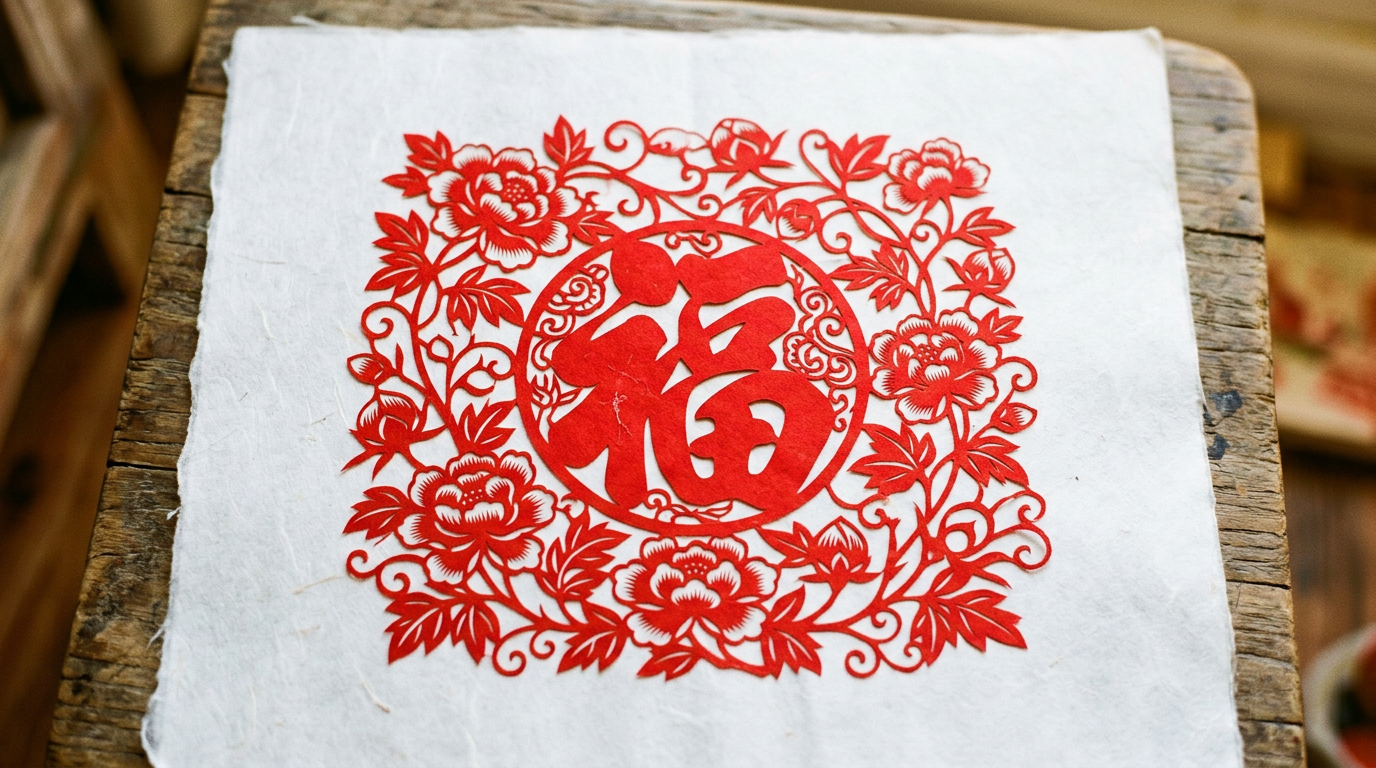
The character Fu (福) is the single most common image in Chinese paper cutting. It means blessing, good fortune, and happiness, and during Spring Festival it appears on doors, windows, red envelopes, and greeting cards across the Chinese-speaking world.
A Fu paper cut is more than decoration. It is a wish made visible. Cutting one yourself connects you to a tradition that is over a thousand years old and still practiced in homes today.
What Fu means
In Chinese, Fu (福) carries a cluster of meanings: good fortune, happiness, prosperity, and blessing. It is one of the five blessings (wu fu, 五福) in classical Chinese thought, alongside longevity, wealth, virtue, and a peaceful end.
Because the character itself is the wish, Fu paper cuts do not need explanation. A red Fu on a door says everything a family wants to say at New Year: may this home be blessed.
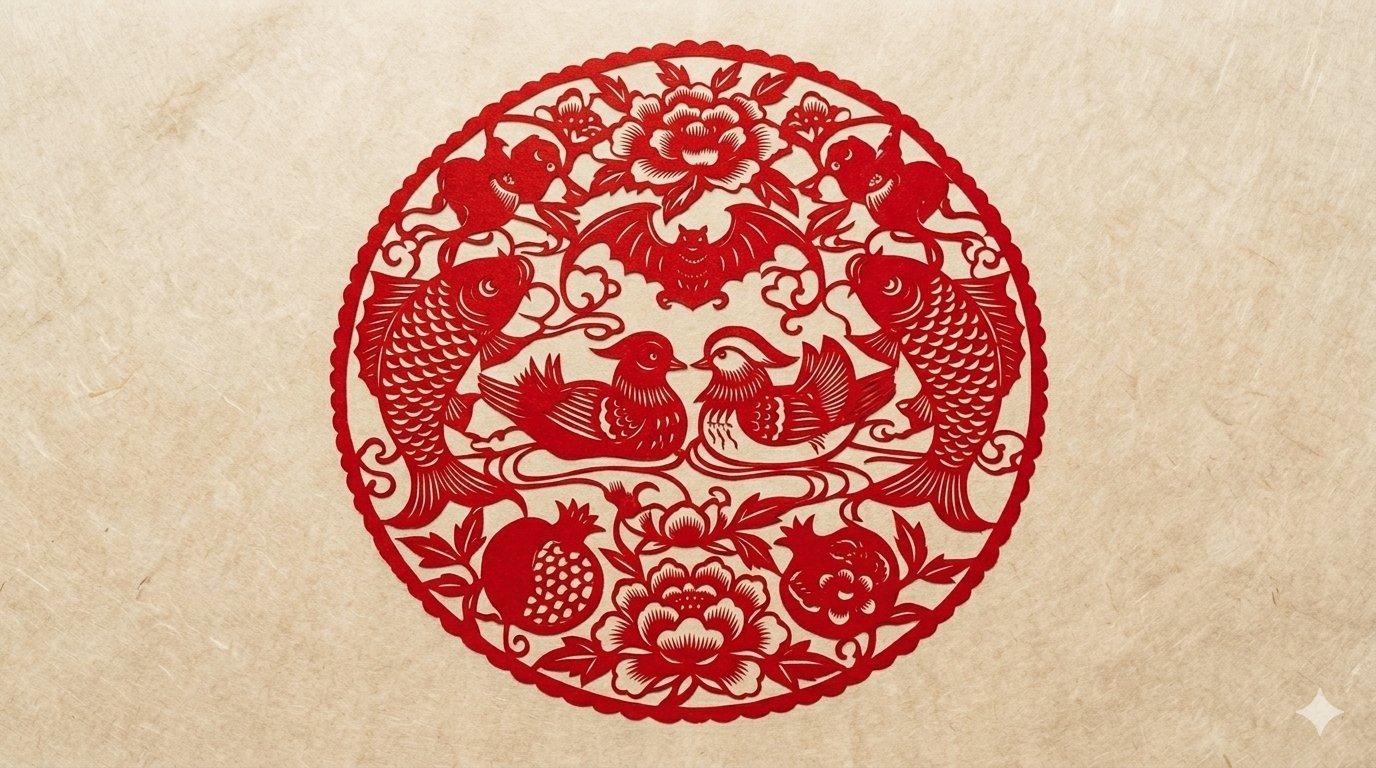
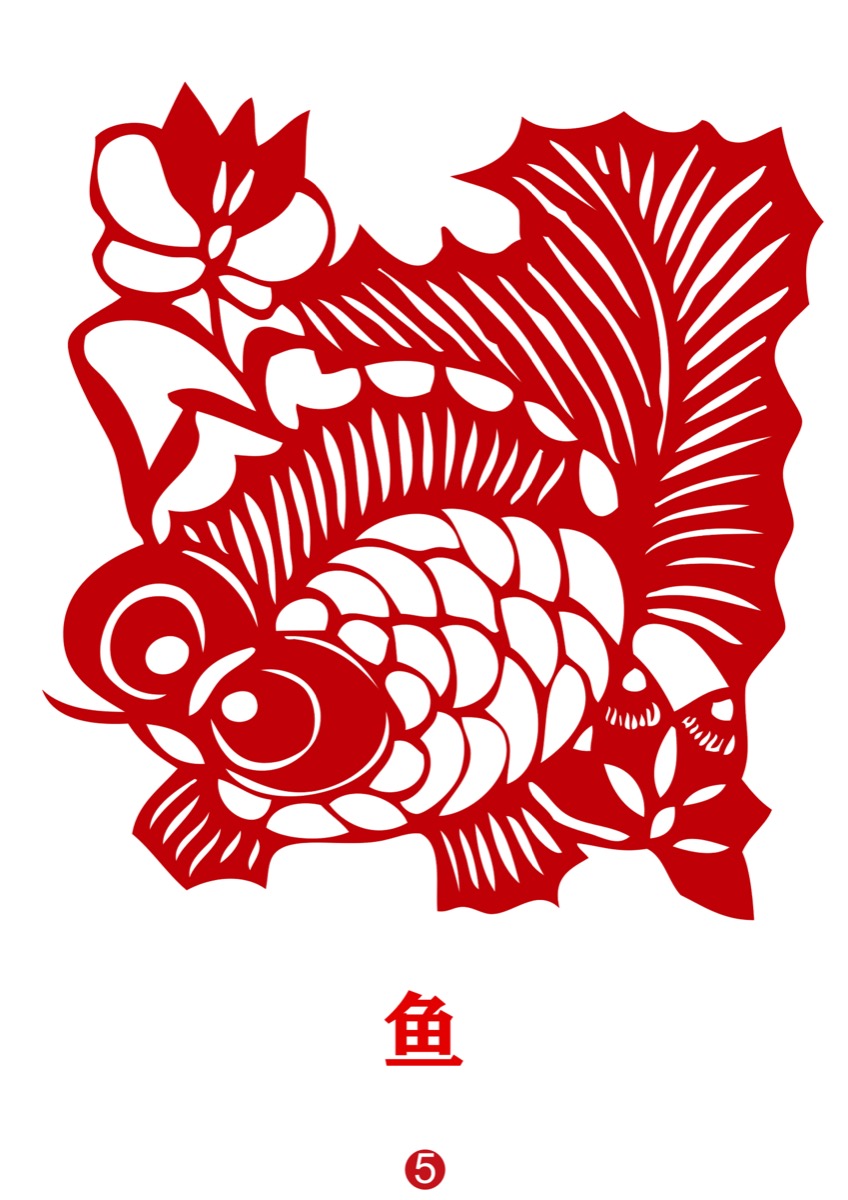
Paper cutters often surround the Fu character with supporting images. Bats are the most common companion, because fu (蝠, bat) sounds like fu (福, blessing). A bat near the character turns one blessing into many. Dragons, phoenixes, fish, and peonies also appear, each adding another layer of meaning.
Why Fu is hung upside down
If you see a Fu paper cut turned upside down on a door, it is not a mistake. The word for "upside down" (dao, 倒) sounds like the word for "arrive" (dao, 到). Hanging Fu upside down is a visual pun: "Fortune has arrived."
This custom is especially common on the main entrance of a home during Chinese New Year. The inverted character greets visitors and announces that blessings have already come to the household. Inside the home, Fu is usually placed right-side up, so the blessing stays where it belongs.
Classic Fu designs
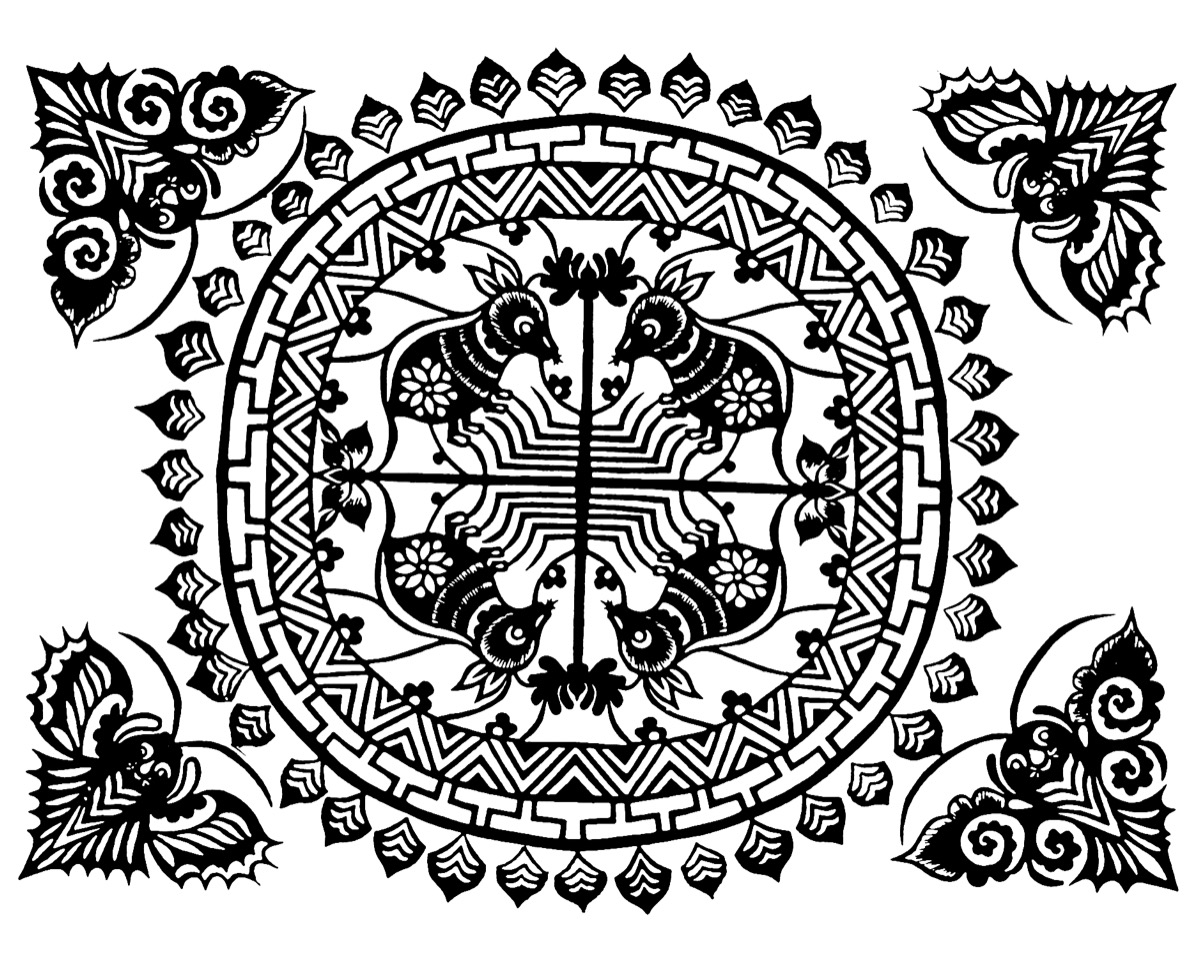
Fu paper cuts come in many styles, from simple single-character cuts to elaborate window flowers. The three designs in our free template set show three classic approaches.
Window-flower Fu. The character sits inside a round, symmetrical medallion with floral corners. This is the style most often pasted on windows at New Year. The round shape means completeness, and the flowers around the edge mean prosperity.
Dragon Fu. Two dragons frame or weave through the character. Dragons add power and authority to the blessing, and the design is popular during Dragon years or for people born under the dragon sign.
Big Fu. A bold, single character with thick, even strokes. This is the easiest style for beginners because the lines are wide and forgiving. It is also the most traditional form: a simple red blessing on a door.
How to use the templates
Our templates are designed for A4 paper at 100% scale. Print them on red paper for a traditional look, or on white paper and back the finished cut with red paper. The black areas are the parts you cut away; the white areas remain as the finished design.
For beginners, start with the Big Fu template. Use small, sharp scissors for the straight lines and a craft knife for the inner corners. Fold the paper gently to reach tight spots, but do not crease the finished design.
Once cut, the Fu can be pasted on a door, window, or card. Remember to hang it upside down on the outside of your door if you want to follow the "fortune has arrived" tradition.
FAQ
Can I use these templates for commercial projects? The templates are free for personal and educational use. For commercial use, please contact us for licensing terms.
What kind of paper works best? Traditional Chinese paper cutting uses thin red paper, but standard printer paper, origami paper, or craft paper also work. Thinner paper is easier to cut cleanly.
Do I need special scissors? Small, sharp scissors help, especially for detailed corners. A craft knife or precision blade is useful for the inner cuts in the window-flower design.
Why is Fu red? Red is the color of joy and good fortune in Chinese culture. It is believed to ward off evil spirits and attract blessings, which is why New Year decorations are almost always red.
Free printable Fu character paper-cutting templates
Want to try cutting your own Fu blessing? Download three ready-to-print A4 templates: a window-flower Fu, a double-dragon Fu, and a bold single Fu character.
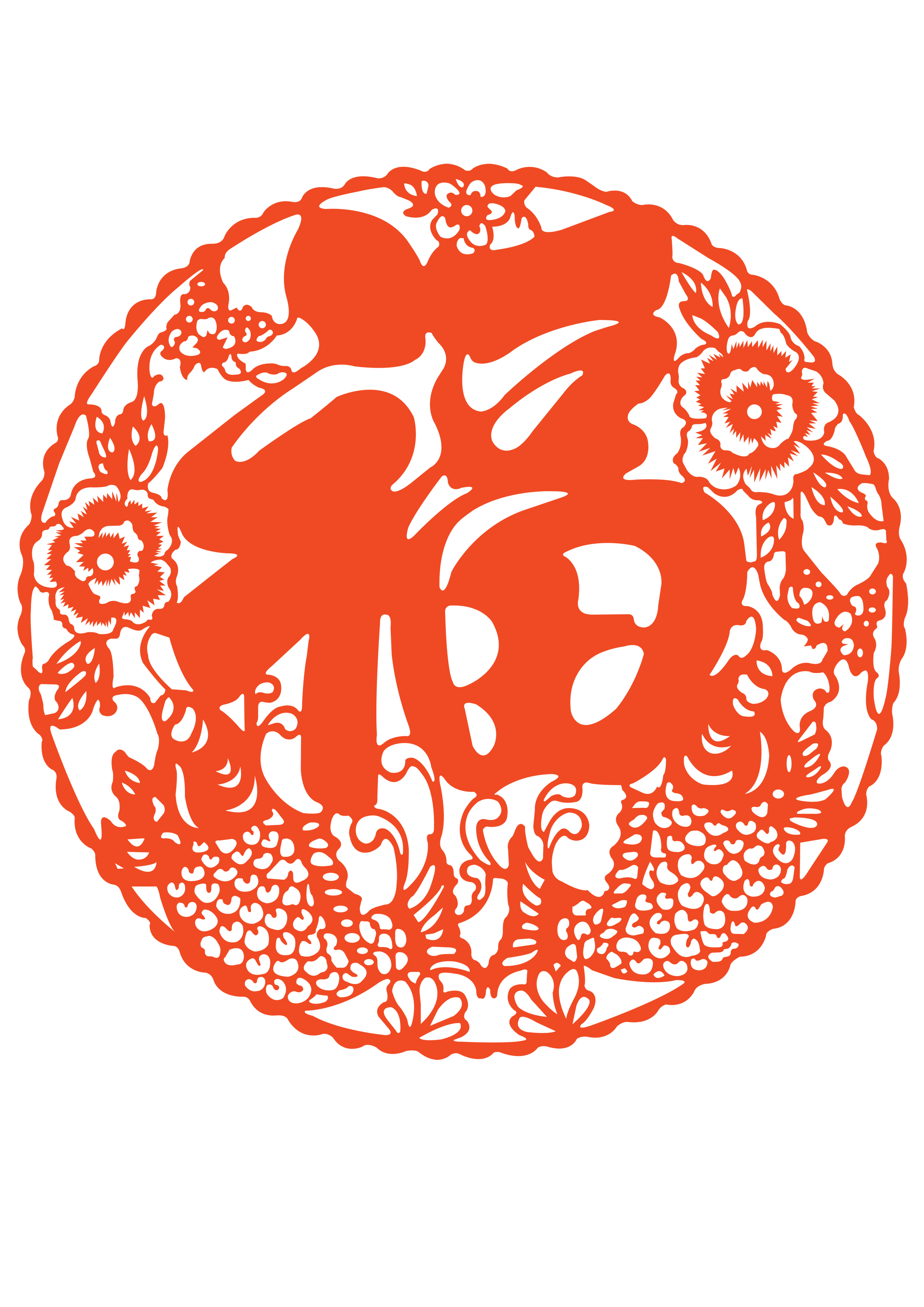
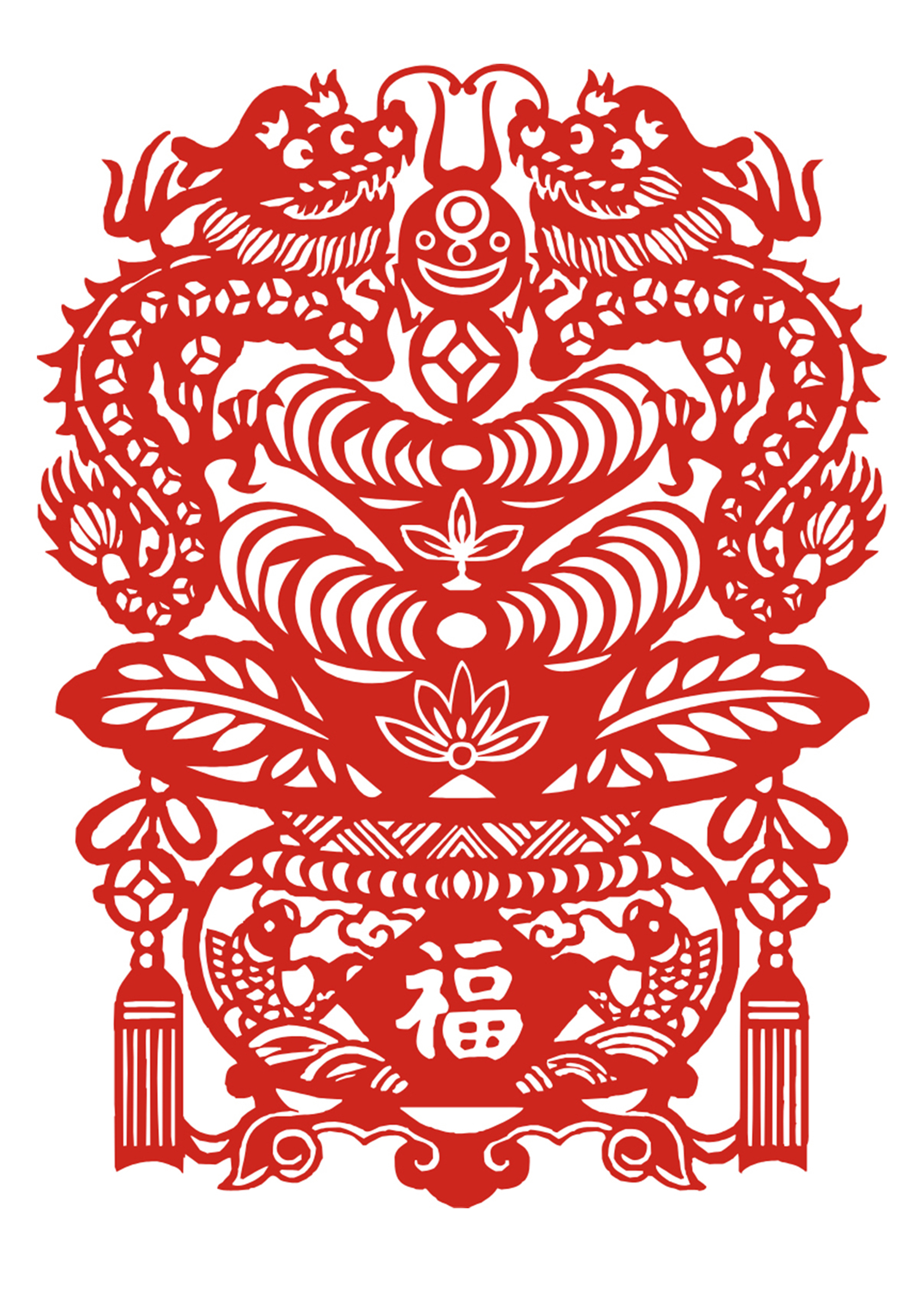
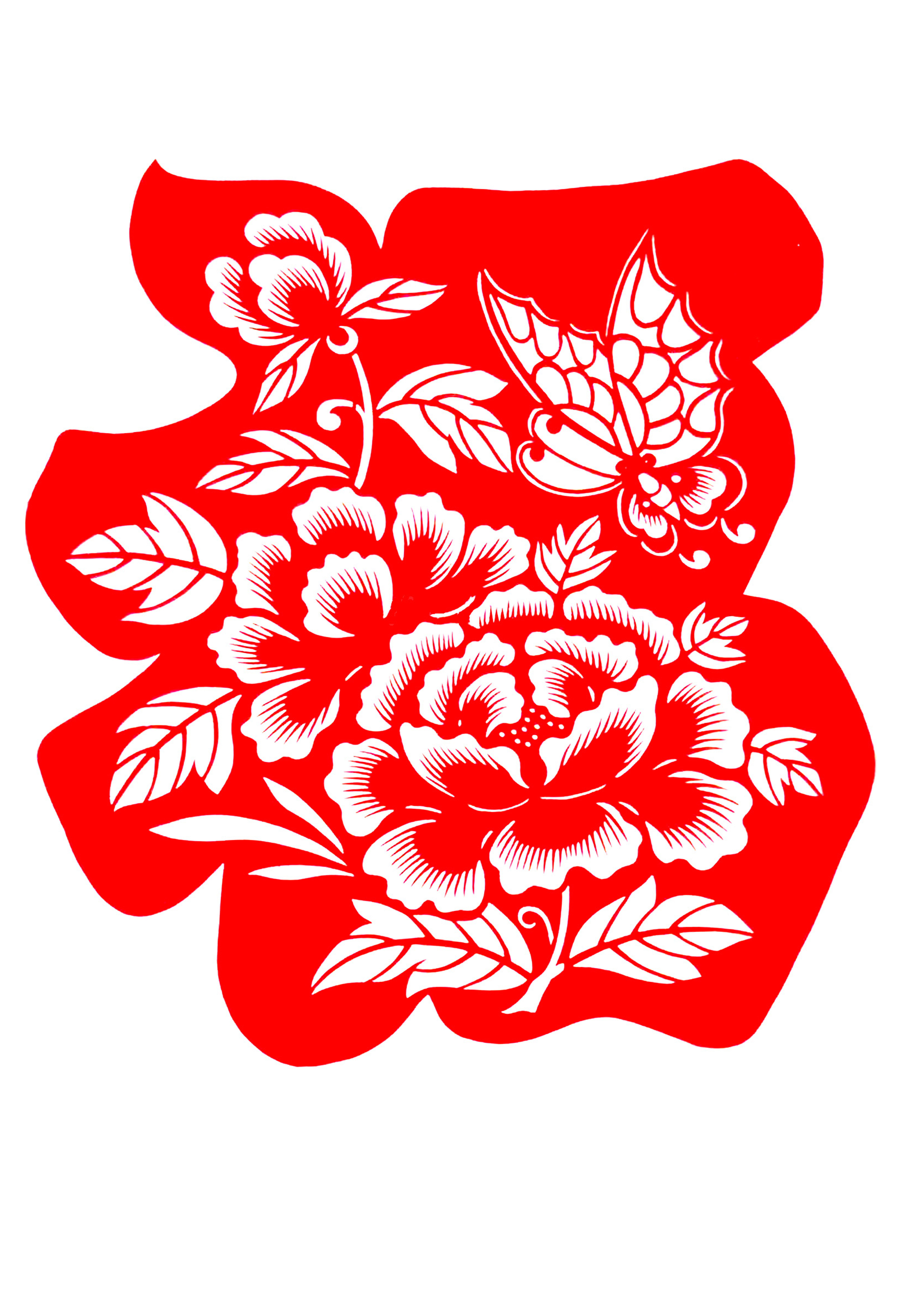
Print at 100% scale on red or white A4 paper. Each page includes the design and a light footer with printing instructions.
Author
This article was prepared by the team at ChineseFolkCrafts.com. We are not intangible-cultural-heritage inheritors or museum researchers. Our job is to find authoritative Chinese sources, understand them, and explain them clearly for international readers.
If you spot an error — a date, a translation, a misattributed custom — please let us know and we will correct it. Last updated 2026-07-27.