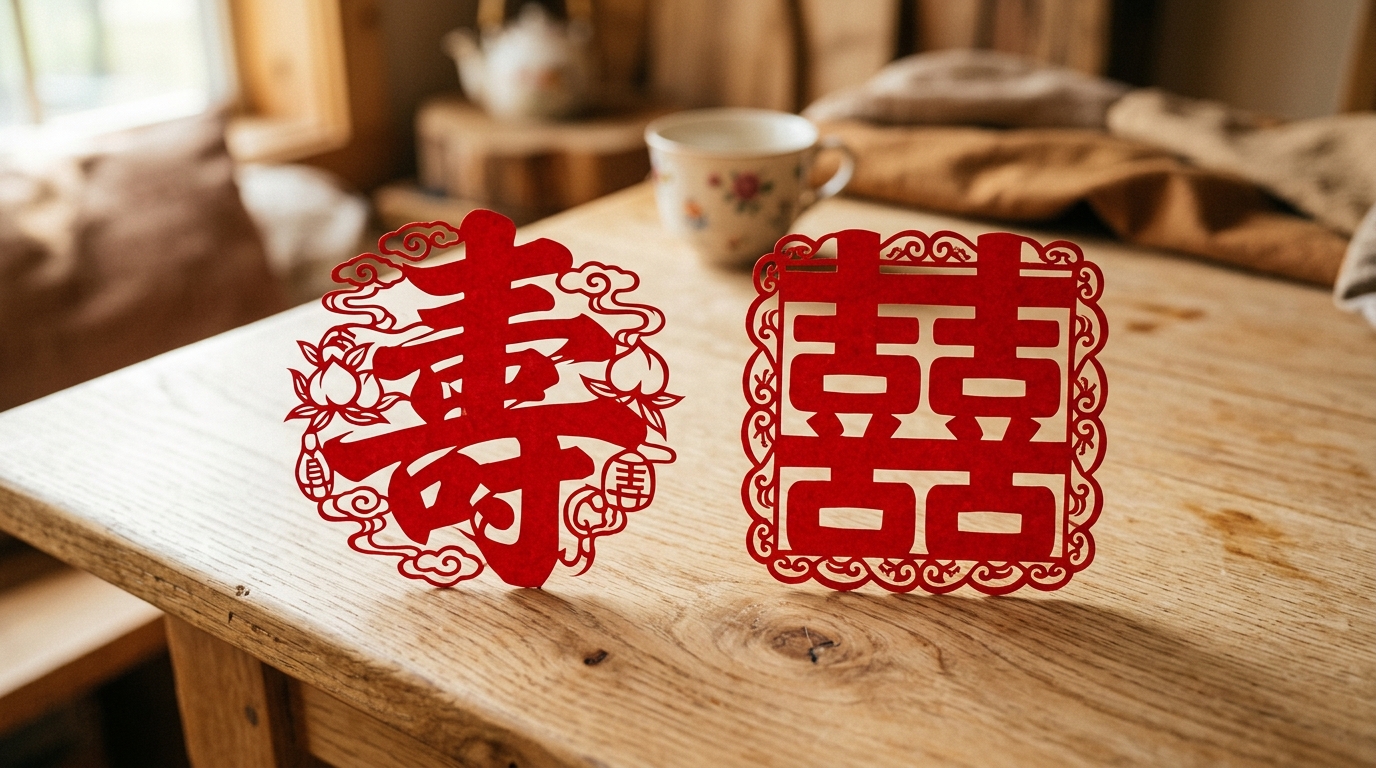
Two characters appear almost as often as Fu in Chinese paper cutting: Shou (寿) for long life, and Xi (囍) for double happiness. One honors age and health; the other celebrates marriage and shared joy. Together they cover the two happiest occasions in a family's life: a long life and a new union.
Cutting these characters is a practical way to learn Chinese paper cutting. The shapes are bold, the symbolism is clear, and the finished cuts make meaningful gifts.
Shou, the character of longevity
Shou (寿) means long life. It is the blessing most often given to elders, and it appears at birthdays, especially milestone birthdays such as sixty, seventy, and eighty.
The character has a distinctive, slightly curved shape that paper cutters have stylized over centuries. A plain Shou cut is already beautiful, but it is often surrounded by bats, peaches, cranes, or pine trees. Each companion reinforces the wish: bats bring blessings, peaches are the fruit of immortality in Chinese myth, cranes are long-lived birds, and pine trees stay green through winter.
A Shou paper cut is never hung casually. It is a respectful wish, most appropriate for grandparents, parents, and older relatives. Giving a hand-cut Shou to an elder is a traditional way to mark a birthday.
Xi, the character of double happiness
Xi (囍) is made by joining two copies of the character for happiness (xi, 喜). The doubled form means shared joy, specifically the joy of marriage. It is the single most important symbol at Chinese weddings.
Unlike Shou, which honors age, Xi belongs to beginnings. It appears on wedding invitations, red envelopes, chamber decorations, and bridal quilts. A newly married couple's door is often covered with red Xi paper cuts.
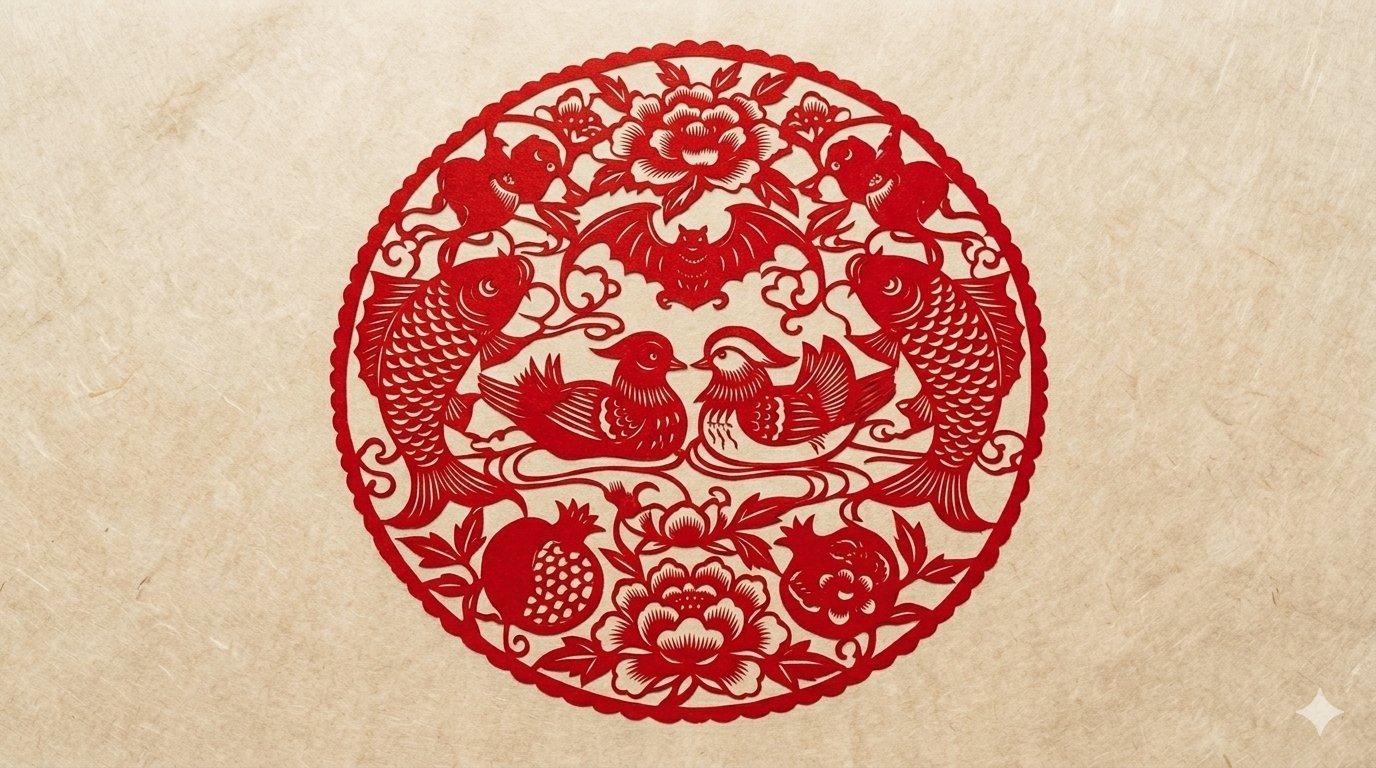
The character is usually cut in bright red and given as a symmetrical, decorative form. Birds such as magpies and mandarin ducks often accompany it, because both are symbols of faithful pairing. A magpie on a branch near Xi means "joyful news," while mandarin ducks mean a faithful marriage.
When to use Shou and Xi
Shou is for longevity celebrations. Use it for birthdays, especially for elders, and for the Lunar New Year wishes to older family members. It pairs well with peaches, cranes, pine, and bats.
Xi is for weddings. Use it for engagement parties, wedding decorations, and anniversary cards. It pairs well with magpies, mandarin ducks, dragons, and phoenixes.
The two characters can also appear together. A design showing Fu, Lu, Shou, and Xi covers the four great blessings: fortune, prosperity, longevity, and happiness. This combination is common on New Year decorations and gift wraps.
How to use the templates
Our free template set includes three A4 designs at 100% scale: a Shou character, a standard Xi, and a magpie Xi that combines the wedding character with the bird of joyful news.
Print the templates on red paper for a traditional finish, or on white paper and back the cut with red. The black areas are removed; the white areas remain as the finished design.
The Shou template is the most forgiving for beginners because its strokes are wide and flowing. The standard Xi template requires a little more care around the doubled horizontal lines. The magpie Xi is the most detailed and works best with a craft knife for the bird's tail and the small inner cuts.
FAQ
What is the difference between Xi and Shou? Xi (囍) is double happiness and is used for weddings. Shou (寿) is longevity and is used for birthdays and elder celebrations.
Can I give a Shou paper cut as a birthday gift? Yes. A hand-cut Shou is a respectful and traditional birthday gift for an older relative or friend.
Why is Xi doubled? The doubled character represents the joining of two people and two families in marriage. It means shared, multiplied happiness.
What paper should I use? Thin red paper is traditional, but printer paper, origami paper, or lightweight craft paper all work well. Thinner paper is easier to cut neatly.
Free printable Shou and Xi paper-cutting templates
Want to try cutting your own longevity and double-happiness designs? Download three ready-to-print A4 templates: a Shou character, a standard Xi, and a magpie Xi.
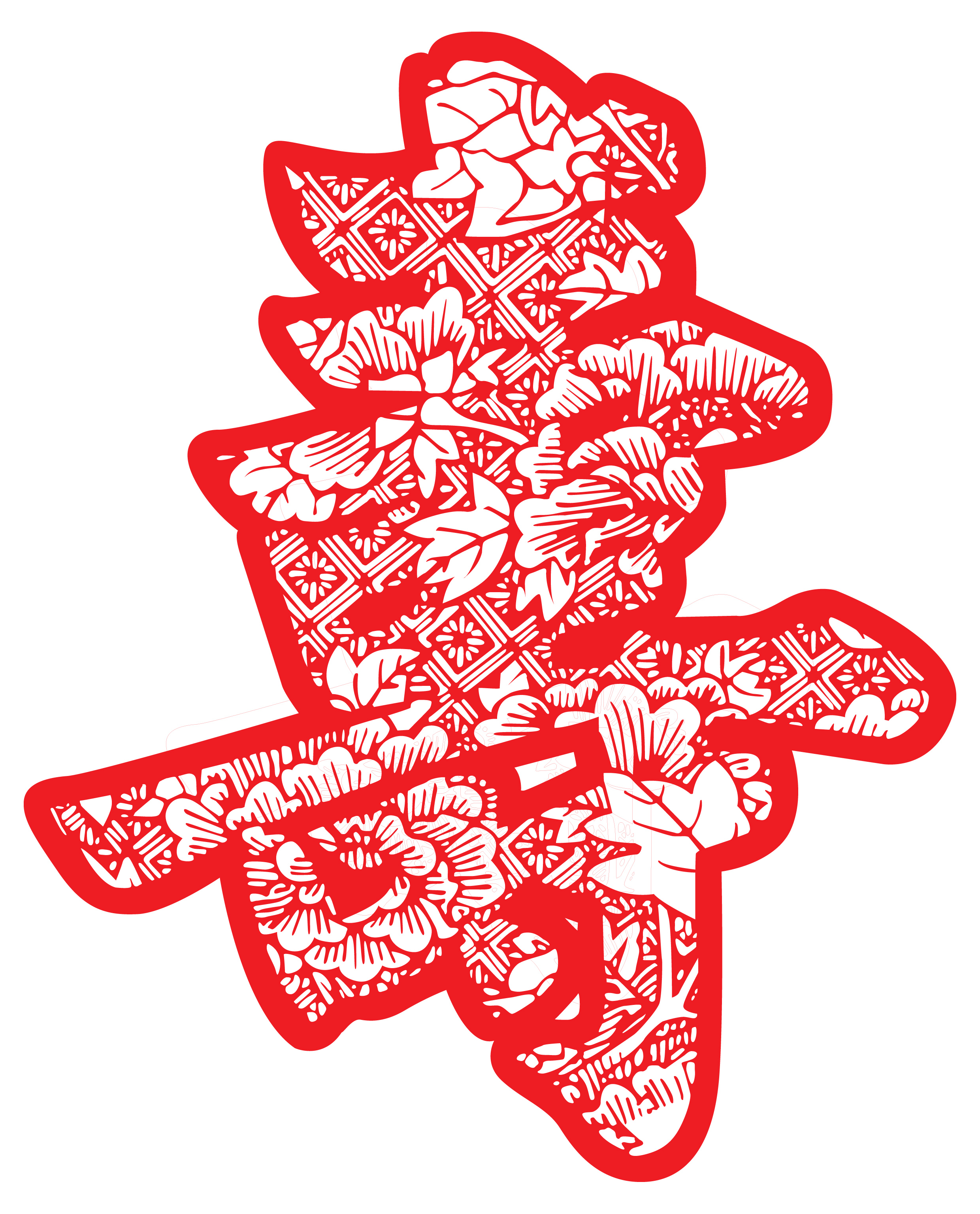
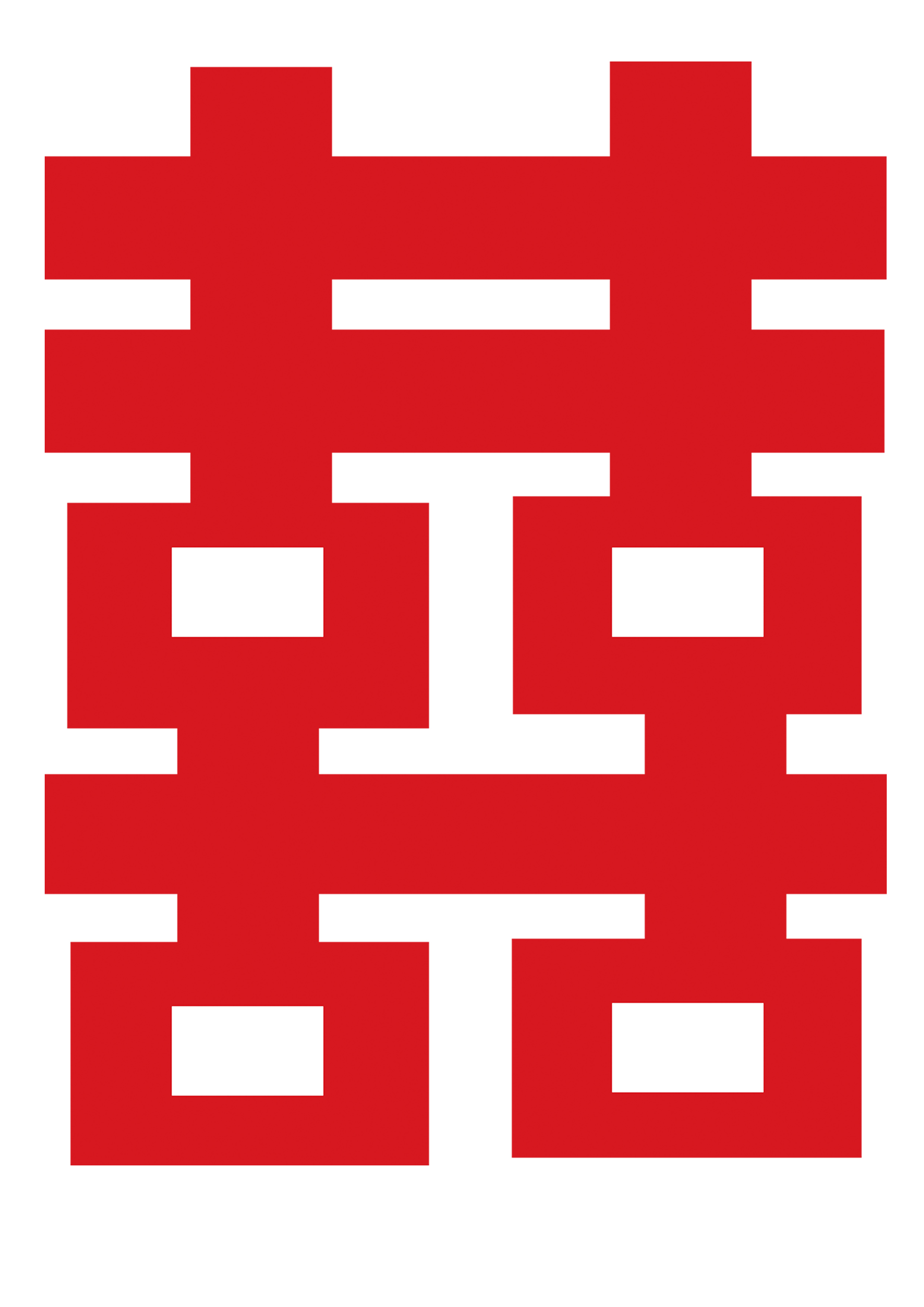
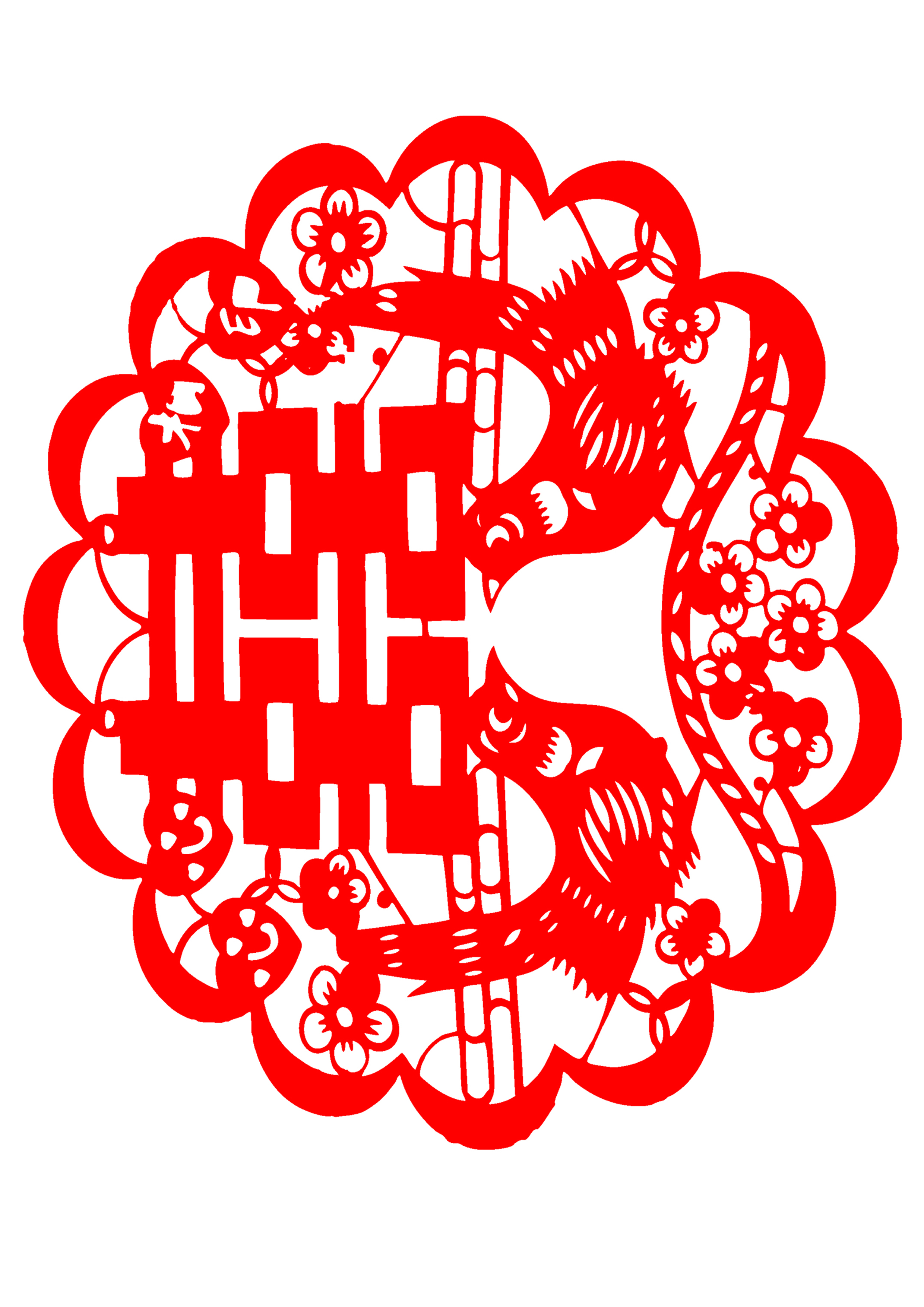
Print at 100% scale on red or white A4 paper. Each page includes the design and a light footer with printing instructions.
Author
This article was prepared by the team at ChineseFolkCrafts.com. We are not intangible-cultural-heritage inheritors or museum researchers. Our job is to find authoritative Chinese sources, understand them, and explain them clearly for international readers.
If you spot an error — a date, a translation, a misattributed custom — please let us know and we will correct it. Last updated 2026-07-27.