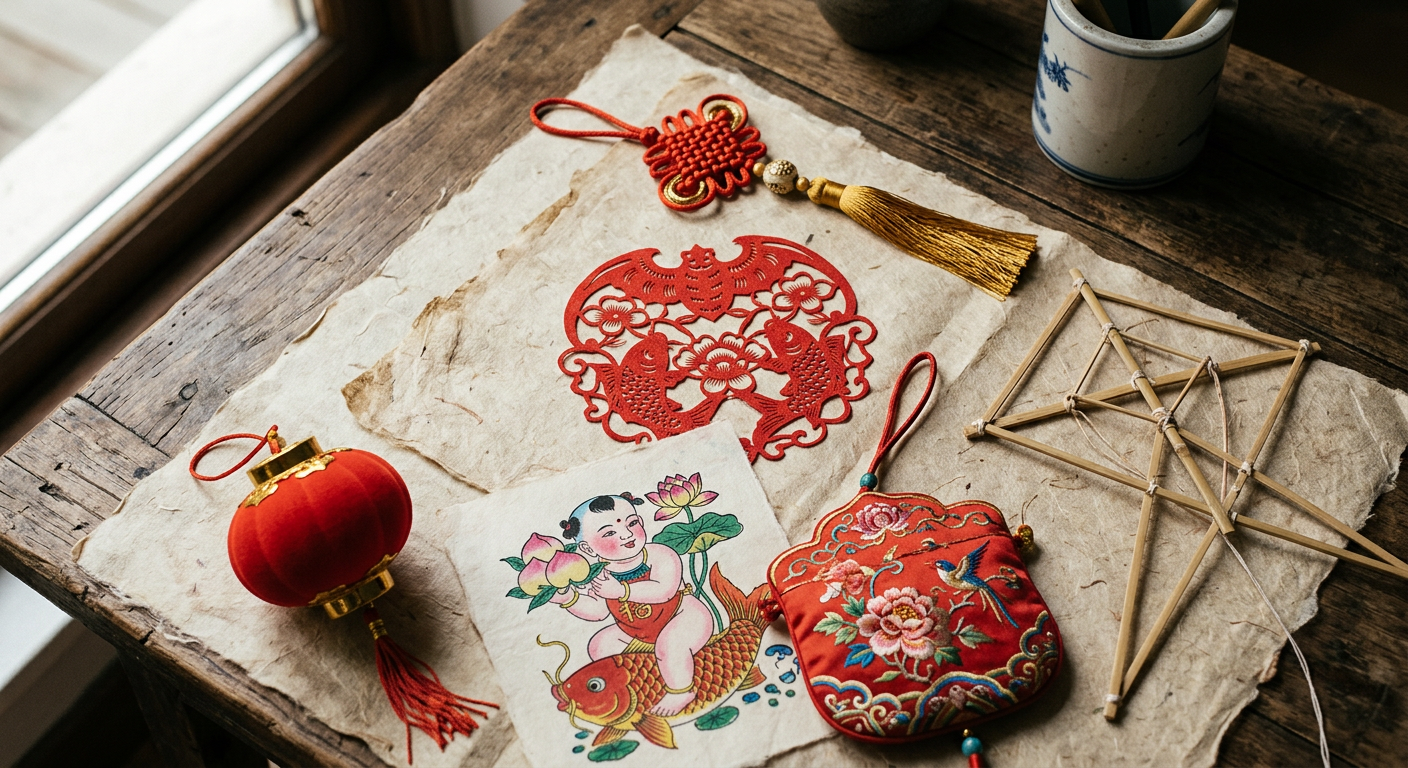
Chinese folk crafts are a living library. For thousands of years, ordinary people have turned paper, cord, bamboo, silk, and wood into objects that carry wishes across generations. A red paper cut on a window, a knot on a door, a painted kite in the sky — each is a sentence in a visual language that is still spoken today.
This guide introduces the major Chinese folk crafts, explains how they work, and shows how they connect to one another. Whether you are a teacher, a maker, or simply curious, it is a map of the tradition.
What counts as a Chinese folk craft
A folk craft is handmade, passed down through families and villages, and shaped by local materials and beliefs. It is not fine art made for museums; it is practical art made for daily life and festivals.
Chinese folk crafts share a few habits:
- They use simple materials. Paper, bamboo, silk thread, cotton cloth, and vegetable dyes are common because they were available.
- They carry symbolic meaning. A shape, a color, or a sound-alike word turns an object into a wish.
- They appear at life events. Births, weddings, birthdays, festivals, and funerals all have their own craft objects.
- They are regional. The same motif looks different in Shaanxi than in Suzhou, because climate, paper, and taste differ.
In 2006, China created its first national list of intangible cultural heritage. Many folk crafts — paper cutting, kite making, embroidery, lantern making, and woodblock printing — were placed on that list. In 2009, Chinese paper cutting was added to UNESCO's Representative List.
A very short history
The roots of Chinese folk craft reach back before paper itself. Neolithic pottery was painted with animal and geometric signs. Bronze casters of the Shang dynasty wrapped taotie masks around ritual vessels. By the time paper was invented in the Western Han dynasty, the Chinese eye was already trained to read flat surfaces as language.
During the Han and Tang dynasties, several craft families took shape. Paper cutting appeared as tomb offerings and stencils. Kites were built from wood and silk for military signaling. Embroidery became a recognized art, and lantern frames were covered with painted silk.
The Song and Yuan dynasties turned folk crafts into trades. Cities had paper-cut pattern shops, embroidery workshops, and lantern markets. Woodblock printing, developed partly for books, was adapted to produce New Year pictures in large numbers.
The Ming and Qing dynasties were the golden age of regional schools. Suzhou embroidery refined its pictorial style. Yangliuqing New Year pictures developed their distinctive green-and-pink palette. Weifang kite makers perfected the balanced bamboo frame. Tiger shoes and baby sachets became standardized across northern villages.
In the twentieth century, wars and industrialization disrupted many crafts. Some, like Chinese knotting, were kept alive in Taiwan and reintroduced to the mainland later. Others, like paper cutting and kite making, were revived as national heritage projects. Today, many crafts are protected by national and international lists, and a new generation of designers is reinterpreting them for contemporary life.
The six great families
This site organizes Chinese folk crafts into six families. Each has its own tools, techniques, and symbolic vocabulary.
Paper cutting (jianzhi)
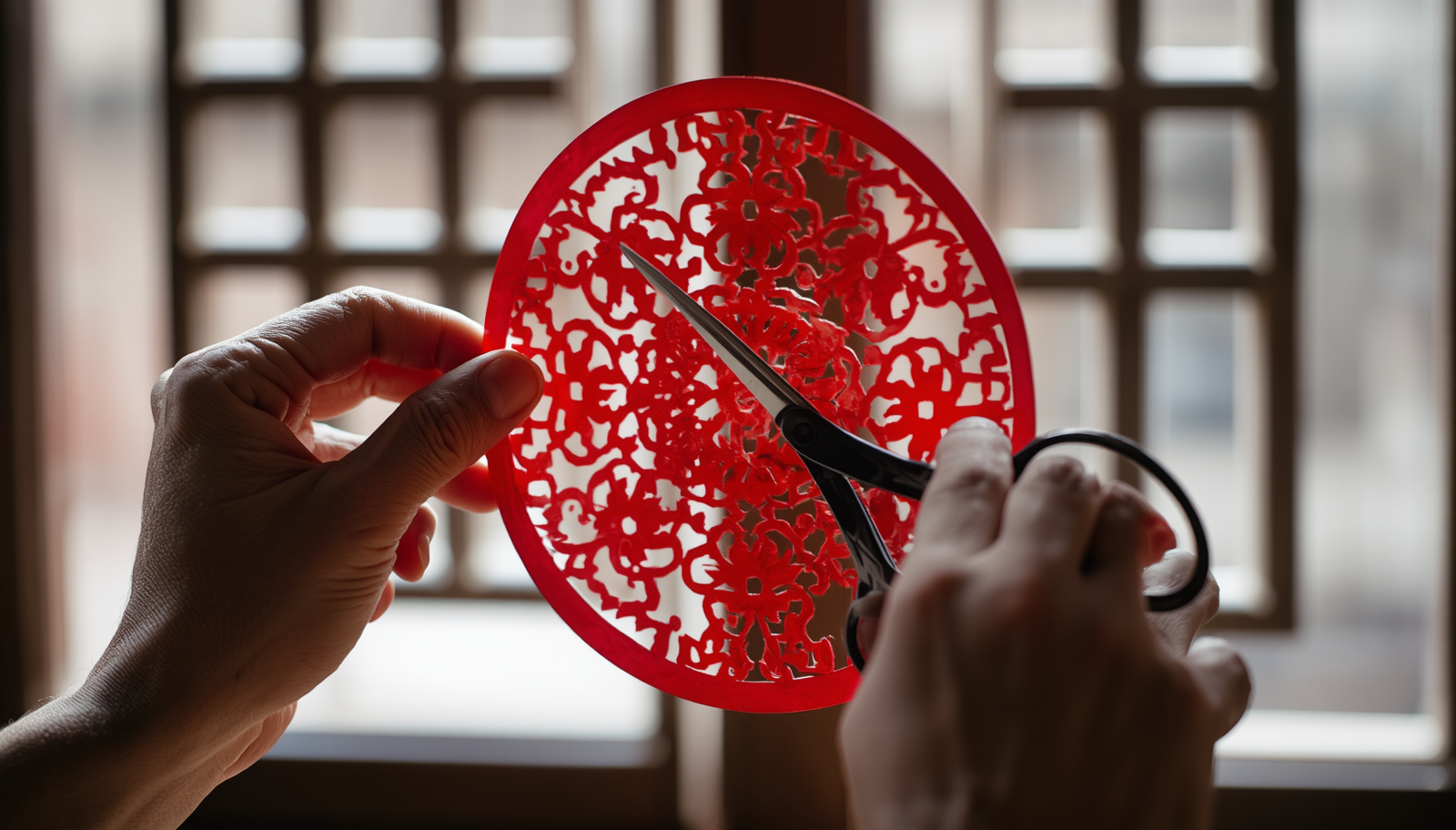
Chinese paper cutting is the art of cutting openwork patterns from paper with scissors or small knives. It is probably the most widespread folk craft in China, practiced in every province and by every generation.
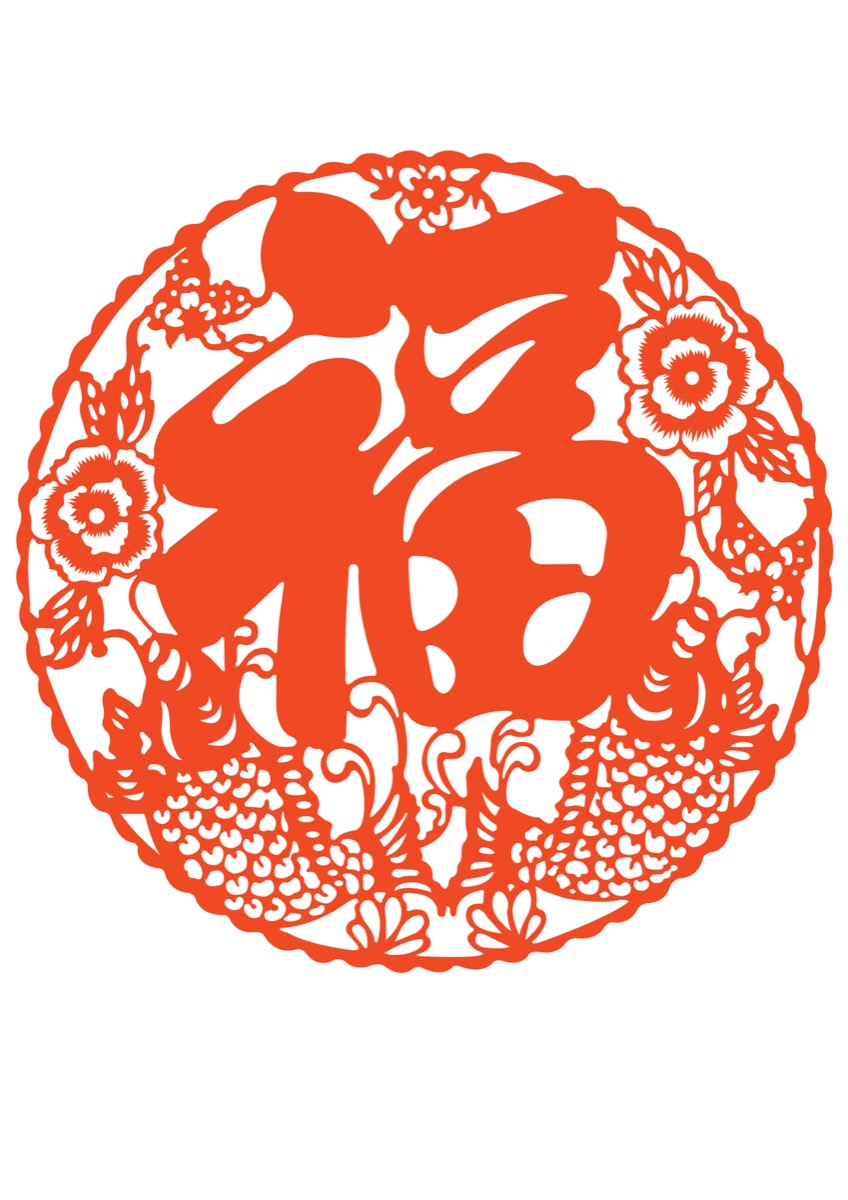
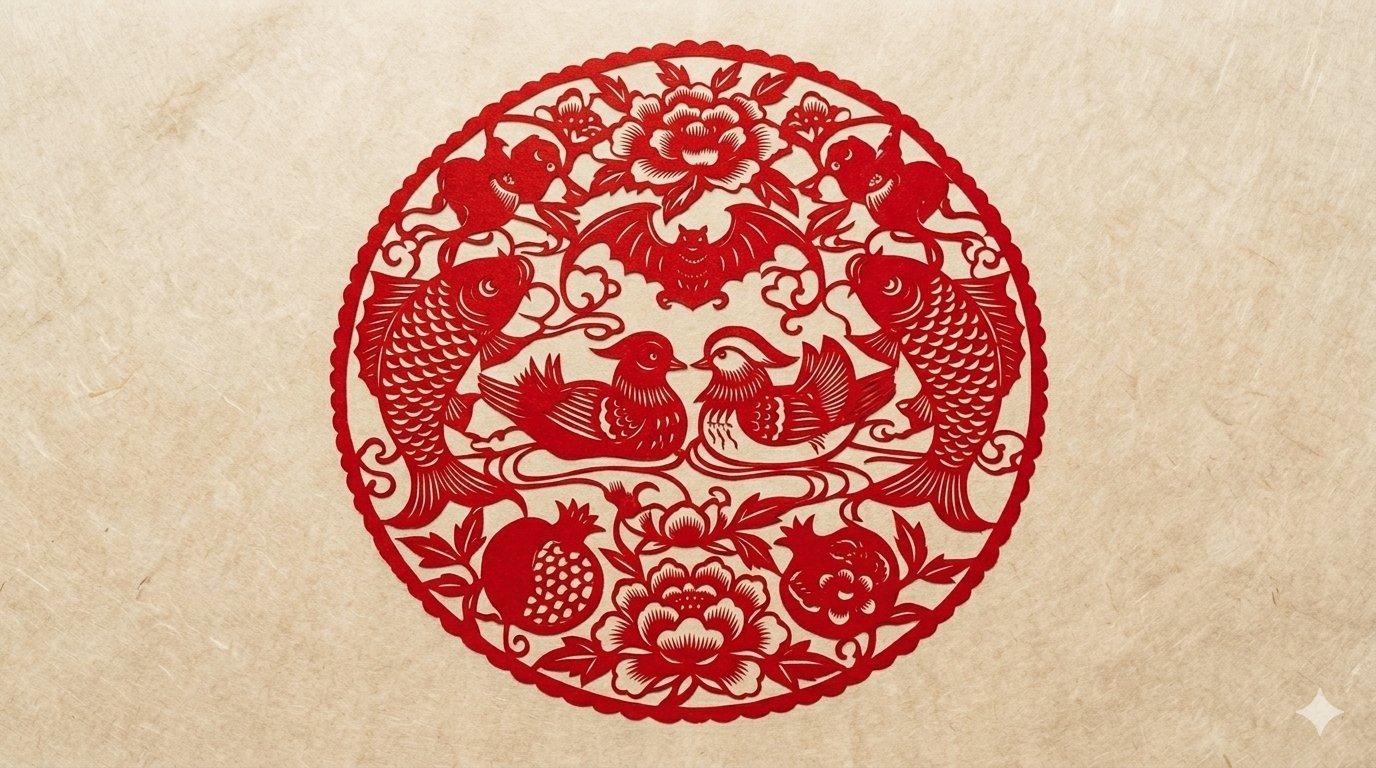
Paper cuts turn empty space into meaning. A cut of a bat means blessing, because fu (蝠, bat) sounds like fu (福, blessing). A fish means abundance, because yu (鱼, fish) sounds like yu (余, surplus). A peony means wealth and honor. The eight auspicious symbols in Chinese paper cutting show how a small visual vocabulary can speak many wishes.
There are many types of Chinese paper cutting — monochrome, color-dyed, scissor-cut, knife-cut, window flowers, and temple decorations. Window flowers are the most common face of the craft: a square of red paper, folded and snipped, then pasted on a window, so the winter light draws flowers on the floor.
Regional highlights. Northern Shaanxi paper cuts are bold and rough, shaped by the yellow earth and farming life. Hebei Yuxian color-dyed paper cuts layer bright dyes over carved paper. Yangzhou in Jiangsu produces delicate, literati-influenced cuts. Fujian and Guangdong cuts often serve temple rituals and opera costumes.
Chinese knots (zhongguo jie)
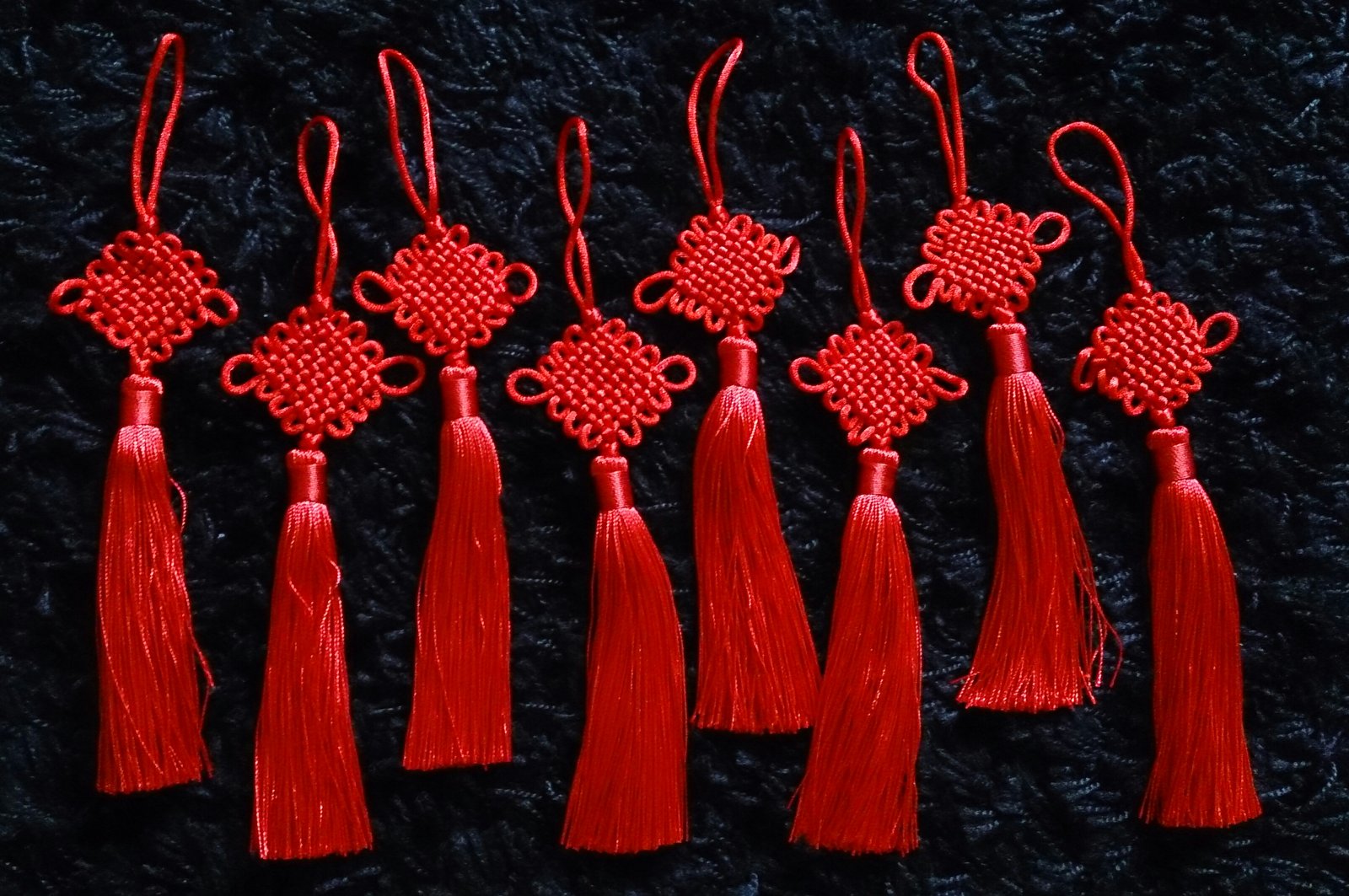
Chinese knotting is the art of tying decorative knots from a single continuous cord. Unlike macramé, which often uses many separate cords, a true Chinese knot is made from one length that loops back on itself until the pattern closes.
Each knot has a name and a wish. The double coin knot means wealth. The pan chang or endless knot means long life. The butterfly knot means love and joy. Five common Chinese knots and their meanings cover the most important ones.
Knots are given as gifts, hung in cars, used as clothing buttons, and combined into larger ornaments. The craft nearly died out in mainland China in the early twentieth century but was revived in Taiwan in the 1980s and has since spread worldwide.
Regional highlights. Beijing-style knotting favors symmetrical, compact knots in silk cord, often in red and gold. Taiwanese revival work introduced more elaborate combined ornaments. Today, knotting guilds and online teachers keep the craft alive in China, Taiwan, and diaspora communities.
Lanterns (deng)
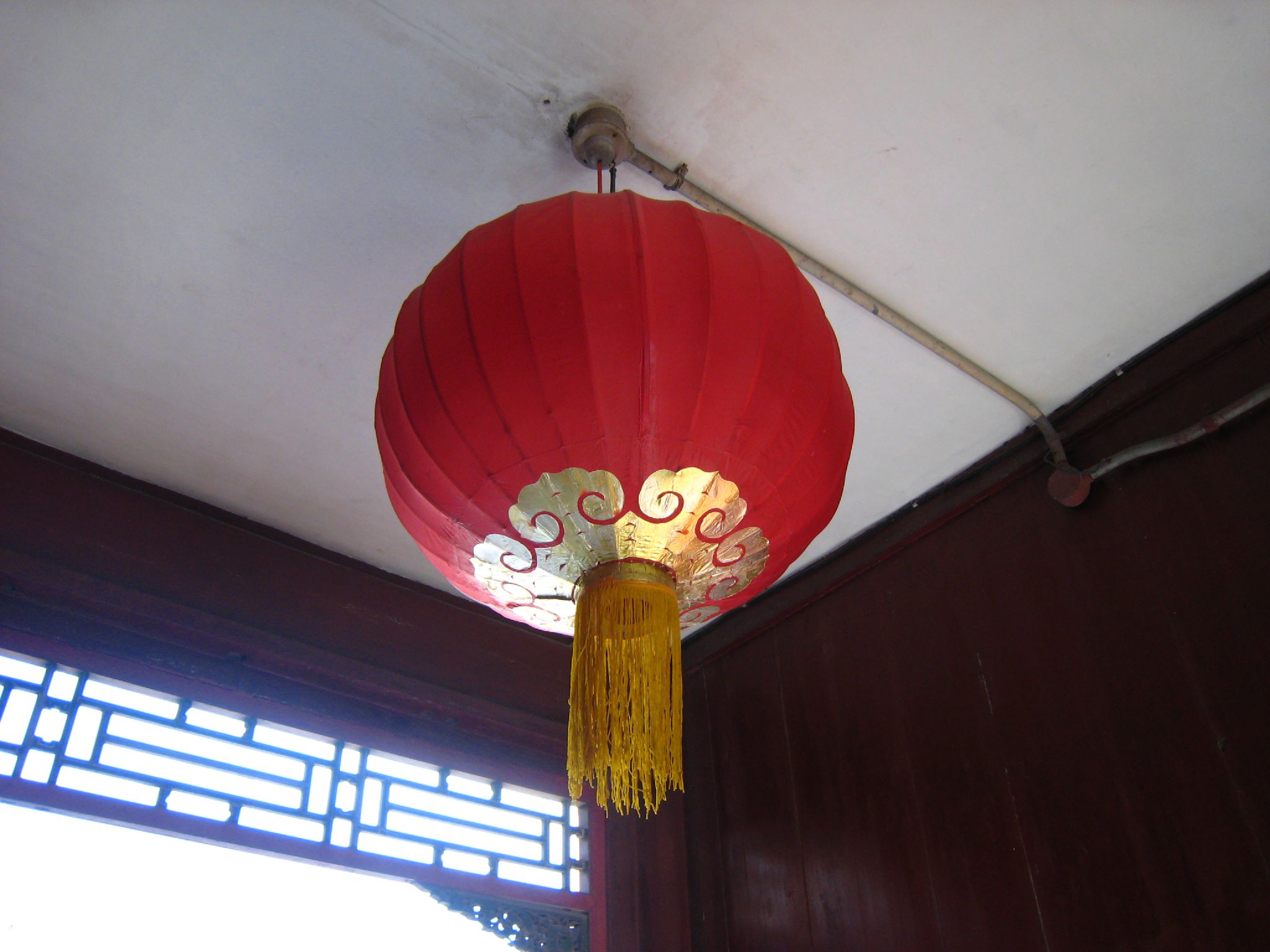
Chinese lanterns began as practical light sources and became festival art. A simple frame of bamboo or wire, covered with paper or silk, turns into a glowing object that marks celebration.
Lanterns are most visible at the Lantern Festival, which ends the Spring Festival season. They also appear at weddings, shop openings, and temple fairs. Red lanterns mean joy; white lanterns are for funerals. Some lanterns are painted with riddles; solving the riddle is part of the festival game.
You can make a simple red paper lantern with a sheet of paper, glue, and scissors. The craft teaches symmetry, patience, and the pleasure of turning flat material into a three-dimensional form.
Regional highlights. Sichuan Zigong is famous for large, elaborate lantern tableaux that draw millions during the Lantern Festival. Beijing palace lanterns use fine wood frames and silk panels. Red gauze lanterns from Shanxi are lightweight and portable, often carried in processions.
New Year pictures (nianhua)
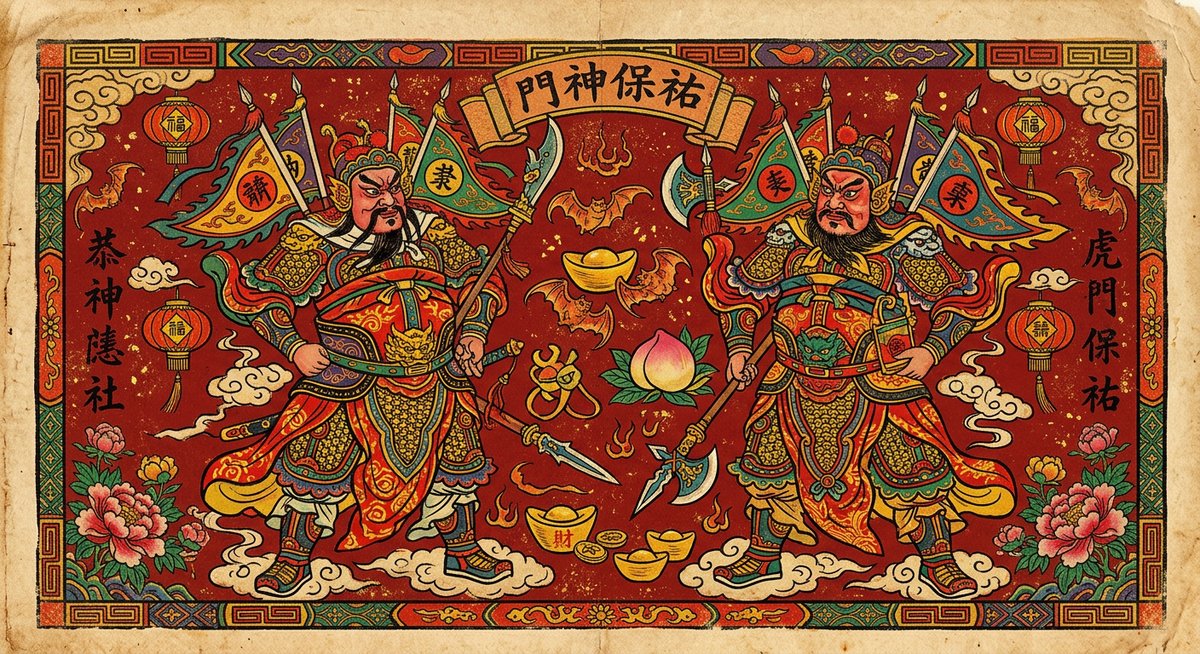
New Year pictures are woodblock prints or paintings pasted in homes during Spring Festival. They began as door guardians painted on peachwood boards and evolved into colorful prints of gods, children, animals, and blessings.
The most famous New Year picture schools are Tianjin Yangliuqing, Shandong Yangjiabu, Jiangsu Taohuawu, and Sichuan Mianzhu. Each has its own palette and carving style. Door gods — fierce warrior pairs pasted on either side of the entrance — are the most recognizable image.
Nianhua are visual prayers. A plump child holding a lotus means "may there be continuous sons." A fish means "may there be surplus year after year." A bat means blessing. The same symbolic vocabulary appears in paper cutting and knotting.
Regional highlights. Yangliuqing pictures are hand-colored after printing, giving them a soft, painterly finish. Yangjiabu pictures are bold and high-contrast, with thick black outlines. Taohuawu pictures favor elegant lines and auspicious scenes from daily life. Mianzhu pictures are bright, narrative, and often humorous.
Cloth art (bu yi)
Cloth art includes embroidery, patchwork, tiger shoes, baby sachets, and quilted clothing. It is often the most intimate folk craft, made for bodies rather than walls.
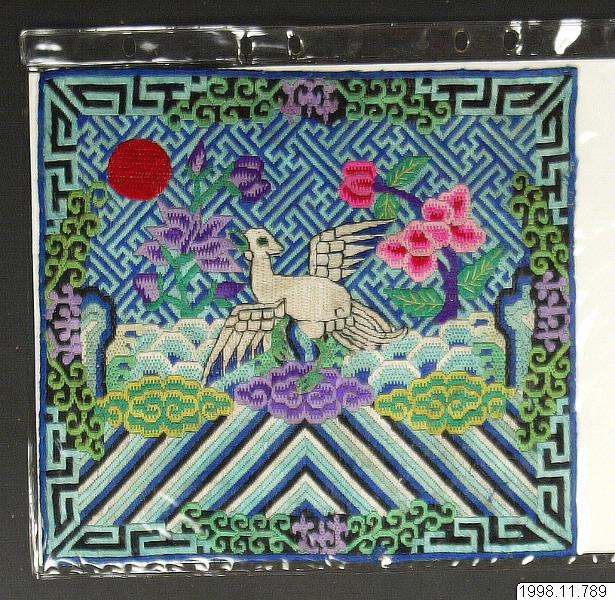
Chinese embroidery has four famous styles: Su (Suzhou), Xiang (Hunan), Yue (Guangdong), and Shu (Sichuan). Each uses different stitches and subjects. Su embroidery is fine and pictorial; Xiang embroidery is bold and painterly; Yue embroidery uses gold thread and dense patterns; Shu embroidery is ancient and symbolic.
Tiger shoes and baby sachets show how cloth art protects as well as decorates. Tigers are believed to ward off evil spirits, so children's shoes and hats are shaped like tiger heads. Sachets filled with aromatic herbs are worn at the Dragon Boat Festival to protect against disease.
Patchwork quilts and tiger hats from northern villages demonstrate how leftover cloth becomes art. Nothing is wasted; every scrap carries color and memory.
Regional highlights. Suzhou embroidery is prized for its "double-sided" pieces, where the front and back are equally refined. Shaanxi cloth art is robust and symbolic, with bold tiger motifs for children. Guangdong and Fujian embroidery often appear on opera costumes and wedding garments.
Chinese kites (fengzheng)
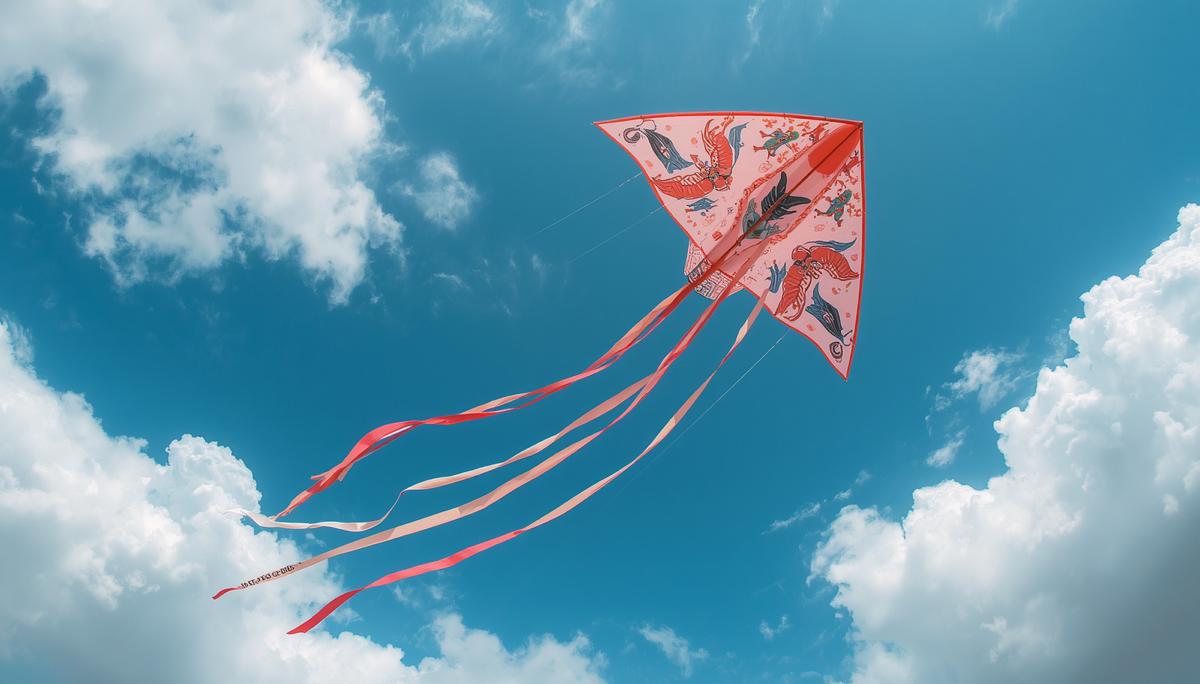
Chinese kites have flown for more than two thousand years. Early kites were made of wood and used for military signaling. Later, bamboo frames and paper coverings made them lighter and more playful.
Traditional kite making has four steps: binding the frame (zha), covering it (hu), painting it (hui), and flying it (fang). Weifang in Shandong is the most famous kite city, hosting an annual international kite festival. You can make a traditional Chinese kite with bamboo, paper, glue, and string.
Kites carry wishes upward. A swallow kite means spring. A dragon kite means power. A butterfly kite means love. The same symbols appear on paper cuts, embroidery, and New Year prints.
Regional highlights. Weifang kites are known for their large, dramatic dragon and centipede designs. Beijing kites, such as the sha yan swallow kite, are elegant and balanced. Nantong in Jiangsu produces soft kites that fly without a tail, relying on subtle frame tension.
The shared language of symbols
The six crafts speak the same symbolic language. Once you learn a few words, you can read any of them.
| Symbol | Meaning | Where you see it |
|---|---|---|
| Bat | Blessing (fu) | Paper cuts, embroidery, New Year prints |
| Fish | Abundance (yu) | Paper cuts, New Year prints, knot tassels |
| Peony | Wealth and honor | Paper cuts, embroidery, cloth art |
| Lotus | Purity, continuity | Paper cuts, embroidery, lanterns |
| Crane | Long life | Paper cuts, embroidery, kites |
| Dragon | Power, emperor, rain | Kites, embroidery, New Year prints |
| Phoenix | Beauty, bride | Embroidery, wedding paper cuts |
| Tiger | Protection | Children's shoes, hats, sachets |
This vocabulary is not random. It grew from puns, poetry, and observation. A bat looks nothing like a blessing, but fu (蝠) sounds like fu (福). A peony looks like wealth because it is lush and full. A crane lives long, so it wishes long life.
Color meanings
Color is another shared language. In Chinese folk crafts, color is never decorative alone; it carries a message.
- Red is the most important color. It means joy, celebration, and protection. New Year paper cuts, wedding knots, and festival lanterns are almost always red because red is believed to drive away evil and attract good fortune.
- Gold and yellow symbolize wealth, imperial dignity, and prosperity. Gold thread appears in Yue embroidery and knot tassels. Yellow was historically reserved for the emperor, but in folk art it simply means abundance.
- Black is the color of stability and the north. It is used in woodblock outlines and in the calligraphy of New Year prints. In some contexts it also suggests solemnity.
- White is associated with mourning and purity. White lanterns are used at funerals. In paper cutting, white is sometimes used for temple offerings or snow scenes.
- Green and blue connect to spring, growth, and longevity. They appear in embroidered landscapes, painted kites, and spring-themed paper cuts.
Understanding color helps you read the mood of an object before you even recognize the motif.
Tools and materials
Despite their variety, the six crafts rely on a surprisingly small set of tools and materials.
- Paper. Xuan paper from Anhui is prized for paper cutting because it is soft and holds a clean edge. Lantern makers use rice paper or silk. Kite makers use thin, strong paper or silk.
- Silk thread and cord. Embroidery uses fine silk thread in dozens of colors. Knotting uses braided cord, traditionally silk, now often nylon or cotton.
- Bamboo. Lantern frames, kite frames, and some embroidery hoops are made from bamboo. The right bamboo is light, flexible, and easy to split.
- Cloth. Cotton, linen, and silk are the main textiles. Scraps are saved for patchwork; whole pieces are reserved for embroidery and festival garments.
- Woodblocks and pigments. New Year prints begin with carved pearwood blocks. Natural pigments gave way to modern inks, but traditional workshops still use mineral and vegetable colors.
- Scissors, knives, and needles. A good pair of scissors is a paper cutter's most important tool. Embroidery needles vary by thread thickness. Some paper cutters prefer small knives for fine detail.
The simplicity of these materials is part of the philosophy. Folk craft is about doing much with little.
How the crafts connect
The crafts are not separate hobbies. They borrow from one another constantly.
- Paper cutting provides patterns. Embroiderers often paste a paper cut onto cloth and stitch through it. Lantern makers use paper-cut patterns on silk shades. Potters and woodblock printers copy paper-cut designs.
- Knots finish objects. A tassel with a Chinese knot completes a lantern, a fan, or a wall hanging. The knot adds both decoration and meaning.
- New Year prints and paper cuts share motifs. The same door gods appear in both. The same fu character is cut in paper and printed in woodblock.
- Cloth art and embroidery carry paper-cut shapes. The double happiness character, bats, and peonies move easily from paper to silk.
- Kites borrow painting styles from New Year prints. A painted swallow kite uses the same flat colors and bold outlines as a woodblock print.
Learning one craft makes the others easier to understand. They are dialects of the same visual language.
Where to start if you want to learn
You do not need to master all six crafts. Start with one and let curiosity lead you.
- If you like paper and scissors: Try how to make your first Chinese paper cut.
- If you like working with cord: Try how to tie basic Chinese knots.
- If you like three-dimensional objects: Try how to make a simple red paper lantern.
- If you like painting and structure: Try how to make a traditional Chinese kite.
Each craft teaches the same lesson: simple materials, used with care and meaning, become art.
How to collect, display, and care for folk crafts
If you begin to collect Chinese folk crafts, a few simple habits will keep them beautiful.
- Paper cuts. Frame them behind glass with acid-free backing. Keep them out of direct sunlight, which fades red paper quickly. Do not paste originals directly on windows; use a copy for display and store the original flat.
- Chinese knots. Dust them with a soft brush. If a cord frays, retire the piece or have it restrung. Avoid hanging knots in humid bathrooms.
- Lanterns. Store collapsible lanterns unfolded to prevent creases. Keep electric lanterns away from water, and never leave candles unattended in traditional paper lanterns.
- New Year prints. Treat them like works on paper. Acid-free folders or archival boxes are ideal. If you frame a print, use UV-filtering glass.
- Embroidery and cloth art. Display textiles away from direct sun and strong light. Avoid washing antique pieces; consult a textile conservator for stains or damage.
- Kites. Release line tension when storing a kite to prevent warping. Store bamboo frames horizontally in a dry place. Repair torn paper with matching tissue and rice paste.
Collecting folk crafts is also a way to support living makers. Whenever possible, buy from workshops, craft fairs, or directly from artists rather than from mass-produced souvenir channels.
Why these crafts matter today
Chinese folk crafts are not museum pieces. They are still made, given, and used. Rural grandmothers still cut window flowers. Urban couples still hang double happiness in their apartments. Children still fly kites in Qingming. Crafters still sell their work online and at fairs.
The crafts matter because they keep a visual language alive. In a world of digital images, a handmade paper cut or knot carries something different: the time of the maker, the intention of the giver, and the weight of a tradition that has survived for centuries.
They also matter because they are democratic. You do not need expensive tools or formal training to tie a double coin knot or cut a four-fold flower. The materials are cheap; the skill is patience. Anyone can participate.
Frequently asked questions
What are the main Chinese folk crafts?
The six most important families are paper cutting, Chinese knotting, lantern making, New Year pictures, cloth art (including embroidery), and kite making. Each has its own tools, techniques, and symbolic vocabulary.
Why are Chinese folk crafts red?
Red is the color of joy and protection in Chinese folk culture. It is believed to ward off evil and bring good fortune. That is why paper cuts, knots, lanterns, and wedding decorations are usually red.
Are Chinese folk crafts still practiced today?
Yes. Many are protected as national or UNESCO-recognized intangible cultural heritage. They are still made for festivals, weddings, birthdays, and home decoration, and many contemporary artists reinterpret them in new forms.
What is the easiest Chinese folk craft for beginners?
Chinese paper cutting and Chinese knotting are both beginner-friendly. A simple four-fold paper cut can be made in five minutes. A double coin knot can be learned in fifteen minutes.
How do I know what a Chinese folk craft symbol means?
Look at three things: the main shape (what it depicts), the color (red for joy, gold for wealth), and the accompanying motifs (bats for blessing, fish for abundance, peonies for wealth). Our guide to auspicious symbols explains the most common ones.
Where can I buy authentic Chinese folk crafts?
Look for craft fairs, museum shops, heritage workshops, and reputable online marketplaces that identify the maker or region. Avoid mass-produced items that imitate traditional designs without supporting the craft community.
Author
This article was prepared by the team at ChineseFolkCrafts.com. We are not intangible-cultural-heritage inheritors or museum researchers. Our job is to find authoritative Chinese sources, understand them, and explain them clearly for international readers.
If you spot an error — a date, a translation, a misattributed custom — please let us know and we will correct it. Last updated 2026-07-26.